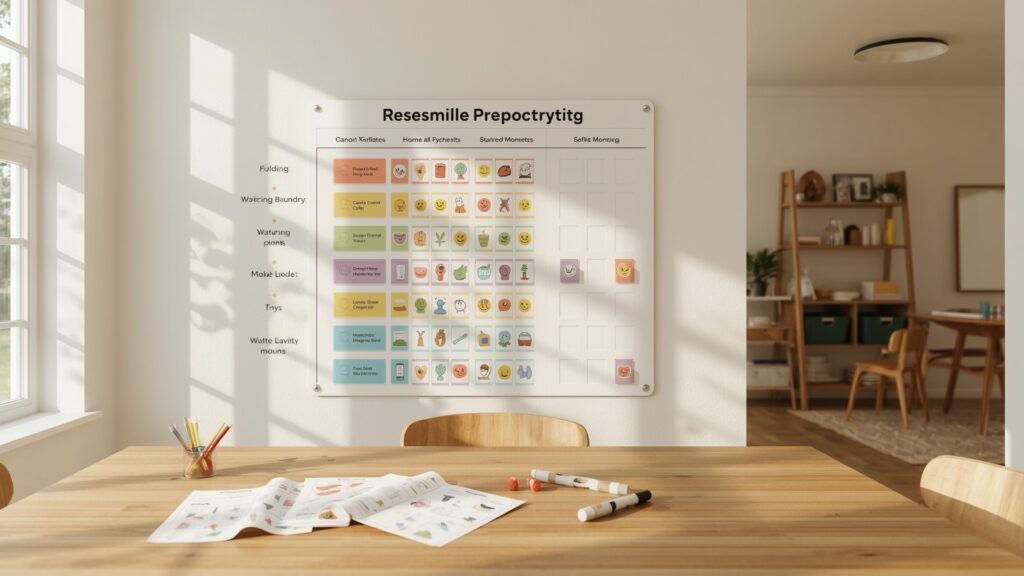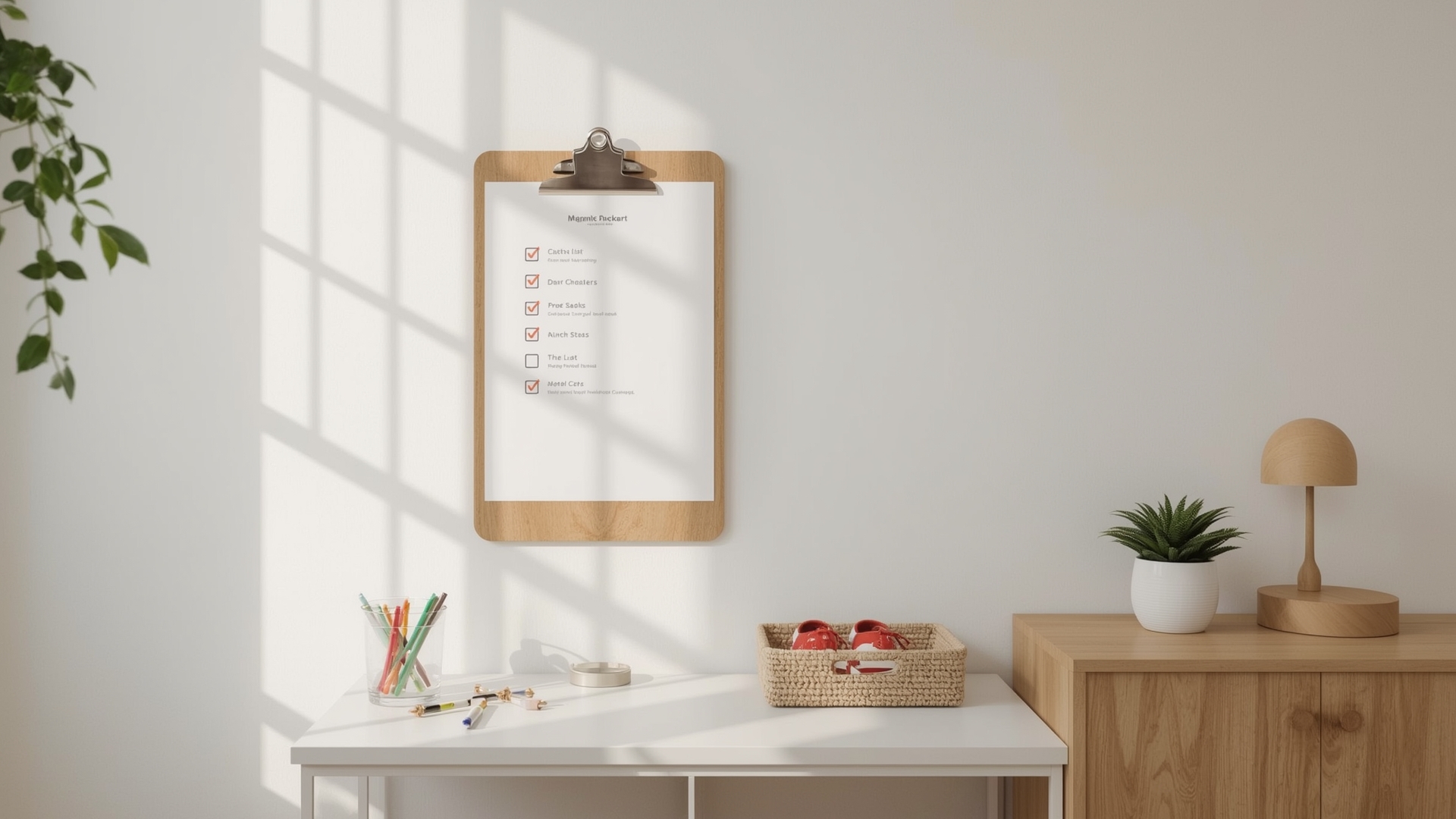
Getting kids to do chores is one of those parenting challenges that never fully goes away. But the right chart makes a bigger difference than most parents expect. A printable chore chart gives kids a clear visual picture of what’s expected, removes the need for constant reminders, and builds responsibility one small task at a time.
The key is matching the chart design to your child’s age and reading level. A picture-based chart works for a 3-year-old who can’t read yet. A checkbox format works better for a 10-year-old who wants to track their own progress. This guide covers both, plus everything in between.
Key Takeaways
- Match the chart format to the child’s age: picture charts for pre-readers (ages 2-5), simple checklists for early readers (ages 6-8), and structured weekly grids for older kids (ages 9+).
- Consistency beats perfection: a simple chart used every day works better than a complex one used once a week.
- Chores build real skills: age-appropriate tasks teach time management, responsibility, and basic home care that carry into adulthood.
- Reward systems work best when tied to the chart: sticker rewards for younger kids, points or allowance tracking for older kids.
- Laminating your printable chart extends its life and lets kids mark tasks with a dry-erase marker instead of printing new sheets weekly.
What Is a Printable Chore Chart Template for Kids?
Quick Answer: A printable chore chart template is a ready-to-use document you download and print at home. It lists assigned tasks for each child, organized by day or week, with checkboxes or sticker spaces to track completion. Designs range from picture-based to written formats.
A chore chart template removes the work of creating a system from scratch. You download a pre-designed file, fill in your child’s name and tasks, print it, and hang it somewhere visible. The template provides the structure. You supply the specifics.
Most templates fall into two format categories. Visual templates use pictures or icons to represent tasks, which works well for children who can’t read yet. Text-based templates use written task names and checkboxes, which suits kids who can read independently.
The best chart for your family depends on your kids’ ages, how many children you’re managing, and whether you want a weekly reset or a permanent laminated version.
Why Do Chore Charts Actually Work for Kids?
Quick Answer: Chore charts work because they turn abstract expectations into concrete visuals. Kids can see what’s done and what’s left. The act of checking off a task gives a small sense of accomplishment, which builds motivation to repeat the behavior the next day.
Kids process information differently than adults. When you tell a child to “clean their room,” they often don’t know where to start. A chart breaks that big idea into specific steps: put toys in the bin, make the bed, put dirty clothes in the hamper. Each step is manageable on its own.
Visual tracking also gives children a sense of ownership. They’re not just following your instructions. They’re completing their own list. That shift in framing makes a real difference in buy-in, especially for kids ages 6 and up.
Consistency is the other factor. When the chart is always there, the routine becomes automatic. Kids stop needing daily reminders because the chart itself is the reminder.
What Chore Chart Format Works Best by Age Group?
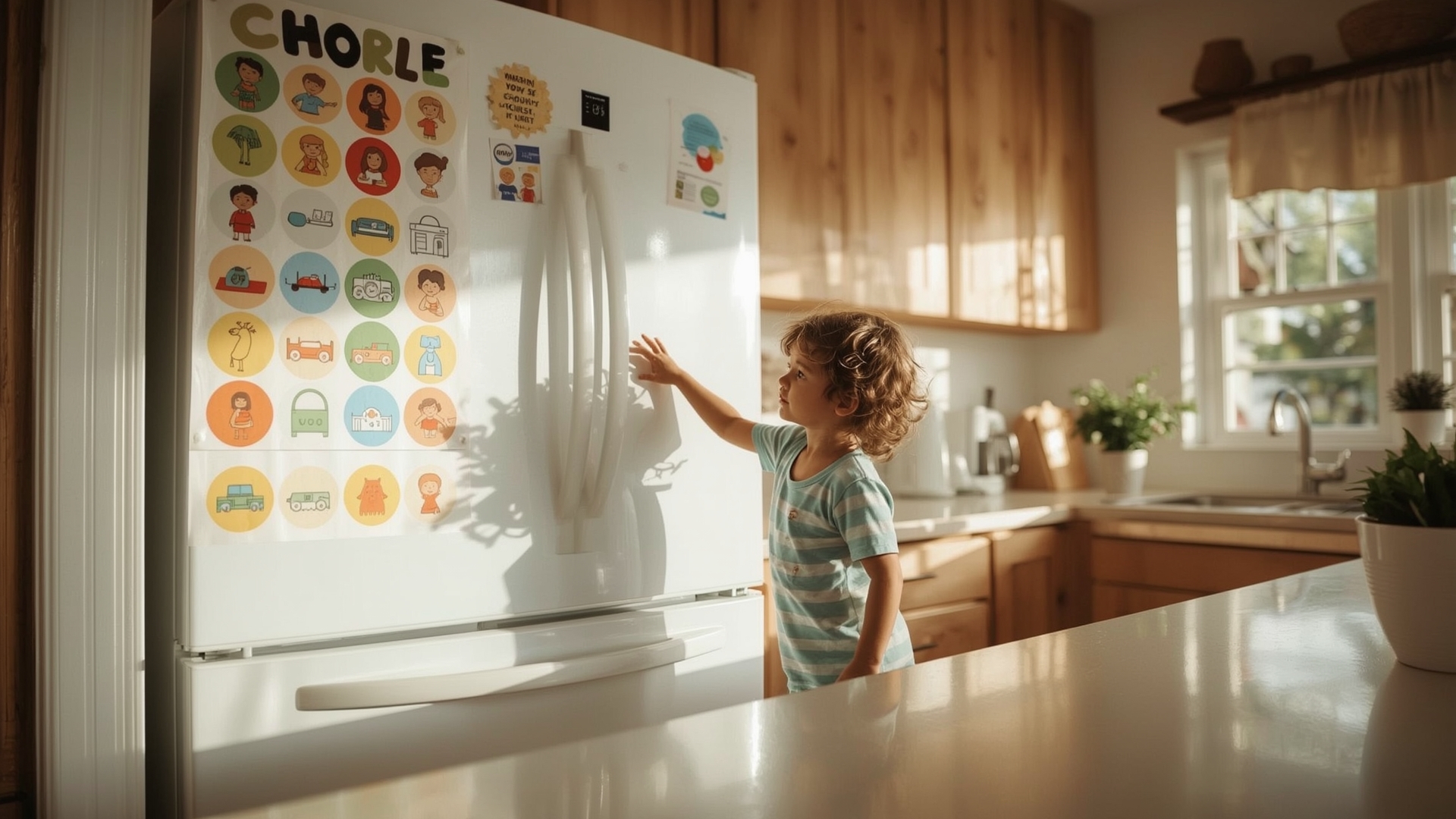
Quick Answer: Toddlers and pre-readers need picture-based charts with simple icons. Kids ages 6-8 do well with short checklists. Ages 9 and up can handle a full weekly grid with named tasks and a reward column. Match the format complexity to the child’s reading level.
Picture-Based Charts for Toddlers and Pre-Readers (Ages 2-5)
Children in this age group can’t read, so words on a chart mean nothing to them. Picture charts use simple icons or photos to represent each task. A drawing of a toothbrush means “brush teeth.” A drawing of a bed means “make the bed.” The child matches the picture to the action.
The best picture charts for this age use bright colors, large images, and no more than 3-5 tasks per day. Overloading a toddler’s chart leads to frustration, not results.
Velcro-based charts are popular in this category. Kids move a picture from the “to do” column to the “done” column, which gives a tactile sense of completion that’s satisfying at this developmental stage.
Simple Checklist Charts for Early Readers (Ages 6-8)
Kids in this range can read basic words, so short written task names work well. A simple checklist format with a checkbox next to each task is easy to follow independently.
This is also the age where sticker reward systems pair well with charts. After completing all daily tasks, the child earns a sticker. A full week of stickers earns a small reward. The connection between effort and reward is short enough for this age group to stay motivated.
Weekly Grid Charts for Older Kids (Ages 9-12)
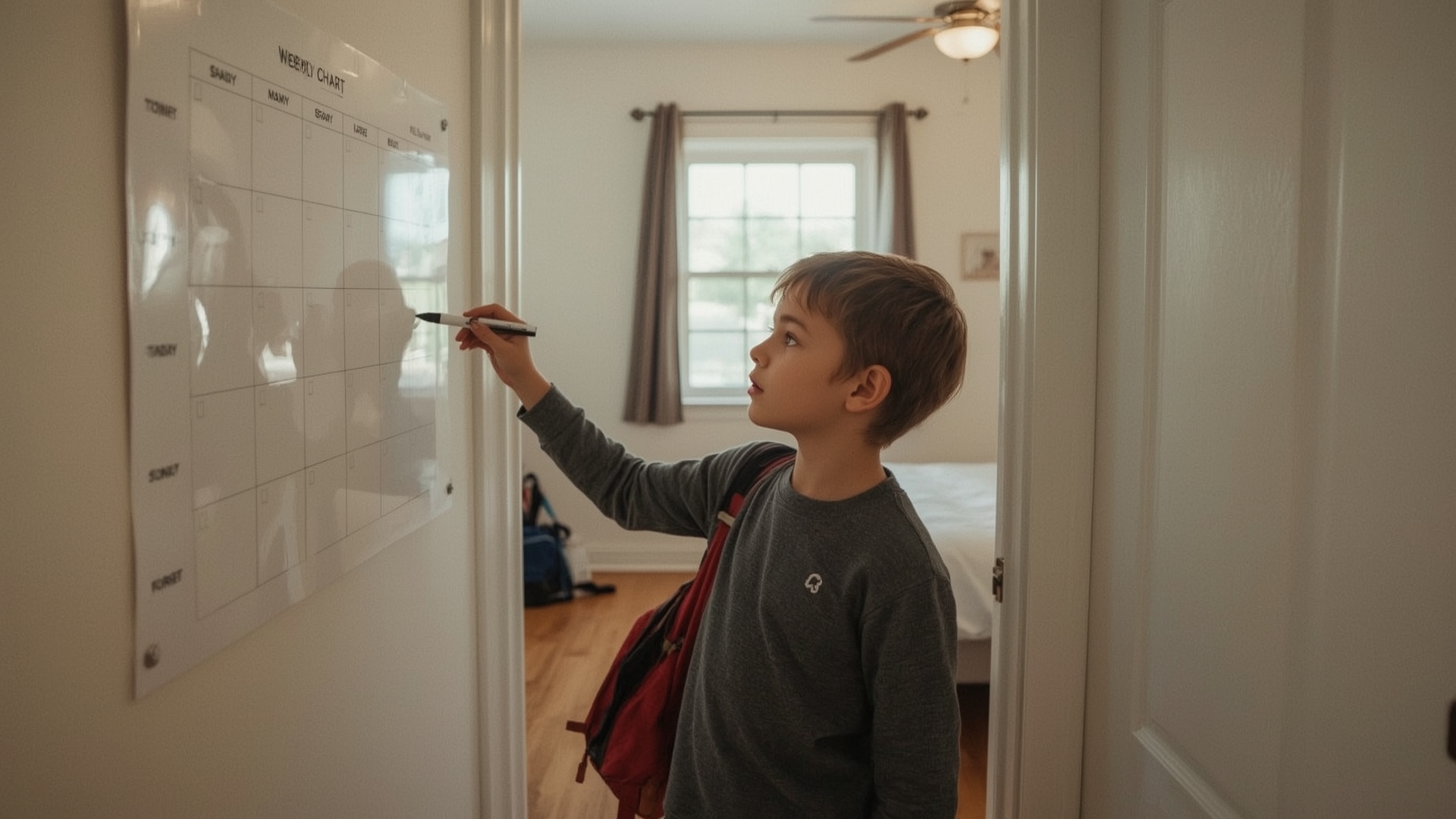
Older kids can handle more structure. A weekly grid lists tasks down the left side and days of the week across the top. Kids check off each task on the day it’s due. Some grids include a point value per task, which connects directly to an allowance system.
At this age, kids benefit from seeing the full week laid out. It teaches planning: they can choose to do a task early in the week to get it out of the way, or manage their time differently on busy days.
Teen Responsibility Charts (Ages 13+)
Teenagers generally don’t respond well to charts with cartoon graphics. A clean, minimal design works better. A simple weekly task list without heavy visual decoration feels more appropriate for their age. Some families shift to a shared digital list at this stage, but printable versions still work if the teen is involved in creating them.
What Age-Appropriate Chores Should Go on Each Chart?
Quick Answer: Toddlers can handle putting toys away and wiping surfaces. Ages 6-8 can manage making beds, feeding pets, and setting the table. Ages 9-12 can vacuum, do laundry, and wash dishes. Teens can handle most household tasks independently, including cooking simple meals.
| Age Group | Sample Chores | Supervision Level | Daily Task Count | Chart Format |
|---|---|---|---|---|
| Ages 2-3 | Put toys in bin, wipe spills, put dirty clothes in hamper | Full supervision | 2-3 tasks | Picture chart |
| Ages 4-5 | Make bed (with help), feed pet, clear dishes from table | Guided with check-in | 3-4 tasks | Picture/icon chart |
| Ages 6-8 | Set table, sweep floors, water plants, pack school bag | Minimal prompting | 4-5 tasks | Checklist with stickers |
| Ages 9-11 | Vacuum rooms, load dishwasher, take out trash, fold laundry | Independent with review | 5-6 tasks | Weekly grid |
| Ages 12-14 | Cook simple meals, clean bathroom, mow lawn, grocery run | Fully independent | 6-8 tasks | Weekly task list |
| Ages 15+ | Deeper cleaning tasks, manage own laundry, household errands | Fully independent | 8+ tasks | Minimal text-based chart |
What Should a Good Printable Chore Chart Template Include?
Quick Answer: A good chore chart template includes a space for the child’s name, a clear task list, a way to mark completion (checkbox or sticker space), and a reward tracker. The design should match the child’s age, with pictures for pre-readers and clean text formats for older kids.
Essential Design Elements for Younger Children
- Large, clear pictures or icons for each task
- Bright, high-contrast colors to hold attention
- Simple star or sticker boxes instead of checkboxes
- Child’s name at the top to create personal ownership
- Limited task count (no more than 5 per day) to prevent overwhelm
Essential Design Elements for Older Children
- Weekly grid layout with days of the week across the top
- Checkbox or tally column for tracking completion
- Point or allowance column if tied to a reward system
- Morning, afternoon, and evening categories for time-blocked routines
- Clean, uncluttered design that doesn’t feel “babyish”
How Do You Set Up a Printable Chore Chart That Kids Will Actually Use?

Quick Answer: Print the chart, laminate it if possible, and hang it at the child’s eye level in a spot they pass daily. Introduce it with a short family meeting. Let kids put their name on it themselves. Review it together for the first week until the habit is set.
Step 1: Choose the Right Template for Your Child’s Age
Start by matching the template format to your child’s current reading and comprehension level, not just their age. Some 5-year-olds can recognize written words. Some 7-year-olds still do better with pictures. Use your judgment.
Step 2: Fill In the Specific Tasks
Generic charts list tasks like “clean room.” That’s too vague for most kids. Write out specific actions instead: “Put all toys in the toy bin,” “Put books on the shelf,” “Put dirty clothes in the hamper.” The more specific the task, the less room for confusion.
Step 3: Print and Prepare the Chart
Print on standard letter-size paper (8.5 x 11 inches). For a chart you’ll reuse weekly, take it to a print shop or use a home laminator. A laminated chart can be marked with a dry-erase marker, wiped clean every Sunday, and used indefinitely.
If you’re printing a fresh sheet each week, cardstock paper holds up better than standard printer paper, especially in high-traffic areas like kitchens and hallways.
Step 4: Post It at Eye Level in a Visible Spot
The chart only works if kids see it regularly. Post it on the refrigerator, inside a bedroom door, or near the bathroom mirror depending on when the chores are scheduled. For younger children, hang it at their eye level, not adult eye level.
Step 5: Introduce It as a Team Decision
Kids are more likely to follow a system they helped create. Hold a short family meeting to go over the chart. Ask your child if the tasks feel fair. Let them suggest a chore they’d actually enjoy. This buy-in step is optional but makes a real difference in the first few weeks.
Step 6: Review the First Week Together
For the first week, check in daily. This isn’t about micromanaging. It’s about making sure your child understands each task and feels confident completing it. After a week of daily check-ins, most kids can use the chart independently.
What Printable Chore Chart Designs Are Available?
Quick Answer: Common chore chart designs include themed picture charts, weekly grid charts, rotating chore wheels, magnetic dry-erase boards printed at home, and reward-tracking charts. Each serves a different function depending on the number of kids, age range, and whether you want a reusable or weekly-reset format.
| Chart Type | Best Age Range | Format | Reusable | Best For |
|---|---|---|---|---|
| Picture Icon Chart | Ages 2-5 | Single day or week | Yes (laminated) | Pre-readers, visual learners |
| Sticker Reward Chart | Ages 4-8 | Weekly grid with sticker spaces | No (new sheet weekly) | Building motivation habits |
| Checkbox Checklist | Ages 6-10 | Daily or weekly list | Yes (laminated) | Independent task tracking |
| Weekly Grid with Points | Ages 9-14 | 7-day grid with point values | Yes (laminated) | Allowance tracking |
| Multi-Child Family Chart | Mixed ages | Columns per child, weekly layout | Yes (laminated) | Families with 2+ kids |
| Morning/Evening Routine Chart | Ages 5-12 | Two-section daily layout | Yes (laminated) | Daily routine building |
How Do You Connect a Chore Chart to an Allowance System?
Quick Answer: Assign point values to each chore on the chart. At the end of the week, the child tallies their points and exchanges them for a dollar amount. A common starting rate is 10 points per dollar. Tying the chart to allowance works best for kids ages 8 and up.
The connection between effort and reward teaches kids how earning works. It’s a simple financial literacy lesson built into the daily routine.
Keep the math simple. If each completed chore earns 1 point, and 10 points equals $1.00, a child who completes 40 chores in a week earns $4.00. This gives parents a predictable system and gives kids a clear goal.
Some families split chores into two categories: base chores (expected with no pay) and bonus chores (optional with pay). Base chores cover basic personal responsibility like making the bed and putting away dishes. Bonus chores cover tasks beyond the baseline, like vacuuming the living room or organizing a shelf.
What Are the Most Common Mistakes Parents Make With Chore Charts?
Quick Answer: The most common mistakes are: assigning too many tasks at once, using a design that’s too complex for the child’s age, forgetting to follow through on rewards, and abandoning the chart after one bad week. Starting simple and staying consistent matters more than having the perfect chart.
Assigning Too Many Tasks Too Soon
Parents often load up a new chart with every chore they want their kids to do. Seeing ten tasks on day one is overwhelming for most children. Start with two or three tasks per day and add more only after the existing ones become habit.
Using the Wrong Design for the Child’s Age
A chart covered in text won’t work for a 4-year-old. A chart with baby cartoon graphics will get ignored by a 12-year-old. Match the visual design to the child’s current stage, not where you hope they’ll be.
Skipping the Follow-Through on Rewards
If you promise a reward for completing the chart and then forget to deliver it, the system breaks down fast. Kids lose faith in the system and stop trying. Keep rewards small and reliable rather than big and inconsistent.
Abandoning the Chart After One Off Week
Every family hits a week where the chart gets ignored. This is normal. The fix is to reset, not to quit. A quick conversation acknowledging the week and restarting the following Monday is usually enough to get back on track.
How Should You Customize a Printable Chore Chart Template?
Quick Answer: Customize by adding the child’s name, replacing generic task names with specific actions, choosing a themed design your child likes, and adjusting the task count for their age. Let older kids help fill in the chart themselves to increase their investment in following it.
| Feature | Option A | Option B | Best For |
|---|---|---|---|
| Task Language | Generic (“Clean room”) | Specific (“Put books on shelf”) | Specific works for all ages |
| Completion Marker | Checkbox | Sticker space | Stickers for ages 4-7, checkboxes for 8+ |
| Visual Theme | Characters/animals | Clean/minimal | Characters for under 9, minimal for 9+ |
| Time Horizon | Daily chart | Weekly chart | Daily for under 7, weekly for 7+ |
| Reward Tracker | Sticker row at bottom | Points column | Stickers for ages 4-8, points for 9+ |
Where Can You Find and Print Chore Chart Templates for Kids?
Quick Answer: Printable chore chart templates are available on home organization blogs, Etsy (paid downloads), Pinterest (free links), and dedicated parenting printable sites. Many are available as PDF or editable Word/Google Docs files, so you can type in your child’s name and tasks before printing.
Free templates are widely available and cover most basic formats. Paid templates from Etsy or design-focused sites typically offer more polished visuals and editable fields, which saves time when you want to customize tasks without handwriting everything in.
For families who want a permanent solution, some office print shops can print and laminate a custom chart for under $5. This one-time cost pays off if you reuse the chart for months.
How Do You Make a Chore Chart a Long-Term Habit, Not Just a Phase?
Quick Answer: Pair the chart with an existing daily anchor like meals or bedtime. Review it at the same time each day. Update the task list every few months as kids grow. Celebrate streaks rather than perfection. The goal is building routine, not achieving a flawless record.
Most chore chart systems fade after 3-4 weeks because they were introduced with energy but not built into a reliable routine. The fix is to attach chart review to something that already happens every day without fail.
For younger kids, reviewing the chart right after breakfast works well because they’re alert and the day hasn’t started yet. For older kids, a quick check at the end of the school day connects chores to their natural afternoon transition.
Plan to update the chart every three to four months. As kids get older, tasks that once required effort become automatic, and the chart needs new challenges to stay meaningful.
| Week | Parent Action | Child Expectation | Goal |
|---|---|---|---|
| Week 1 | Daily check-in with child | Completes tasks with prompting | Familiarity with chart system |
| Week 2 | Remind once, then let chart guide | Completes most tasks independently | Reducing reliance on reminders |
| Week 3-4 | Review at end of week only | Uses chart without daily prompting | Chart becomes the system, not you |
| Month 2+ | Monthly chart review and update | Independent task management | Long-term routine ownership |
Frequently Asked Questions
At what age should kids start using a chore chart?
Kids can start using a picture-based chore chart as early as age 2 or 3. At that age, tasks are simple and heavily supervised, like putting toys in a bin. The chart is more about building habits than completing complex tasks.
Should chores be tied to screen time instead of allowance?
Some families link completed chores to daily screen time minutes instead of money. This can work well for kids ages 6-10, especially if screen time is already a household issue. The system works the same way: completed tasks on the chart earn a set amount of screen time that day.
How many chores per day is reasonable for a 7-year-old?
Three to five chores per day is realistic for most 7-year-olds. These should be short tasks that take 5 to 10 minutes each, not complex jobs. Examples include making their bed, setting the table for dinner, and putting school items away.
What is the best paper to print chore charts on?
Cardstock paper (65 lb or heavier) holds up much better than standard printer paper, especially if the chart is on the refrigerator or a bedroom door. For a long-term reusable chart, print on cardstock and laminate it with a home laminator or at a print shop.
How do you handle it when a child refuses to follow the chart?
Refusal is most common in the first week or when the chart is introduced without the child’s input. Try involving the child in choosing their tasks or the chart’s visual theme. For persistent refusal, temporarily reduce the task list to one or two non-negotiable items and build back up from there.
Do chore charts work for children with ADHD?
Yes, chore charts can work very well for children with ADHD when designed correctly. Visual, picture-based charts with very short task descriptions reduce cognitive load. Breaking tasks into micro-steps, such as listing each step of “clean your room” separately, helps children with ADHD follow through without getting overwhelmed or distracted mid-task.