Getting kids to help around the house is one of the most valuable things you can do for their development. But handing a five-year-old a mop or asking a toddler to vacuum sets everyone up for frustration. The secret is matching the chore to the child’s age, attention span, and physical ability.
A well-designed chore chart does three things: it sets clear expectations, builds daily habits, and gives kids a sense of ownership over their home. When the tasks are the right fit for their age, kids actually feel proud of completing them instead of overwhelmed.
This guide breaks down exactly which chores work at each developmental stage, how to build a chart that sticks, and which reward systems actually motivate kids to follow through.
Key Takeaways
- Match tasks to developmental ability: Kids as young as 2 can do simple chores like picking up toys or putting napkins on the table.
- Visual charts work best for ages 2 to 8: Picture-based chore charts remove the reading barrier and make expectations crystal clear.
- Consistency beats perfection: A chore done imperfectly but regularly is more valuable than a perfect chore done once a week.
- Reward systems boost follow-through: Sticker charts, allowance, and privilege-based rewards each work best at different age ranges.
- Printable chore chart templates save time: Pre-built templates by age group make setup fast and remove the guesswork.
- Teens need autonomy, not micromanagement: Older kids respond better to flexible chore structures than rigid daily lists.
What Is a Chore Chart for Kids and Why Does It Work?
Quick Answer: A chore chart for kids is a visual tool that lists household tasks assigned to a child, tracked daily or weekly. It works because it makes expectations concrete, removes negotiation, and gives children a clear routine that builds responsibility over time.
A chore chart is essentially a visual contract between you and your child. It removes the daily back-and-forth of “did you do your chores?” by making tasks visible and trackable.
Research in developmental psychology consistently shows that children who do regular household chores develop stronger self-regulation, better time management, and higher self-esteem. They also tend to perform better academically, because chores teach the same skill that homework does: completing a task you didn’t necessarily choose.
The chart format matters too. A handwritten list on paper works for a teenager. A picture-based magnetic chart works for a preschooler. Matching the format to the child’s age is just as important as matching the task.
What Chores Can Toddlers (Ages 2 to 3) Actually Do?

Quick Answer: Toddlers can handle simple one-step tasks: putting toys in a bin, placing dirty clothes in a hamper, putting napkins on the table, and wiping up small spills with a cloth. Keep tasks under two minutes and stay nearby to guide them.
Why Simple Tasks Matter at This Age
At ages 2 and 3, the goal isn’t a clean house. The goal is habit formation. You’re teaching the idea that everyone in the family contributes. That concept, planted early, shapes how a child sees their role in the household for years.
Toddlers have short attention spans and limited fine motor skills. Tasks that involve one simple action and immediate, visible results work best. Putting blocks in a basket is satisfying because they can see the progress.
Toddler Chore Chart: Sample Tasks by Type
| Task | Skill Developed | Average Time | Supervision Needed |
|---|---|---|---|
| Put toys in a bin | Sorting, tidying | 2 to 5 minutes | Nearby supervision |
| Place napkins on table | Responsibility, sequencing | 1 to 2 minutes | Brief guidance |
| Put dirty clothes in hamper | Routine building | 1 minute | Reminder only |
| Wipe spills with cloth | Problem-solving, cleanup | 1 to 3 minutes | Direct supervision |
| Feed a pet (with help) | Empathy, responsibility | 2 to 3 minutes | Direct supervision |
Which Chores Are Right for Kids Ages 4 to 5?
Quick Answer: Kids ages 4 to 5 can clear their plate after meals, make their bed (imperfectly is fine), help sort laundry by color, water plants with a small pitcher, and dust low surfaces. Picture-based chore charts work best at this stage.
The Role of Picture-Based Chore Charts
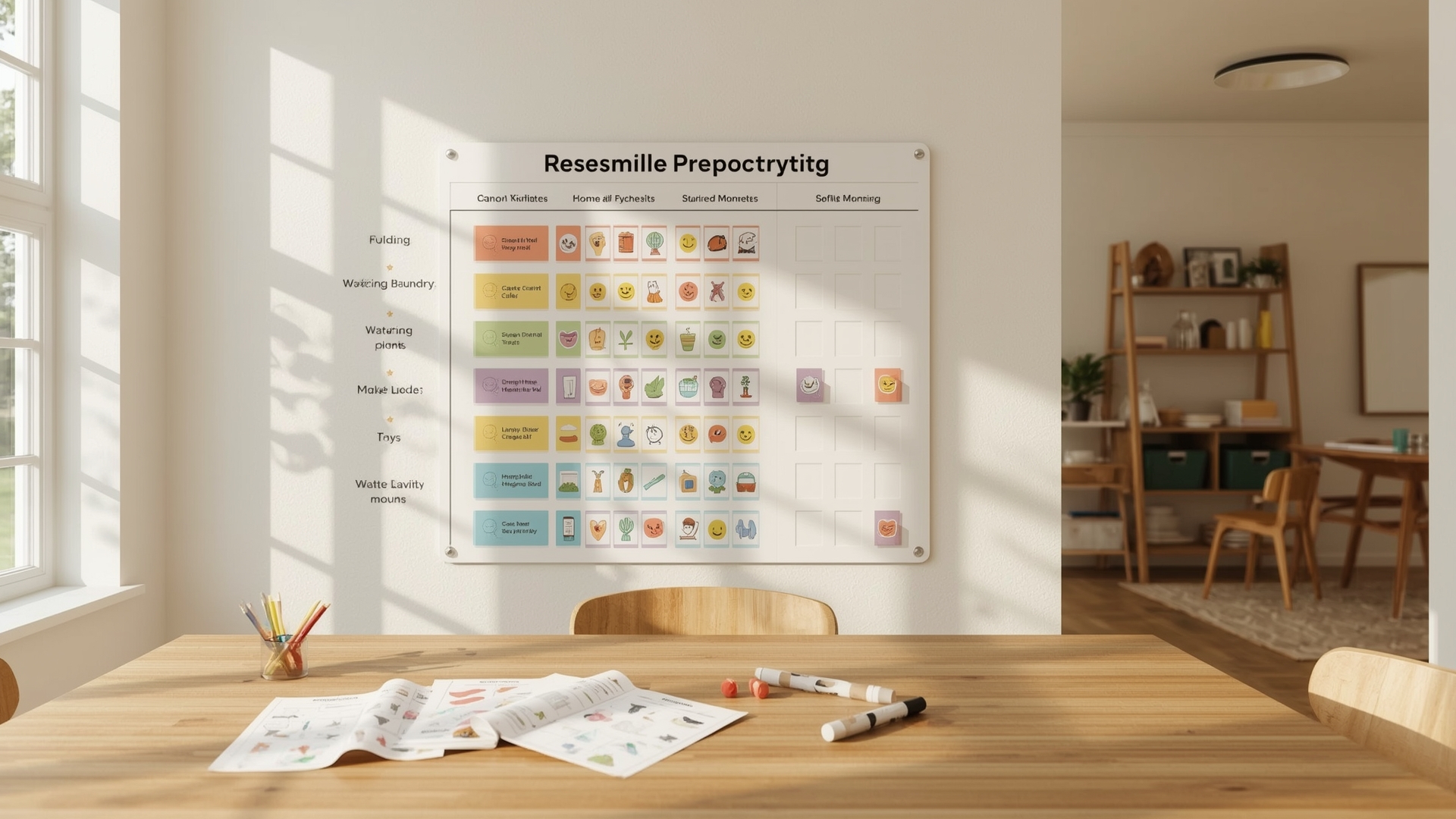
Most kids in the 4 to 5 age range are pre-readers or early readers. A picture-based chore chart replaces words with images of each task. The child looks at the chart, sees a picture of a made bed, and knows exactly what’s expected without needing to read anything.
Magnetic picture charts are especially popular at this age. Each task has a tile that flips or moves when it’s completed, giving kids a tactile sense of accomplishment. That physical interaction reinforces the habit loop: see the task, do the task, mark it done.
Setting Up a Morning and Evening Chore Routine
At ages 4 to 5, splitting chores into morning and evening blocks works better than a long list. A morning block might include making the bed and putting pajamas away. An evening block might include picking up toys and putting shoes by the door.
Keeping each block to three tasks or fewer prevents overwhelm. Short, predictable routines become automatic faster than long, variable ones.
What Chores Should a 6 to 8 Year Old Be Doing?
Quick Answer: Kids ages 6 to 8 can handle multi-step tasks: loading the dishwasher, folding and putting away laundry, vacuuming a single room, making a simple breakfast, and taking out recycling. Checklists with checkboxes replace picture charts at this stage.
Moving From Picture Charts to Checkbox Checklists
By age 6, most kids can read well enough to use a word-based checklist. The transition from picture charts to checkbox checklists is a natural developmental milestone. It also feels like a promotion to most kids, which motivates them to take the new version seriously.
Printed weekly chore charts with checkboxes work well at this age. The child checks off each task as they finish it, and you review together at the end of the week. That review moment is important. It’s not about punishment for missed tasks. It’s a weekly habit of reflection.
Age 6 to 8 Chore Chart EAV Table
| Chore | Frequency | Time Required | Skill Level | Independence Level |
|---|---|---|---|---|
| Load the dishwasher | Daily | 5 to 10 minutes | Medium | Mostly independent |
| Fold laundry | 1 to 2x per week | 10 to 15 minutes | Medium | Mostly independent |
| Vacuum one room | Weekly | 10 to 15 minutes | Medium | Independent with check-in |
| Make a simple breakfast | Daily (optional) | 5 to 10 minutes | Low to medium | Supervision first 5 times |
| Take out recycling | Weekly | 3 to 5 minutes | Low | Fully independent |
| Clean bathroom sink | Weekly | 5 minutes | Low | Fully independent |
What Chores Are Appropriate for Kids Ages 9 to 11?
Quick Answer: Kids ages 9 to 11 can handle real household responsibilities: washing dishes by hand, mopping floors, preparing simple meals, doing a full laundry cycle, cleaning bathrooms, and yard work like raking leaves. Weekly chore charts with daily and weekly columns work best.
Daily vs. Weekly Chores at This Stage
By age 9, kids can manage a two-column chore chart that separates daily tasks from weekly ones. Daily tasks include things like making their bed and tidying their room. Weekly tasks include deeper responsibilities like cleaning a bathroom or mowing part of the lawn.
The two-column format teaches time management. Kids start to understand that some things need attention every day, while others follow a weekly rhythm. That’s a genuinely useful life skill that transfers directly into adult routines.
Introducing Earned Privileges and Allowance
At this age, allowance tied to chore completion becomes a meaningful motivator. A consistent structure works better than a vague promise. For example, five completed daily chores each week might earn $3 to $5, while completed weekly chores might earn an additional $2 to $3.
Privilege-based rewards also work well here. Completing all assigned chores by Saturday morning could unlock screen time, a sleepover, or a chosen family activity. The key is making the reward predictable and the requirement specific.
How Should Chore Charts Change for Tweens Ages 12 to 14?
Quick Answer: Tweens ages 12 to 14 benefit from ownership-based chore systems rather than rigid daily lists. Assign areas of the home instead of individual tasks. Let them decide when and how to handle their assigned zone, with a weekly check standard.
Zone-Based Chore Systems for Tweens
A zone-based system assigns a section of the home to a tween. Instead of a list of tasks, they’re responsible for keeping their zone clean and functional. Their zone might include the main bathroom, their bedroom, and vacuuming the hallway.
This approach mirrors how adult households actually function. It builds executive function (the ability to plan and self-manage tasks) because the child has to figure out the sequence themselves instead of following a checklist.
Tween Chore Zone Chart: Sample Structure
| Zone | Assigned Tasks | Check Frequency | Typical Time Per Week |
|---|---|---|---|
| Main bathroom | Toilet, sink, mirror, floor | Weekly review | 20 to 30 minutes |
| Own bedroom | Vacuuming, dusting, laundry | Weekly review | 15 to 25 minutes |
| Kitchen shared duty | Dishes, counters, stovetop | Daily rotation | 10 to 15 minutes/day |
| Yard zone | Mowing, raking, weeding | Bi-weekly | 30 to 45 minutes |
What Chores Should Teenagers Ages 15 to 18 Handle?
Quick Answer: Teenagers can handle adult-level household tasks: cooking full meals, doing all their own laundry, deep-cleaning bathrooms and kitchens, grocery shopping with a list, yard maintenance, and basic home repairs like replacing light bulbs or unclogging drains.
Building Life Skills Through Teen Chores
Teen chores should be framed as life skill preparation, not punishment. A 16-year-old who knows how to do laundry, cook three basic meals, and clean a bathroom is genuinely more prepared for college or independent living than one who doesn’t.
Having a direct conversation about this framing helps. “I’m not asking you to cook dinner because I’m lazy. I’m asking because you need to know how before you move out.” That reframe works better than an authority-based approach for most teenagers.
Teen Chore EAV Table: Life Skill Tasks
| Chore | Life Skill Category | Frequency | Time Required | Independence Level |
|---|---|---|---|---|
| Cook a full meal | Nutrition and independence | 1 to 2x per week | 30 to 60 minutes | Fully independent |
| Complete laundry cycle | Self-care | Weekly | 90 minutes total | Fully independent |
| Deep clean bathroom | Hygiene and home maintenance | Weekly | 20 to 30 minutes | Fully independent |
| Grocery shopping with list | Planning and budgeting | Monthly or as needed | 30 to 45 minutes | Supervised first 2 to 3 times |
| Mow lawn or yard work | Property maintenance | Bi-weekly (seasonal) | 30 to 60 minutes | Fully independent |
| Basic home repairs | Problem-solving | As needed | 5 to 30 minutes | Guided first time |
How Do You Set Up a Reward System That Actually Works?

Quick Answer: The most effective reward systems are immediate, predictable, and age-appropriate. Sticker charts work for ages 2 to 7. Allowance tied to task completion works for ages 6 to 14. Privilege-based rewards (screen time, outings) work across all ages, especially for tweens and teens.
Sticker Charts for Young Kids (Ages 2 to 7)
Sticker charts work because young children are highly motivated by visual progress. Each completed chore earns a sticker. A full row of stickers earns a small reward, like choosing the bedtime story, picking a movie, or a trip to the dollar store.
The reward doesn’t need to be expensive or elaborate. At this age, novelty and parent attention are the real rewards. The sticker is just the visible marker of that recognition.
Allowance Systems for School-Age Kids (Ages 6 to 14)
Tying allowance to chore completion teaches the foundational concept that work has value. A simple structure works best. Completed daily chores earn a set daily amount. Completed weekly chores add a weekly bonus.
A common and effective structure is $0.50 to $1.00 per year of age per week. A 10-year-old earns $5 to $10 per week for completing their assigned chores. Missed chores result in a partial payment, not a full forfeit, which keeps motivation from collapsing after one bad week.
Privilege-Based Rewards for Tweens and Teens
For older kids, screen time, social privileges, and freedom work better than money alone. Completing all assigned chores by a set time might unlock an extra hour of gaming, permission to have a friend over, or use of the car.
The privilege should feel proportional to the effort. Small weekly chores unlock small daily privileges. Bigger responsibilities, like cleaning the whole kitchen, can unlock bigger perks. The key is making the system clear and consistent before the week starts.
What Makes a Printable Chore Chart Template Effective?
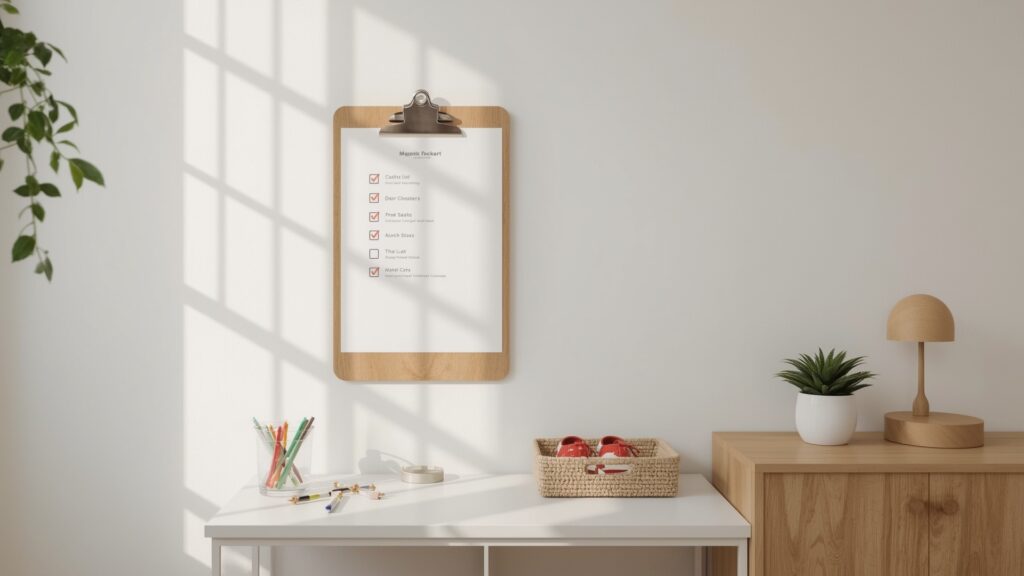
Quick Answer: An effective printable chore chart template includes the child’s name, a list of tasks grouped by day or frequency, checkboxes or completion markers, and a reward tracker. Age-appropriate visual design (pictures for young kids, clean text for older kids) makes charts easier to use.
Key Design Elements by Age Group
A chart for a toddler needs large pictures, bright colors, and very few words. A chart for a 10-year-old needs organized columns, clear checkboxes, and room to track weekly progress. A chart for a 15-year-old can be a simple text-based weekly planner.
Laminating printable charts and using dry-erase markers lets kids check tasks off and reset weekly without printing a new sheet. This small step dramatically increases how long a chart gets used before it becomes clutter.
Daily vs. Weekly Chart Formats
Daily chore charts list tasks by day of the week. They work well for kids ages 4 to 10 who need a concrete daily structure. Weekly chore charts list all tasks once and let kids complete them any time within the week. These work better for ages 11 and up, who can self-manage their schedule.
How Do You Get Kids to Actually Stick With Their Chores?
Quick Answer: Consistency is the only real strategy. Introduce chores at a calm moment (not mid-conflict), do the first few tasks alongside your child, keep the reward system simple, review the chart together weekly, and avoid threatening punishments that override the reward structure.
Common Mistakes That Undermine Chore Charts
The most common mistake is making the first week’s expectations too high. A toddler assigned five chores will fail and learn that chore charts lead to failure. Start with one or two tasks, build success, then add more.
Another common mistake is inconsistent follow-through. If chores go unreviewed for two weeks, kids learn the chart doesn’t matter. The weekly check-in, even a three-minute conversation, signals that the chart is real.
What to Do When a Child Refuses Chores
Refusal is normal and shouldn’t derail the whole system. First, check whether the task is genuinely too hard for their age. If not, stay calm and give them a choice between two options: “Do you want to do the dishes now or after your snack?” Autonomy within a structure reduces resistance dramatically.
Avoid turning chore refusal into a power struggle. Natural consequences, like missing a sticker or not earning their allowance that week, are more effective than escalating conflict. The chart does the disciplining, not you.
Chore Chart by Age: Quick Reference Summary
Quick Answer: Ages 2 to 3 do one-step tasks. Ages 4 to 5 use picture charts. Ages 6 to 8 shift to checkboxes. Ages 9 to 11 add daily and weekly columns. Ages 12 to 14 use zone-based systems. Ages 15 to 18 handle adult tasks independently.
| Age Group | Chart Type | Task Complexity | Best Reward System | Weekly Chore Time |
|---|---|---|---|---|
| Ages 2 to 3 | Verbal reminder + parent praise | 1-step tasks | Praise and stickers | 5 to 10 minutes |
| Ages 4 to 5 | Picture-based magnetic chart | 1 to 2-step tasks | Sticker chart reward | 10 to 20 minutes |
| Ages 6 to 8 | Printed checkbox checklist | 2 to 3-step tasks | Small allowance + stickers | 20 to 40 minutes |
| Ages 9 to 11 | Daily + weekly two-column chart | Multi-step household tasks | Allowance + privileges | 45 to 75 minutes |
| Ages 12 to 14 | Zone-based ownership chart | Full area responsibility | Privileges + allowance | 60 to 120 minutes |
| Ages 15 to 18 | Weekly planner or shared family list | Adult-level tasks | Privilege-based (car, curfew) | 90 to 150 minutes |
Frequently Asked Questions
At what age should you start giving kids chores?
You can introduce simple chores as early as age 2. At that age, tasks should be one-step actions like putting a toy in a bin. The goal at this stage is habit formation, not a cleaner house. Starting early makes chores feel normal rather than like a new imposition later on.
Should chores be tied to allowance or kept separate?
Both approaches work, but they teach different things. Tying allowance to chores teaches that work has financial value, which is useful for ages 6 and up. Keeping them separate teaches that some responsibilities exist because you’re part of the family, not for payment. Many families use a hybrid: some chores are always required, and extra chores can earn money.
How many chores should a child have per day?
A good rule is one to two chores per day for ages 2 to 5, two to three for ages 6 to 10, and three to five for ages 11 and up. The total time spent should feel manageable, not punishing. For most school-age kids, 15 to 30 minutes of chores per day is a reasonable range.
What is a picture-based chore chart and who needs one?
A picture-based chore chart uses images instead of words to show each assigned task. It’s designed for pre-readers and early readers, typically ages 2 to 6. Each picture shows exactly what the task looks like when done, so the child doesn’t need a parent to explain the list every day.
How do you make a chore chart that kids won’t ignore after the first week?
The biggest predictor of chart longevity is the weekly review. If you check in with your child every week, the chart stays alive. Also, start simple and add tasks gradually. Charts fail most often when they’re too ambitious on day one. Build success first, then raise the bar.
Can chore charts work for kids with ADHD or sensory sensitivities?
Yes, but the structure needs adjustments. Kids with ADHD benefit from shorter task lists, immediate rewards rather than delayed ones, and visual timers alongside the chart. For kids with sensory sensitivities, avoid assigning chores that involve textures or sounds they find distressing. Occupational therapists often recommend task cards with pictures and step-by-step breakdowns for these children.