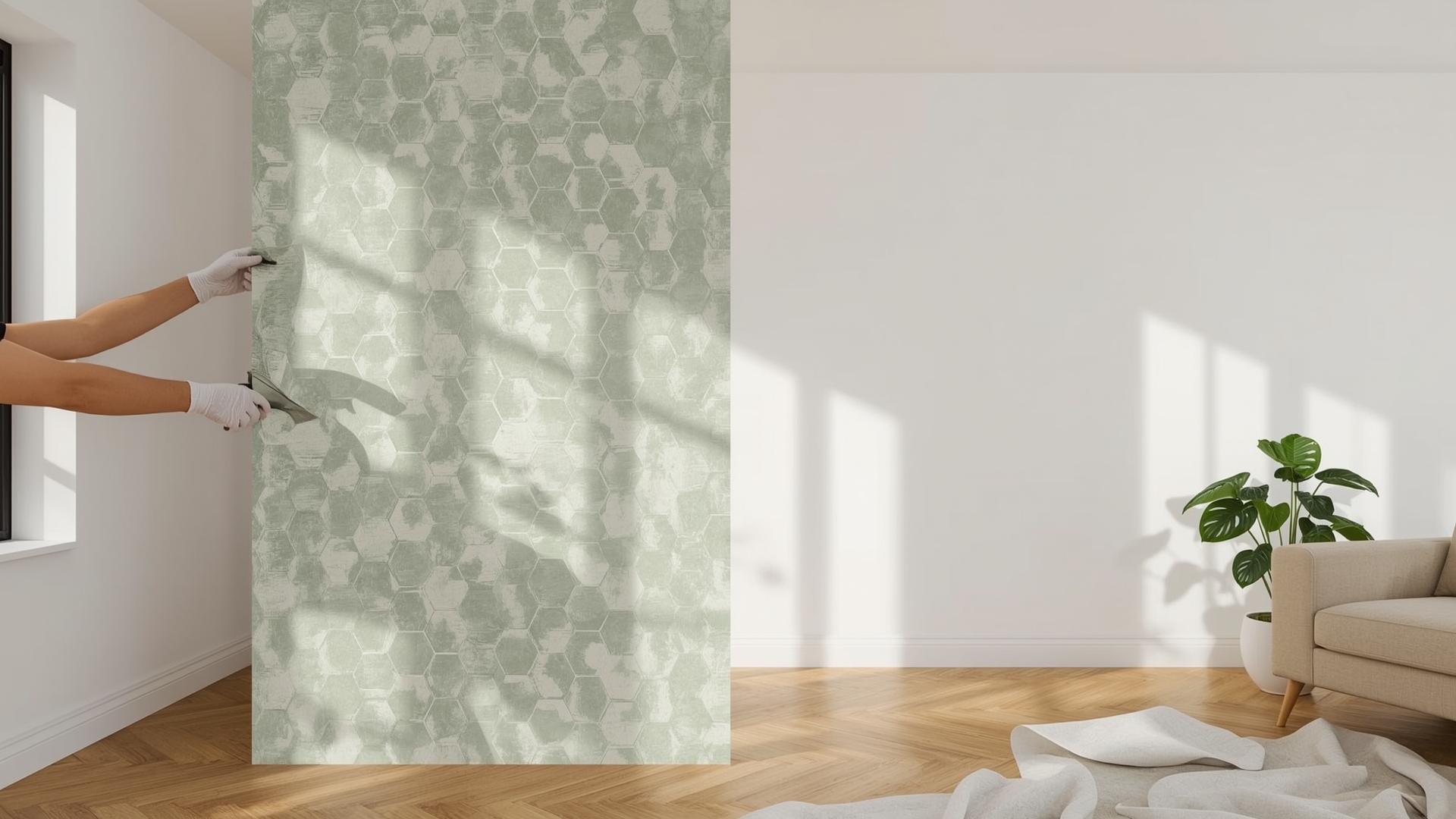
Renting a home means living with white walls, beige paint, and zero say in how the space looks. But peel and stick wallpaper changes that. It goes up in an afternoon, comes down without damage, and can completely transform a room. No landlord permission slips required.
This guide covers everything renters need to know: the best brands, which rooms work best, how to apply it correctly, and how to remove it without losing your security deposit.
Key Takeaways
- Peel and stick wallpaper is renter-friendly because it removes cleanly from most painted walls without damage.
- Surface prep is the most important step — clean, smooth, fully cured walls make the difference between clean removal and peeled paint.
- Not all brands perform equally — Tempaper, Chasing Paper, and NuWallpaper each have different price points, pattern ranges, and removal track records.
- Accent walls outperform full-room coverage for renters — less material, less risk, more visual impact.
- Humidity-prone rooms like bathrooms require moisture-resistant options — standard wallpaper may not hold in steamy environments.
- The right removal technique matters — slow, low-angle peeling at room temperature prevents wall damage.
What Is Peel and Stick Wallpaper and How Does It Work?
Quick Answer: Peel and stick wallpaper is a self-adhesive wall covering with a removable backing. You peel off the backing and press the panel to the wall. Most versions use a pressure-sensitive adhesive that grips smooth, painted surfaces without permanent bonding.
Traditional wallpaper uses paste or glue that soaks into drywall. Removing it later means steaming, scraping, and sometimes damaging the wall underneath. Peel and stick versions work differently. The adhesive sits on the surface of the wall rather than absorbing into it.
Most peel and stick wallpaper is made from vinyl, fabric, or non-woven materials. The adhesive layer is usually acrylic-based, which grips flat surfaces firmly but releases cleanly when pulled back slowly at a low angle.
The key limitation is surface type. These products work best on smooth, flat, fully cured paint (usually eggshell or semi-gloss). Textured walls, matte paint, and fresh paint (less than 30 days old) can all cause adhesion problems or pull paint on removal.
Which Peel and Stick Wallpaper Brands Are Best for Renters?
Quick Answer: Tempaper, Chasing Paper, and NuWallpaper are the top brands for renters. Tempaper is the most renter-tested for clean removal. Chasing Paper offers the widest design range. NuWallpaper is the most affordable entry point for budget-conscious renters.
Brand Comparison: Peel and Stick Wallpaper for Renters
| Brand | Price Per Roll | Roll Coverage | Material | Removal Track Record | Best For |
|---|---|---|---|---|---|
| Tempaper | $45–$75 | 56 sq ft | Vinyl | Excellent (rental-tested) | Long-term renters, premium looks |
| Chasing Paper | $48–$65 | 24–56 sq ft | Non-woven fabric | Very Good | Design variety, statement walls |
| NuWallpaper | $20–$40 | 20.5 sq ft | PVC vinyl | Good (on smooth walls) | Budget renters, short-term leases |
| Rifle Paper Co. x Chasing Paper | $65–$85 | 24 sq ft | Non-woven fabric | Very Good | Botanical, floral, illustrated styles |
| Wallshoppe | $55–$90 | 24–56 sq ft | Fabric-based | Very Good | Renters wanting custom sizing options |
| Target Threshold / Opalhouse | $18–$35 | 20.5 sq ft | PVC vinyl | Moderate | Short leases, low-commitment testing |
One thing to notice: price per roll doesn’t tell the full story. A cheaper roll with smaller coverage can end up costing more per square foot than a premium brand. Always calculate price per square foot before buying.
How Do You Prepare Your Walls Before Applying Peel and Stick Wallpaper?
Quick Answer: Clean walls with a mild soap solution and let them dry completely — at least 24 hours. Remove dust, grease, and oils. Check that paint is smooth, fully cured (30+ days old), and not flaking. Skip textured or matte-painted walls if possible.
Wall prep is the most skipped step and the most important one. Adhesive needs a clean, smooth surface to bond properly. Dust, cooking grease, and even skin oils left from leaning on walls can all reduce grip and cause panels to peel at the edges.
Wall Prep Checklist for Renters
- Wipe walls with a damp cloth and mild dish soap
- Rinse with a clean damp cloth and let dry fully (24 hours minimum)
- Test a small strip in a hidden corner before covering the full wall
- Fill any holes with spackling compound and sand smooth before applying
- Confirm paint is at least 30 days cured (freshly painted walls trap moisture under adhesive)
- Avoid walls with matte or flat paint finishes — adhesive may pull paint on removal
- Check for existing wallpaper underneath: peel and stick won’t bond well over it
What Paint Finishes Work Best?
Eggshell and semi-gloss finishes are the sweet spot for peel and stick wallpaper. They’re smooth enough to hold adhesive and durable enough to release it cleanly. Flat or matte finishes absorb adhesive differently and are more likely to lose paint during removal.
What Are the Best Rooms for Peel and Stick Wallpaper in a Rental?
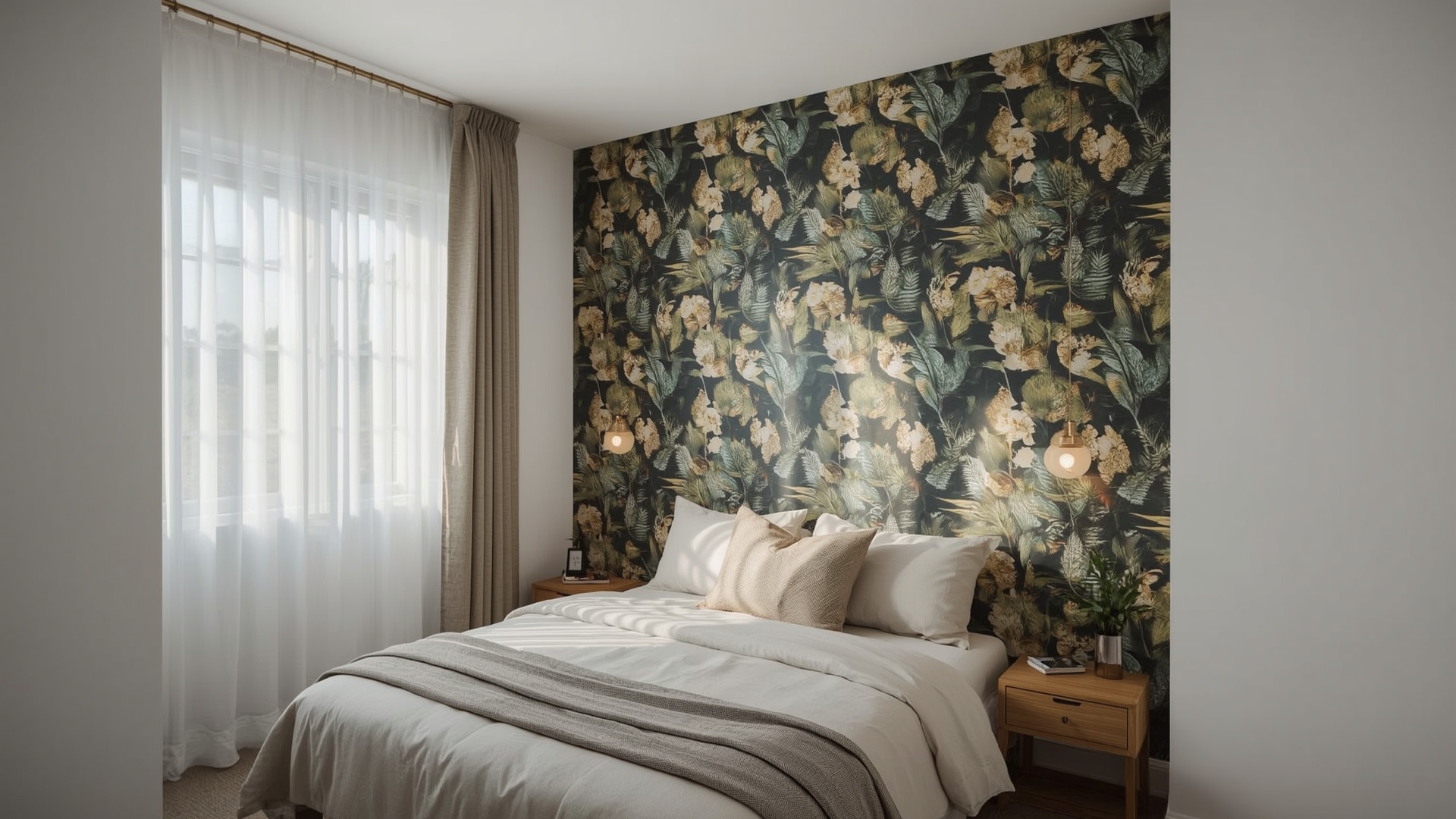
Quick Answer: Bedrooms and living rooms give you the most visual impact with the least risk. Entryways and home offices are also excellent low-risk choices. Bathrooms require moisture-resistant products. Kitchens near the stove or sink need extra surface prep and heat-tolerant options.
Bedroom Accent Wall Ideas
The wall behind your bed (called the headboard wall) is the single best place to use peel and stick wallpaper in a rental bedroom. It creates a focal point without covering all four walls. One roll often covers this area depending on bed size and ceiling height.
Popular patterns for rental bedrooms include geometric prints, linen textures, subtle botanicals, and moody dark tones like deep navy or forest green. These create a furnished, curated look that photographs well and feels intentional.
Living Room Statement Wall Ideas
In living rooms, the wall behind your sofa or TV unit works the same way as the headboard wall in a bedroom. Pick one wall and treat it as a canvas. Grasscloth-texture prints, large-scale botanicals, and abstract patterns all work well at this scale.
Avoid covering all four walls in a living room. Beyond cost, full coverage increases removal time and the chance of adhesive issues at seams.
Entryway and Hallway Ideas
Entryways are low-risk zones for peel and stick wallpaper. The surface area is small, humidity is usually low, and the visual payoff is high. A bold print or vintage tile pattern in a 4-foot wide entryway can set the entire tone of your apartment.
Narrow hallways work well with vertical stripe patterns or light-colored prints that make the space feel wider.
Home Office Wall Ideas
If you work from home and appear on video calls, the wall behind your desk is valuable real estate. A single panel or half-wall treatment creates a polished background without papering an entire room.
Textured prints, subtle geometric patterns, and architectural designs like brick or paneling work especially well in home office spaces.
Bathroom-Safe Peel and Stick Options
Bathrooms are the trickiest rooms for renters. Steam, humidity, and temperature swings all work against adhesive. Standard peel and stick wallpaper will often peel at the edges within weeks in a bathroom.
Look specifically for moisture-resistant or bathroom-rated options from brands like Tempaper or NuWallpaper. Apply to walls away from the shower or tub. Use a seam sealer along edges to help adhesive hold.
How Do You Apply Peel and Stick Wallpaper Without Bubbles or Gaps?
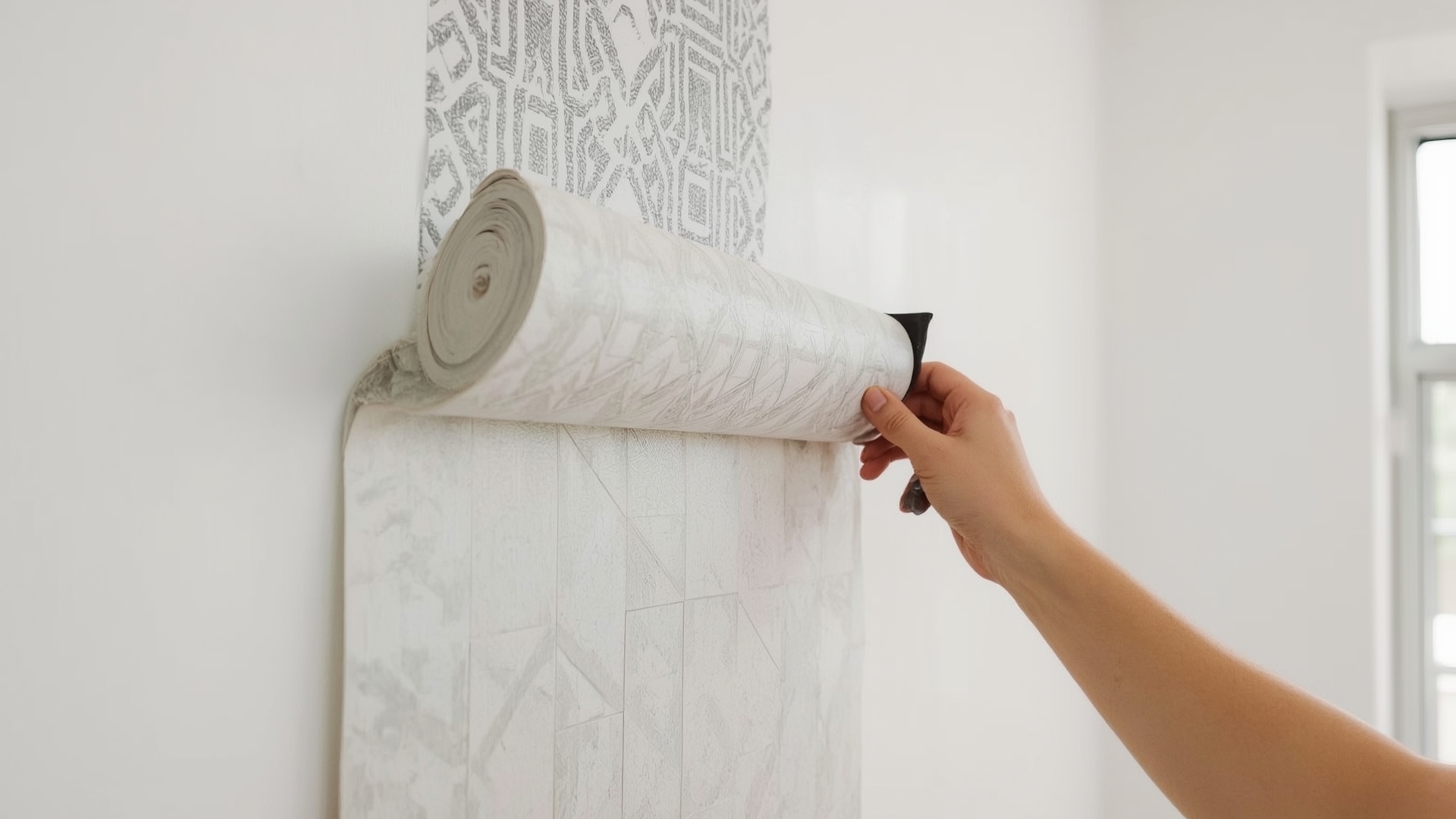
Quick Answer: Start from the top and work down in sections. Use a smoothing tool or credit card to press out air as you go. Align each panel carefully with the one before it, matching the pattern repeat. Work slowly — you can reposition within the first few seconds of application.
Step-by-Step Application for Renters
- Measure your wall and cut panels with 2–3 inches of extra length at top and bottom for trimming.
- Mark a plumb line (a straight vertical line using a level) — walls in older apartments are rarely perfectly straight.
- Peel the backing in sections — peel 6–8 inches at a time rather than all at once. This gives you control.
- Align the top edge first and press lightly before committing. You can reposition at this stage.
- Smooth downward using a wallpaper smoother or the flat edge of a credit card. Work from center to edges to push air out.
- Match the pattern on each new panel before pressing it fully against the wall.
- Trim excess at the top, bottom, and around outlets using a sharp craft knife and a metal ruler.
- Press seams firmly and run a seam roller along each join to prevent lifting.
Common Application Mistakes Renters Make
- Peeling the entire backing at once — causes panels to fold onto themselves
- Skipping the plumb line — crooked first panel means every panel after it is crooked
- Pressing too hard too fast — you lose the ability to reposition
- Ignoring pattern repeats — mismatched patterns look unprofessional at seams
- Applying in cold rooms — adhesive performs best between 60°F and 80°F (15°C–27°C)
What Pattern Styles Work Best in Rental Apartments?
Quick Answer: Botanical prints, geometric patterns, grasscloth textures, and classic stripes are the most versatile choices for rental spaces. They work across furniture styles, photograph well, and suit multiple room types. Bold maximalist prints work best as single accent walls rather than full-room coverage.
Peel and Stick Wallpaper Styles by Room and Aesthetic
| Pattern Style | Best Room | Works With | Risk Level for Renters | Approximate Pattern Repeat |
|---|---|---|---|---|
| Botanical / Floral | Bedroom, living room | Boho, cottagecore, eclectic | Low to medium | 12–24 inches |
| Geometric | Home office, entryway | Modern, mid-century, minimalist | Low | 6–18 inches |
| Grasscloth Texture | Living room, dining area | Natural, coastal, warm neutral styles | Very low | No repeat (texture) |
| Maximalist Print | Accent wall only | Eclectic, maximalist, bold interiors | Medium (limit to one wall) | 18–36 inches |
| Classic Stripe | Hallway, nursery, office | Traditional, transitional, coastal | Very low | 2–8 inches |
| Tile / Mosaic | Kitchen backsplash, bathroom | Mediterranean, boho, modern | Medium (humidity caution) | 6–12 inches |
How Much Peel and Stick Wallpaper Do You Need for a Room?
Quick Answer: Measure wall height times wall width in square feet. Add 10–15% extra for pattern matching and trimming. A standard accent wall behind a queen bed is roughly 60–80 square feet. Always round up to the next full roll.
Quick Square Footage Reference for Common Accent Walls
| Wall Location | Approximate Width | Standard Ceiling Height | Estimated Square Footage | Rolls Needed (56 sq ft/roll) |
|---|---|---|---|---|
| Queen bed headboard wall | 10–12 ft | 8 ft | 80–96 sq ft | 2 rolls |
| King bed headboard wall | 12–14 ft | 8 ft | 96–112 sq ft | 2 rolls |
| Apartment entryway | 4–6 ft | 8 ft | 32–48 sq ft | 1 roll |
| Sofa/TV accent wall | 10–14 ft | 8 ft | 80–112 sq ft | 2 rolls |
| Home office video wall | 5–8 ft | 8 ft | 40–64 sq ft | 1–2 rolls |
How Do You Remove Peel and Stick Wallpaper Without Damaging Walls?
Quick Answer: Start at a corner and peel slowly at a 15-degree angle close to the wall. Work in sections. Use a hairdryer on low heat to warm stubborn sections — heat softens the adhesive. Pull parallel to the wall surface, not outward, to prevent paint from lifting.
The removal angle matters more than most people realize. Pulling outward at a 90-degree angle puts stress directly on the paint behind the adhesive. Pulling at a low, flat angle distributes that force across the adhesive layer instead, which is what you want.
Step-by-Step Removal Process
- Start at a top corner and lift the panel edge with a fingernail or plastic putty knife
- Peel slowly at a 15–30 degree angle, moving in 2–3 inch sections
- If resistance is felt, use a hairdryer on low heat for 10–15 seconds to warm the adhesive
- Continue peeling slowly — never rip or pull fast
- After removing panels, check for any adhesive residue on the wall
- Remove residue with a soft cloth and mild adhesive remover like Goo Gone (diluted)
- Wipe down the wall with a clean damp cloth and let dry before move-out inspection
What to Do If Peel and Stick Wallpaper Takes Paint With It
If small areas of paint come off during removal, touch up with matching paint before your move-out inspection. Most landlords accept minor touch-up repairs without withholding the deposit. Document the original wall condition with photos before you ever apply wallpaper — this protects you if any dispute arises.
What Are Creative Ways Renters Use Peel and Stick Wallpaper Beyond Full Walls?
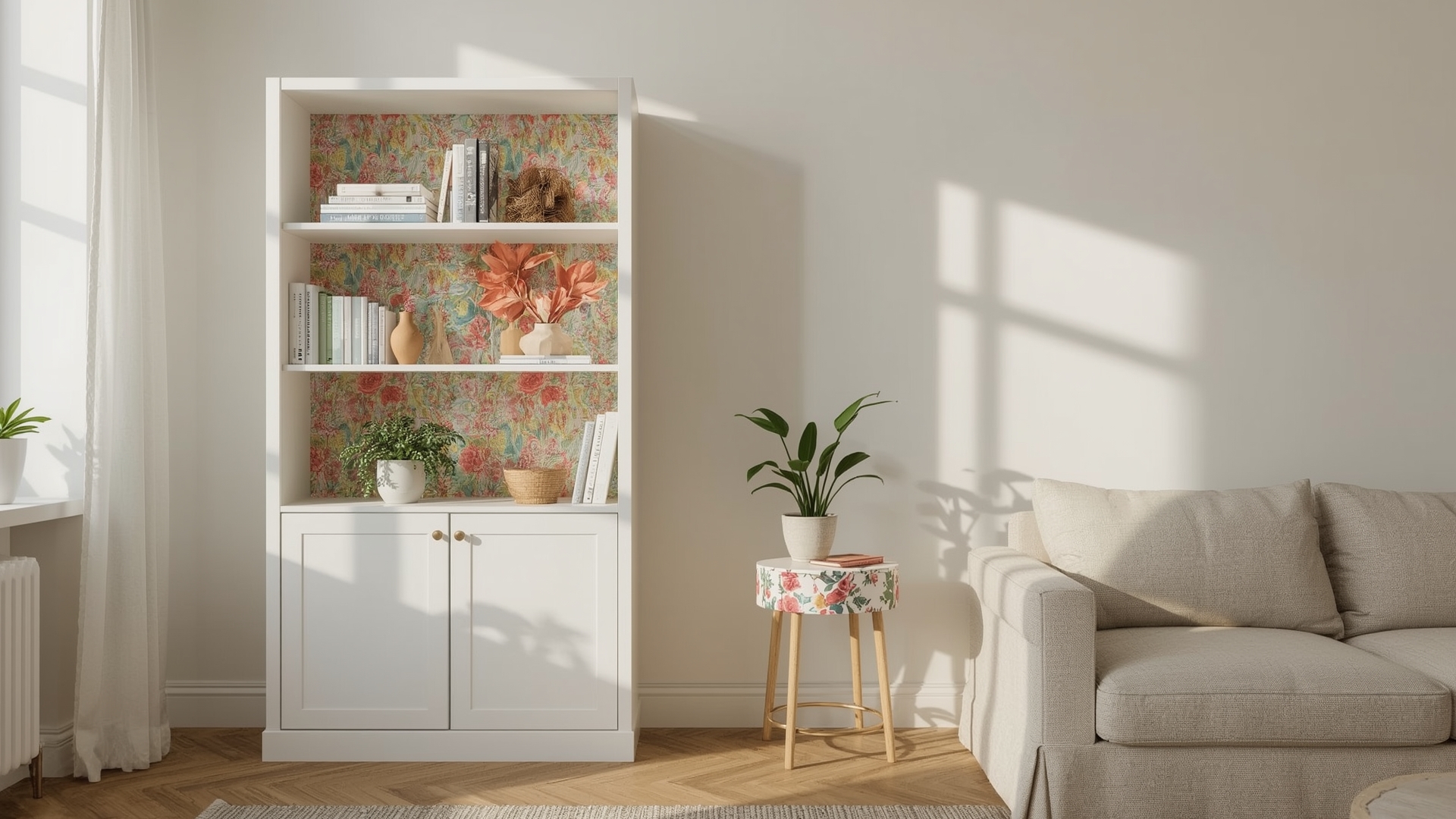
Quick Answer: Renters use peel and stick wallpaper to line the inside of bookshelves, cover the backs of cabinets, create faux headboards, decorate stair risers, and add visual interest to ceiling panels. These small-scale uses reduce risk and material cost while still transforming a space.
Unexpected Rental-Friendly Uses
- Bookshelf backs: Cut strips to fit the back interior of a bookcase. The effect shows between books and adds depth without touching any walls.
- Drawer and shelf liner: Line kitchen cabinet shelves or dresser drawers. This is fully landlord-safe since it touches no walls.
- Stair risers: Apply cut strips to the vertical face of each stair step. Tile prints and geometric patterns work especially well here.
- Ceiling medallion effect: Apply a geometric or botanical panel section to the ceiling above a bed or dining area to create a focal point overhead.
- Faux headboard panel: Apply a rectangular section of wallpaper directly behind the bed, framed by painted or taped borders, to mimic an upholstered headboard.
- Furniture refresh: Apply peel and stick to the flat surfaces of a basic dresser drawer front or side table for a quick furniture makeover that also removes cleanly.
How Do You Choose the Right Peel and Stick Wallpaper for Your Rental?
Quick Answer: Match the product to your wall surface, lease length, and room environment. Short leases call for lower-cost options on smooth walls. Long leases justify premium brands with better removal records. Humid rooms need moisture-rated products. Always test a small sample panel first.
Decision Checklist for Renters
| Factor | What to Check | Best Choice |
|---|---|---|
| Wall surface | Smooth vs. textured; paint finish type | Eggshell or semi-gloss painted drywall |
| Lease length | Under 12 months vs. multi-year | Budget brand for short; premium for long |
| Room humidity | Bathroom, kitchen, basement | Moisture-resistant rated product |
| Coverage area | Accent wall vs. full room | Accent wall for renters (lower risk) |
| Pattern repeat | Large repeat = more material waste | Small or no repeat for tight budgets |
| Removal history | How well does this brand release? | Tempaper or Chasing Paper for safest removal |
Frequently Asked Questions About Peel and Stick Wallpaper for Renters
Will peel and stick wallpaper damage apartment walls?
Most peel and stick wallpaper removes cleanly from smooth, cured painted walls. The biggest risk is applying it to matte or flat paint, or to freshly painted walls that haven’t cured. Test a small section in a hidden spot before applying to the full wall.
How long does peel and stick wallpaper stay up?
Properly applied peel and stick wallpaper can last 3–5 years on smooth painted walls. Humidity, temperature swings, and poor surface prep all shorten that window. Premium brands like Tempaper are designed to hold for the full duration of a typical lease.
Can you reuse peel and stick wallpaper after removing it?
Usually not. The adhesive loses most of its grip during removal. Some fabric-based products hold a small amount of tackiness after peeling, but reliable re-adhesion isn’t something you can count on. Budget for new material at each rental.
Does peel and stick wallpaper work on textured walls?
Standard products don’t adhere well to textured walls like orange peel or knockdown finishes. The adhesive only contacts the high points of the texture, which means bubbles, lifting edges, and poor adhesion overall. Some brands sell thicker vinyl options designed for light texture — check product specs before buying.
Can you put peel and stick wallpaper in a bathroom?
Yes, but only with moisture-resistant or bathroom-rated products. Standard wallpaper will peel at the seams within weeks in a steamy bathroom. Apply to walls away from the direct shower zone, and use a seam sealer along edges for longer hold.
How do you get peel and stick wallpaper to stick to a wall better?
Clean walls thoroughly with soap and water, then wait a full 24 hours before applying. Room temperature should be between 60°F and 80°F during application. Use a seam roller along edges after pressing each panel. Applying gentle pressure along the full panel with a smoothing tool also improves adhesion.