Family homes run out of space fast. Between homework stations, overnight guests, game nights, and daily meals, every room has to work harder than it was designed to. Multi-function furniture — pieces that serve two or more purposes — solves this without requiring you to move to a bigger house.
The best multi-function pieces don’t just save space. They reduce clutter, lower your total furniture cost, and make your home more adaptable as your family grows and changes. This guide covers every category worth knowing about, with real specs and honest comparisons so you can buy with confidence.
Key Takeaways
- Sofa beds and convertible sofas are the highest-impact multi-function purchase for most families, replacing both a couch and a guest bed.
- Expandable dining tables handle everyday meals and large gatherings without occupying permanent extra space.
- Storage ottomans replace coffee tables, provide seating, and hide toys or blankets in one piece.
- Loft beds with desks are the single best space-saver for kids’ rooms, stacking sleeping and study zones vertically.
- Nesting tables and stackable seating give you flexible surfaces and extra seats that disappear when not needed.
- Material and weight capacity matter more than aesthetics when buying for active families — prioritize durability specs over looks.
What Is Multi-Function Furniture and Why Do Families Need It?
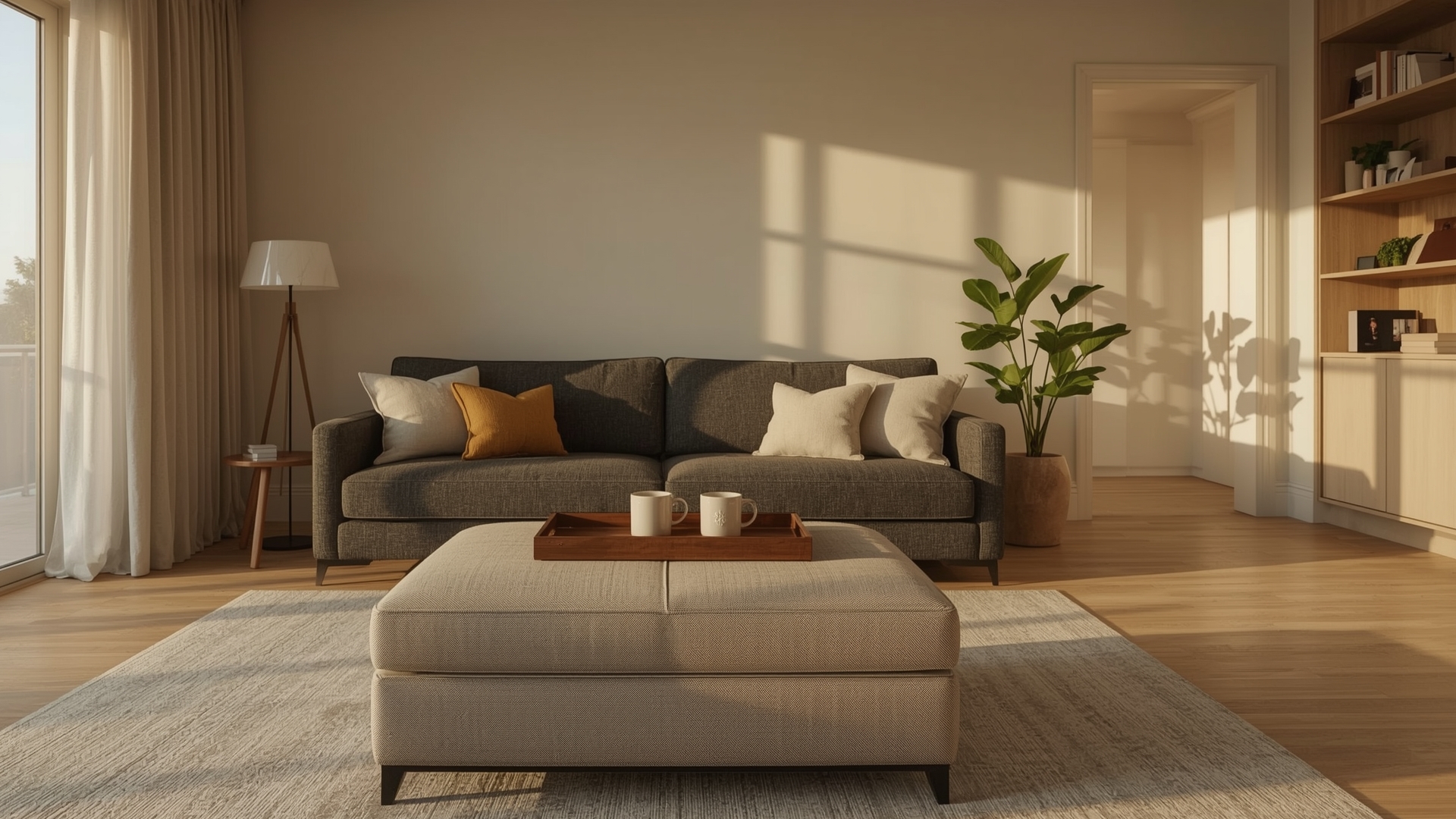
Quick Answer: Multi-function furniture is any piece that serves two or more purposes, like a sofa that converts to a bed or a dining table that expands for guests. Families need it to maximize limited square footage without buying separate pieces for every use.
Standard furniture is designed for one job. A couch is a couch. A coffee table is a coffee table. That works fine in large homes with dedicated rooms for every activity. Most family homes don’t have that luxury.
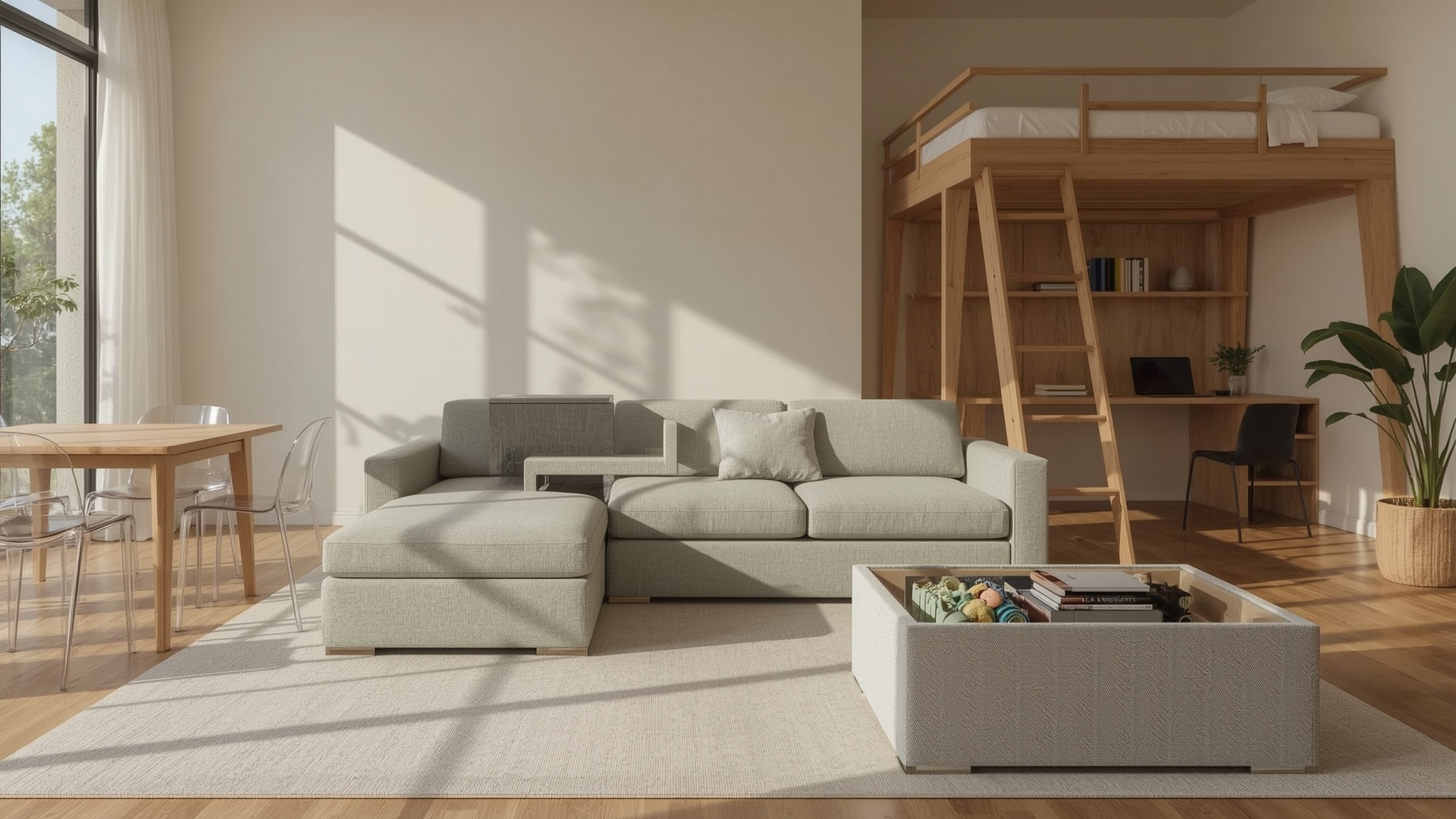
Multi-function furniture fills multiple roles simultaneously. A storage ottoman replaces your coffee table, adds seating, and hides clutter. A loft bed with a built-in desk turns a 10×10 kids’ room into a bedroom and study space. A wall bed with attached shelving becomes a full home office when the bed folds up.
The core benefit isn’t just space. It’s buying fewer total pieces, reducing visual clutter, and building a home that adapts to changing needs — a toddler’s playroom becomes a teen’s study space without a full furniture overhaul.
What Types of Convertible Sofas and Sofa Beds Work Best for Families?
Quick Answer: Pull-out sofa beds with innerspring mattresses offer the most comfortable sleeping surface. Futons work for kids or temporary guests. Sectional sleeper sofas maximize seating while hiding a queen-size bed. Choose based on how often you’ll use the sleeping function.
Sofa Bed vs. Futon: Which Should You Choose?
Sofa beds (also called pull-out sofas or sleeper sofas) have a folding metal frame with a mattress inside the sofa body. When folded out, they sit at standard bed height and sleep like a real bed. Futons have a simpler hinge mechanism — the back folds flat to create a sleeping surface.
Futons are lighter, cheaper, and easier to convert. They’re great for kids’ rooms and basement hangout spaces. Sofa beds are heavier, pricier, and slower to convert, but offer a significantly better sleeping experience for adult guests.
What Are the Specs to Compare When Buying a Sofa Bed?
| Type | Mattress Thickness | Sleeps | Conversion Time | Price Range | Best For |
|---|---|---|---|---|---|
| Pull-Out Sofa Bed (innerspring) | 4–6 inches | 2 adults | 2–3 minutes | $600–$2,500 | Frequent adult guests |
| Pull-Out Sofa Bed (memory foam) | 4–5 inches | 2 adults | 2–3 minutes | $900–$3,000 | Guest comfort priority |
| Futon (bifold) | 6–8 inches (cushion) | 1–2 people | 30–60 seconds | $150–$600 | Kids’ rooms, casual use |
| Sectional Sleeper Sofa | 4–5 inches | 2 adults | 3–5 minutes | $1,200–$4,000 | Large living rooms, families needing seating + guest bed |
| Loveseat Sleeper | 4 inches | 1 adult or 2 children | 2–3 minutes | $500–$1,500 | Small rooms, occasional use |
What Fabric Holds Up Best on a Family Sofa Bed?
Microfiber and performance fabrics (like Crypton or solution-dyed acrylic) resist stains, dry quickly, and handle high use without pilling. Avoid loose-weave fabrics like linen blends on pieces that see daily family traffic — they snag and wear faster.
Leather and faux leather are easy to wipe clean but can crack in dry climates and feel hot in summer. If you have young children, a performance fabric in a medium tone (charcoal, warm grey, dark olive) hides wear far better than light or pure white options.
How Do Expandable Dining Tables Serve Growing Families?
Quick Answer: Expandable dining tables use leaves — removable panels that insert into the table surface — to increase seating from 4 to 8 or more. They sit at a smaller everyday footprint and expand only when needed, freeing floor space in compact dining rooms.
What Are the Main Expansion Mechanisms?
There are four common expansion systems used in dining tables today:
- Butterfly leaf: A hidden leaf folds out from the center of the table. No separate storage needed. Fast to extend (under 30 seconds). Most convenient for everyday use.
- Drop-in leaf: A separate panel is stored elsewhere and inserted into a gap when the table halves are pulled apart. Slower to set up but allows larger expansions.
- Self-storing leaf: Similar to butterfly but the leaf stores inside the table base. Common in round and oval tables.
- Extension track (accordion-style): Multiple hidden leaves accordion outward. Found in larger farmhouse and pedestal styles. Allows expansion for 12+ people.
Expandable Dining Table Comparison by Size and Seating
| Table Style | Collapsed Size | Expanded Size | Seats (Collapsed) | Seats (Expanded) | Price Range |
|---|---|---|---|---|---|
| Round with self-storing leaf | 42″ diameter | 60″ oval | 4 | 6 | $400–$1,200 |
| Rectangular butterfly leaf | 60″ x 36″ | 78″ x 36″ | 6 | 8 | $500–$1,800 |
| Farmhouse with drop-in leaves (x2) | 72″ x 40″ | 108″ x 40″ | 6 | 10–12 | $800–$3,000 |
| Pedestal accordion extension | 48″ x 36″ | 96″ x 36″ | 4 | 8–10 | $900–$2,500 |
What Makes a Storage Ottoman a Smart Multi-Function Buy?
Quick Answer: A storage ottoman functions as a coffee table, extra seating, and hidden storage in one piece. Families use them to store blankets, toys, and remote controls. Tufted or hard-lid versions support a serving tray, making them practical coffee table replacements.
Storage Ottoman Specs Worth Checking
Before buying, look at three numbers: interior storage volume (measured in cubic feet or liters), weight capacity for seating, and lid hinge type. A piano hinge holds the lid at any angle. A simple hinge lets the lid fall fully open. For households with toddlers, a soft-close hinge prevents finger pinching.
| Ottoman Type | Storage Volume | Weight Capacity | Doubles As | Price Range |
|---|---|---|---|---|
| Square tufted (36″) | 2.5–3 cu ft | 250–300 lbs | Coffee table (with tray), seating | $120–$400 |
| Rectangular bench (48″) | 3–4 cu ft | 400–500 lbs | Bench seating, foot-of-bed storage | $150–$500 |
| Modular sectional set (4-piece) | 1–1.5 cu ft per cube | 200–250 lbs per cube | Individual seating, combined table surface | $200–$700 per set |
| Storage ottoman with pull-out tray | 2 cu ft | 300 lbs | Serving surface, seating, storage | $180–$600 |
How Do Loft Beds and Bunk Beds Maximize Kids’ Room Space?
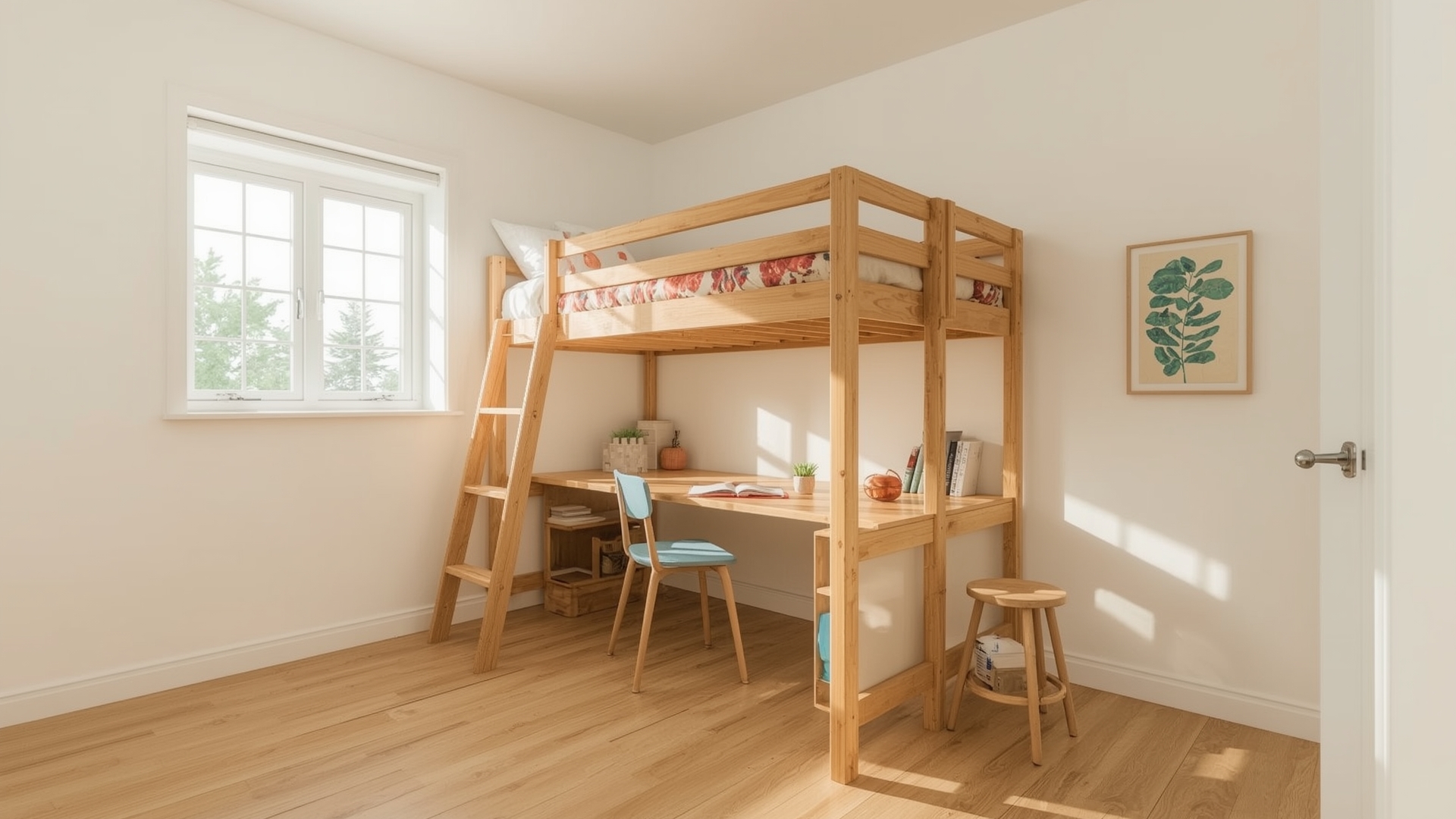
Quick Answer: Loft beds raise the sleeping surface to free the floor space below for a desk, dresser, or play area. Bunk beds stack two sleeping surfaces in the footprint of one. Both are ideal for rooms under 120 square feet shared by one or two children.
Loft Bed vs. Bunk Bed: Which Is Right for Your Kids?
A loft bed has one sleeping surface elevated at the top with open space underneath. That space fits a desk, bookshelf, dresser, or a small couch. It’s the better option for one child who needs a dedicated study area.
A bunk bed stacks two beds vertically. It’s ideal for two children sharing a room. Some bunk beds include a twin on top and a full on bottom (called a twin-over-full) to accommodate different ages or sizes.
Loft and Bunk Bed Specs by Configuration
| Configuration | Floor Footprint | Under-Bed Use | Recommended Age | Weight Capacity (Top) | Price Range |
|---|---|---|---|---|---|
| Twin loft with desk | 42″ x 80″ | Built-in desk + small shelf | 6+ years | 200–250 lbs | $300–$900 |
| Twin loft with futon | 42″ x 80″ | Futon sofa/bed | 8+ years | 200–250 lbs | $400–$1,100 |
| Twin-over-twin bunk | 42″ x 80″ | None (second bed) | 6+ (top); 3+ (bottom) | 150–200 lbs | $250–$800 |
| Twin-over-full bunk | 56″ x 80″ | Full bed on bottom | 6+ (top); any age (bottom) | 150–200 lbs (top) | $400–$1,200 |
| L-shaped bunk (triple) | 80″ x 80″ corner | Third sleeping surface or desk | 6+ years | 150–200 lbs per bunk | $700–$2,000 |
What Safety Standards Should Loft and Bunk Beds Meet?
In the United States, bunk beds must comply with ASTM F1427, the standard covering guardrail height, spacing, and ladder safety. The top bunk guardrail must be at least 5 inches above the mattress surface to prevent roll-off. Look for ASTM F1427 compliance listed in product specs before buying.
Guardrail openings should be no wider than 3.5 inches to prevent head entrapment for young children. Ladder rungs should be non-slip and spaced no more than 12 inches apart.
What Is a Murphy Bed and Is It Worth It for a Family Home?
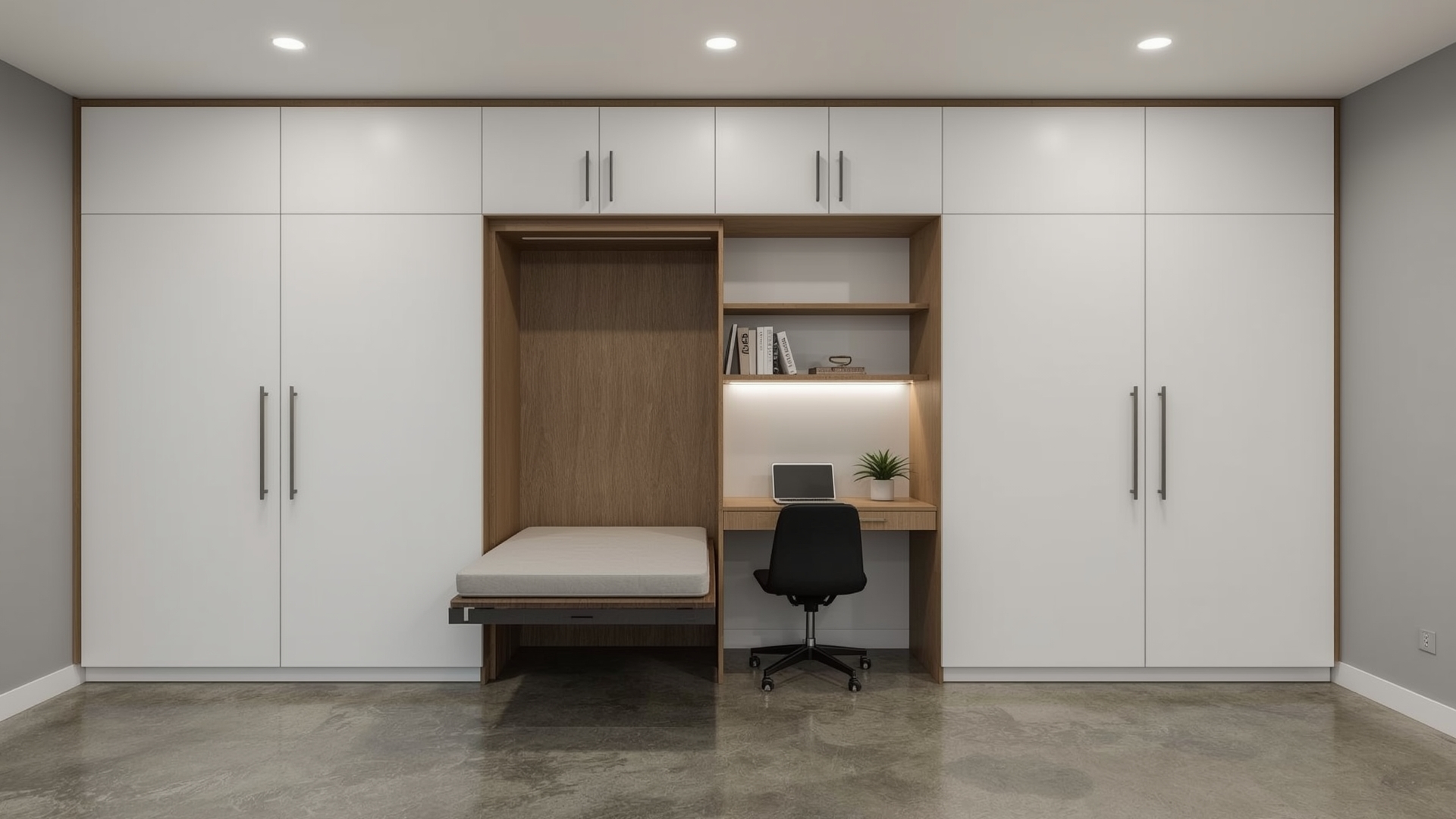
Quick Answer: A Murphy bed (also called a wall bed) folds vertically into a wall-mounted cabinet. When folded up, the space becomes a home office or living area. It’s worth it for families needing a dedicated guest room without sacrificing a full room to a rarely-used bed.
Murphy Bed System Types and Price Ranges
Murphy beds come in three main configurations: vertical (folds up against the wall), horizontal (folds sideways, for rooms with low ceilings), and cabinet-integrated (the bed is built into a unit with shelving, a desk, or a sofa that moves with the bed).
Cabinet-integrated Murphy beds are the highest-value option for families. The shelving and desk remain functional whether the bed is up or down. Some models include a sofa that pivots away automatically when the bed folds out, so you don’t need to move furniture before accessing the bed.
| Murphy Bed Type | Bed Size Options | Installation | Wall Space Required | Price Range (DIY Kit) | Price Range (Installed) |
|---|---|---|---|---|---|
| Vertical wall bed (basic) | Twin, Full, Queen | Wall-anchored, DIY possible | 60–80 inches wide | $500–$1,200 | $1,500–$3,000 |
| Horizontal wall bed | Twin, Full | Wall-anchored | 80–96 inches wide | $600–$1,400 | $1,800–$3,500 |
| Cabinet-integrated (with desk) | Full, Queen | Professional recommended | 90–120 inches wide | $1,500–$3,500 | $3,000–$7,000 |
| Cabinet-integrated (with sofa) | Queen, King | Professional required | 100–140 inches wide | $2,500–$5,000 | $5,000–$12,000 |
How Do Nesting Tables and Stackable Seating Work for Families?
Quick Answer: Nesting tables are sets of 2–4 tables in graduated sizes that stack under each other when not in use. They free up floor space when stored and spread out instantly for drinks, games, or crafts. Stackable chairs serve the same principle for flexible seating.
Where Nesting Tables and Stackable Seating Work Best
Nesting tables shine in living rooms and family rooms where occasional surface space is needed but a full coffee table setup would crowd the area. A three-piece nesting set stores in roughly 24×18 inches of floor space. Pulled out, they provide three independent surfaces for different family members.
Stackable chairs are ideal for dining rooms that expand for holidays or for covered patios that host larger gatherings. Metal and polypropylene stackable chairs are rated for outdoor and indoor use, resist moisture, and stack 4–8 high for storage in a closet or garage.
What Should Families Know Before Buying a Convertible Dining Bench?
Quick Answer: A convertible dining bench transforms into a step stool, a small ladder, or extra storage. Some designs flip open to reveal hidden compartments. They’re practical for families who need flexible seating at the dining table and occasional step access in the kitchen.
The most practical convertible bench designs for families are storage bench seats — a hinged top opens to reveal interior storage for placemats, napkins, table linens, or kids’ craft supplies. This keeps dining-adjacent items out of drawers and cabinets while keeping them close to the table.
Weight capacity matters here. A dining bench used as seating for adults and kids simultaneously should support at least 400–600 lbs total. Check that spec before buying, especially for benches with hollow storage compartments, which can compromise structural rigidity in cheaper models.
How Should You Arrange Multi-Function Furniture in a Small Family Room?
Quick Answer: Start with your largest convertible piece — usually a sofa bed or sectional — against the longest wall. Use a storage ottoman in place of a coffee table. Add nesting side tables for flexible surfaces. Keep clear walking paths of at least 36 inches between pieces for safety and function.
Room Layout Rules That Make Multi-Function Pieces Work
The biggest mistake families make is choosing great multi-function pieces and then arranging them so the conversion functions are blocked. A sofa bed pushed into a corner can’t fold out. A Murphy bed with a dresser in the swing path won’t open safely.
Before placing any convertible piece, map its “conversion footprint” — the total floor space needed when fully extended or opened. A queen sofa bed needs roughly 80 inches of clear floor space in front of the sofa when deployed. A Murphy bed needs that same clear space below it.
High-Traffic Family Room Layout Checklist
- Main walking paths: 36–48 inches wide minimum between pieces
- Sofa bed conversion clearance: 80–84 inches in front of the sofa
- Murphy bed swing path: Full mattress length (75–80 inches) clear from wall
- Expandable table clearance: 24 inches from table edge to wall or next piece when expanded
- Storage ottoman access: Lid needs 18–24 inches of clearance to open fully
What Multi-Function Furniture Works Best in a Home Office Shared with Family Space?
Quick Answer: A Murphy bed with an integrated desk is the best solution for a shared home office and guest room. The desk stays accessible when the bed is folded up. Fold-down wall desks and convertible console tables also work well for creating temporary work surfaces that disappear after hours.
Fold-Down Wall Desk Specs for Shared Spaces
A fold-down wall desk (also called a secretary desk or wall-mounted drop-leaf desk) mounts flush against the wall. The work surface folds down from the wall face, supported by chains or fold-out legs. When folded up, it looks like a cabinet door or decorative panel.
Most fold-down wall desks provide a work surface of 24×36 to 24×48 inches — adequate for a laptop, notebook, and a few items. Weight capacity typically runs 40–80 lbs for the work surface. Some models include interior cubbies and cork boards accessible whether the desk is open or closed.
How Do You Evaluate Multi-Function Furniture Quality Before You Buy?
Quick Answer: Check the frame material (solid wood and steel outperform MDF and particleboard), hardware quality (full-extension drawer slides, reinforced hinges), weight capacity ratings, and warranty length. A piece used daily by a family needs at least a 3-year warranty to be worth the investment.
Frame and Construction Quality Indicators
The conversion mechanism is the highest-stress component in any multi-function piece. Pull-out sofa bed frames take repeated folding stress. Murphy bed piston lifts support the full weight of a mattress hundreds of times. Expandable table track systems align and lock dozens of times a year.
Look for steel-reinforced conversion hardware in sofa beds. Piston or spring-lift systems in Murphy beds should be rated for at least 1,000 open-close cycles. Dining table extension tracks should be solid wood or metal-reinforced, not plastic, to stay aligned over years of use.
Multi-Function Furniture Quality Comparison by Frame Material
| Frame Material | Durability Rating | Weight | Moisture Resistance | Typical Lifespan (Family Use) | Price Impact |
|---|---|---|---|---|---|
| Solid hardwood (oak, maple, ash) | Excellent | Heavy (high stability) | Moderate (seal required) | 15–30+ years | High (+40–80%) |
| Engineered wood (plywood) | Good | Moderate | Moderate | 10–20 years | Mid-range |
| Steel frame | Excellent | Heavy | High (powder-coated) | 20+ years | Mid-to-high |
| MDF (medium-density fiberboard) | Fair | Heavy but weak under stress | Low (swells with moisture) | 5–10 years | Low baseline |
| Particleboard | Poor for conversion pieces | Light | Very low | 3–7 years | Lowest |
What Are the Best Multi-Function Furniture Pieces by Room?
Quick Answer: Living rooms benefit most from sofa beds and storage ottomans. Dining rooms gain flexibility from expandable dining sets. Kids’ rooms transform with loft beds and storage bunk beds. Home offices double as guest rooms with Murphy beds and fold-down desks. Each room has a clear highest-impact piece.
Living Room
- Sleeper sofa or sectional sleeper: Replaces both couch and guest bed
- Storage ottoman: Replaces coffee table, adds seating, hides clutter
- Nesting side tables: Flexible surfaces that store flat when not needed
- Bookshelf with fold-down desk: Creates a homework nook without a dedicated room
Dining Room
- Expandable dining table: Seats 4 daily, extends to 8–12 for gatherings
- Storage bench: Dining seating plus linen or kids’ item storage
- Stackable chairs: Extra seating stored compactly in a closet or pantry
Kids’ Room
- Loft bed with desk: Stacks sleeping and study in a single footprint
- Bunk bed with storage stairs: Built-in drawers in the stair treads replace a dresser
- Storage daybed: Sofa by day, bed by night, with drawers underneath
Home Office / Guest Room
- Murphy bed with integrated desk: Full guest bed that disappears behind a home office wall
- Daybed with trundle: Seating during work hours, two sleeping surfaces for guests
- Fold-down wall desk: Work surface that closes flat against the wall
Frequently Asked Questions
What is the most versatile single piece of multi-function furniture for a family?
A storage ottoman is the most versatile single piece. It functions as a coffee table, extra seating, and hidden storage — all in one unit that costs less than most standalone coffee tables. Add a tray on top and it handles drinks, snacks, and board games without any conversion needed.
Are sofa beds comfortable enough for regular guest use?
Yes, if you choose the right type. Pull-out sofa beds with innerspring or memory foam mattresses at 4–6 inches thick sleep comparably to a budget hotel bed. Futons and thin foam mattresses are less comfortable for adult guests. Spending $900 or more typically gets you a noticeably better sleeping surface.
At what age can kids safely use a top bunk?
The American Academy of Pediatrics recommends that children be at least 6 years old before sleeping on the top bunk. Kids under 6 lack the coordination to climb safely in the dark. Always verify the bunk bed meets ASTM F1427 safety standards, which govern guardrail height and ladder spacing.
How much floor space does a Murphy bed require when open?
A queen Murphy bed needs approximately 60 inches of wall width and 80–84 inches of clear floor space in front of the wall when deployed. That’s the full length of the mattress. Plan for that clearance before buying — it’s a common oversight that makes the bed awkward to use.
Can expandable dining tables handle daily family use, or are they just for guests?
Most expandable dining tables are built for daily use in their collapsed form. The extension mechanism adds occasional stress but is designed for regular operation. Butterfly leaf tables can be extended and collapsed in under a minute, making them practical for use at every gathering rather than reserved for special occasions only.
What is the difference between a daybed and a trundle bed?
A daybed is a sofa-style frame that holds a twin mattress — it functions as a couch during the day and a single bed at night. A trundle is a second mattress on a wheeled frame that slides under the daybed when not in use. Together, a daybed with trundle provides two sleeping surfaces in the footprint of one.