The right houseplant does more than fill an empty corner. It adds texture, color, and life to a room in a way that furniture and art simply can’t match. Plants also improve air quality, reduce stress, and make any space feel more intentional and lived-in.
The tricky part is choosing the right plant for the right room. A fern that thrives in your bathroom will struggle by a south-facing window. A snake plant that looks perfect in a minimalist living room might feel out of place in a cozy cottage bedroom. This guide matches plants to spaces, light levels, and skill levels so you get it right the first time.
Key Takeaways
- Match plant to light first. Light availability in a room determines which plants survive and which ones slowly die.
- Low-maintenance doesn’t mean no maintenance. Pothos, snake plants, and ZZ plants tolerate neglect but still need occasional watering and seasonal fertilizing.
- Scale matters for styling. Large floor plants anchor a room; small plants on shelves add detail without competing for visual space.
- Propagation cuts your plant budget in half. Many popular houseplants root from cuttings in water in under four weeks.
- Where you buy affects plant health. Local nurseries generally sell healthier plants than big-box stores because stock turns over faster.
- A few well-chosen plants look better than many random ones. Cohesion in leaf shape, pot material, and color palette makes a styled collection, not just a shelf full of plants.
What Are the Best Low-Maintenance Indoor Plants for Beginners?
Quick Answer: Snake plants, pothos, ZZ plants, and peace lilies are the best low-maintenance indoor plants for beginners. They tolerate low light, irregular watering, and average indoor humidity. Most survive on watering once every one to two weeks.
If you’ve killed plants before, the problem was probably the plant choice, not your skills. Some houseplants are genuinely difficult. Others are nearly impossible to kill. Start with the second group.
Top Low-Maintenance Plants and Their Basic Care Needs
| Plant | Light Requirement | Watering Frequency | Typical Height | Average Price (4″ Pot) |
|---|---|---|---|---|
| Snake Plant (Sansevieria) | Low to bright indirect | Every 2–6 weeks | 1–4 feet | $8–$18 |
| Pothos (Epipremnum aureum) | Low to medium indirect | Every 1–2 weeks | Trailing, up to 10 feet | $5–$15 |
| ZZ Plant (Zamioculcas zamiifolia) | Low to medium indirect | Every 2–3 weeks | 2–3 feet | $10–$25 |
| Peace Lily (Spathiphyllum) | Low to medium indirect | Every 1–2 weeks | 1–3 feet | $8–$20 |
| Spider Plant (Chlorophytum comosum) | Medium to bright indirect | Every 1–2 weeks | 1–2 feet | $6–$14 |
| Cast Iron Plant (Aspidistra elatior) | Low to medium indirect | Every 2–3 weeks | 2–3 feet | $12–$30 |
The cast iron plant earns its name. It tolerates low light, dust, irregular watering, and temperature swings that would kill most other houseplants. It grows slowly, but it’s nearly indestructible.
Why Do Low-Maintenance Plants Still Die Sometimes?
The most common killers aren’t neglect. They’re overwatering, wrong pot size, and compacted soil that holds too much moisture. Always check the soil before watering. If the top inch is still damp, wait another few days.
Which Indoor Plants Work Best in a Living Room?
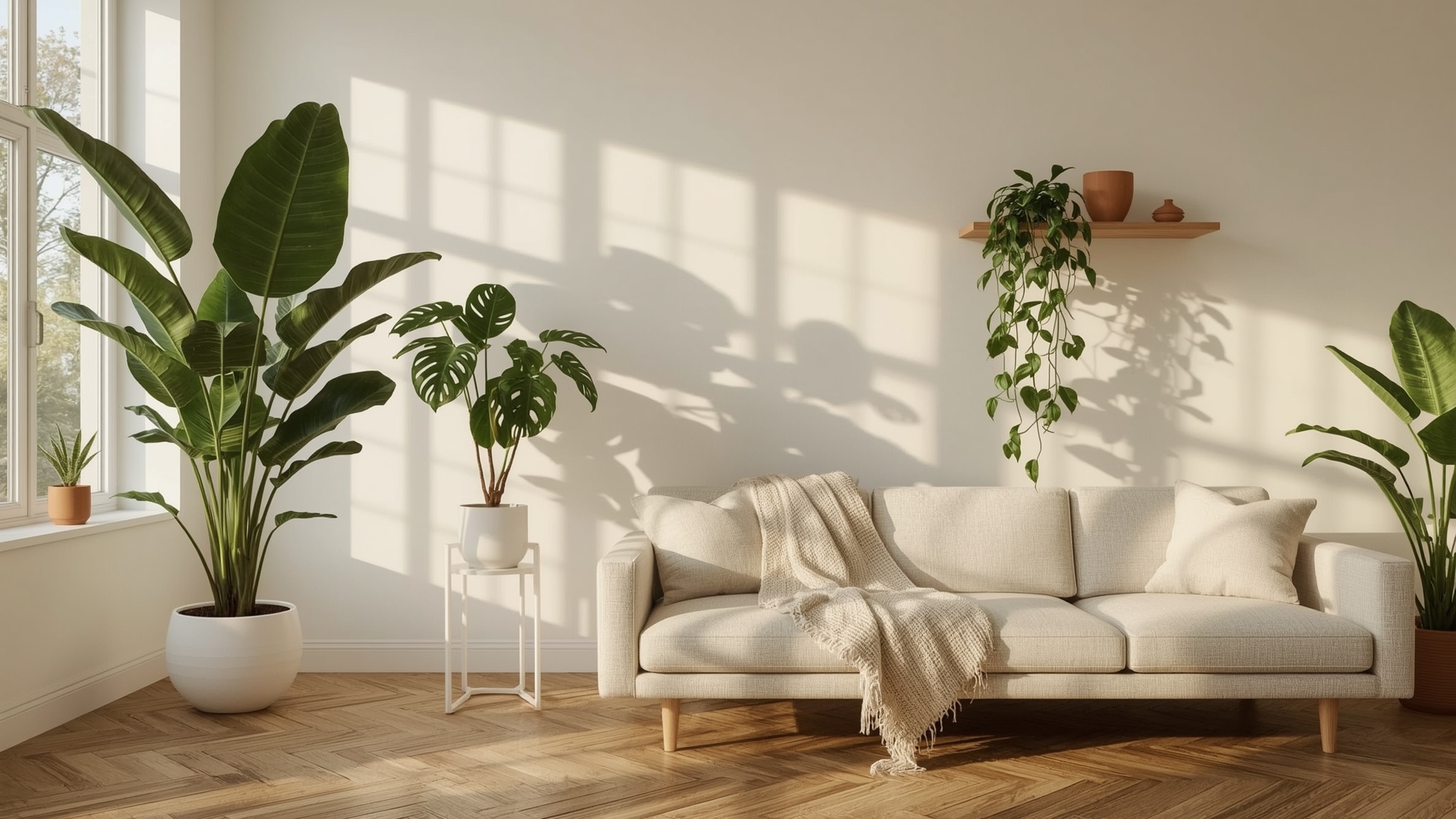
Quick Answer: Fiddle-leaf figs, monstera deliciosas, rubber trees, and bird of paradise plants work best in living rooms. They make a visual statement, tolerate average home humidity, and scale well with furniture. Most need bright indirect light near a large window.
Living rooms usually have the best light in a home. That gives you more plant options than any other room. The goal here is visual impact.
How to Style Plants in a Living Room
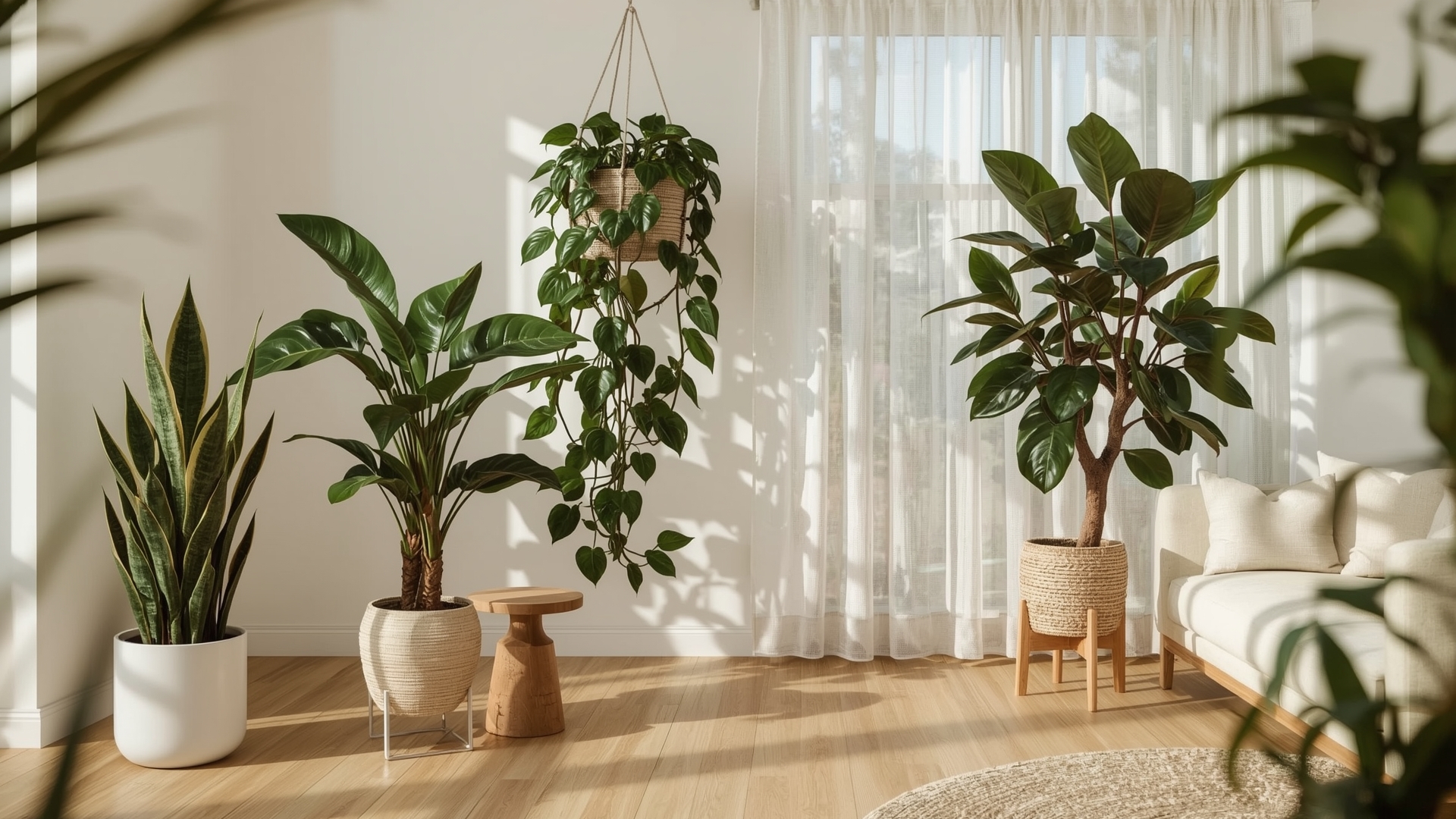
Use the rule of three: one large floor plant, one medium plant on a side table or plant stand, and one small trailing plant on a shelf or bookcase. This creates visual hierarchy without crowding the space.
Large plants like the fiddle-leaf fig (Ficus lyrata) reach six to ten feet indoors. They anchor an empty corner the same way an oversized lamp does. The rubber tree (Ficus elastica) does the same job with burgundy or deep green leaves that photograph well against white walls.
Monstera deliciosa is one of the most versatile styling plants available. The split leaves add organic texture, the growth rate is manageable, and it costs far less than many similarly sized houseplants.
Living Room Plants by Light Condition
| Light Condition | Best Plant Options | Pot Size to Start | Expected Indoor Height |
|---|---|---|---|
| Bright direct light (south window) | Bird of paradise, cacti, aloe vera | 10–14 inch | 4–6 feet |
| Bright indirect light (east/west window) | Fiddle-leaf fig, monstera, rubber tree | 8–12 inch | 3–8 feet |
| Medium indirect light (5–8 feet from window) | Pothos, ZZ plant, dracaena | 6–8 inch | 1–4 feet |
| Low light (north window or no window) | Snake plant, cast iron plant, peace lily | 6–8 inch | 1–3 feet |
What Plants Are Best for a Bedroom?
Quick Answer: Snake plants, lavender, aloe vera, and pothos are the best bedroom plants. They release oxygen at night or tolerate low light. Keep bedroom plants small to avoid visual clutter — a 4- to 6-inch pot on a nightstand or windowsill is the right scale.
Bedrooms are usually darker and cooler than other rooms. That limits your options, but it also keeps the styling simple. One or two well-placed plants are enough.
Should You Put Plants in a Bedroom?
Yes. The old concern about plants consuming too much oxygen at night has been disproven. The amount of CO2 a plant releases overnight is negligible. In fact, plants like snake plants and aloe vera perform a process called Crassulacean acid metabolism (CAM), which means they absorb CO2 and release oxygen at night instead of during the day.
Lavender is a genuine exception. Research supports its mild calming effect when used in aromatherapy. A small pot of lavender on a windowsill with direct morning sun provides both function and fragrance.
Bedroom Styling Tips for Houseplants
- Place a trailing pothos on a high shelf or bookcase and let it drape downward for a soft, layered look.
- Group a small succulent collection on a windowsill tray to keep them contained and easy to water.
- Use pots that match your bedroom’s color palette. Terracotta works with warm tones; white ceramic or concrete works with cooler, minimalist spaces.
- Avoid large statement plants in small bedrooms. They compete with furniture and make the room feel crowded.
Which Plants Thrive in a Bathroom?
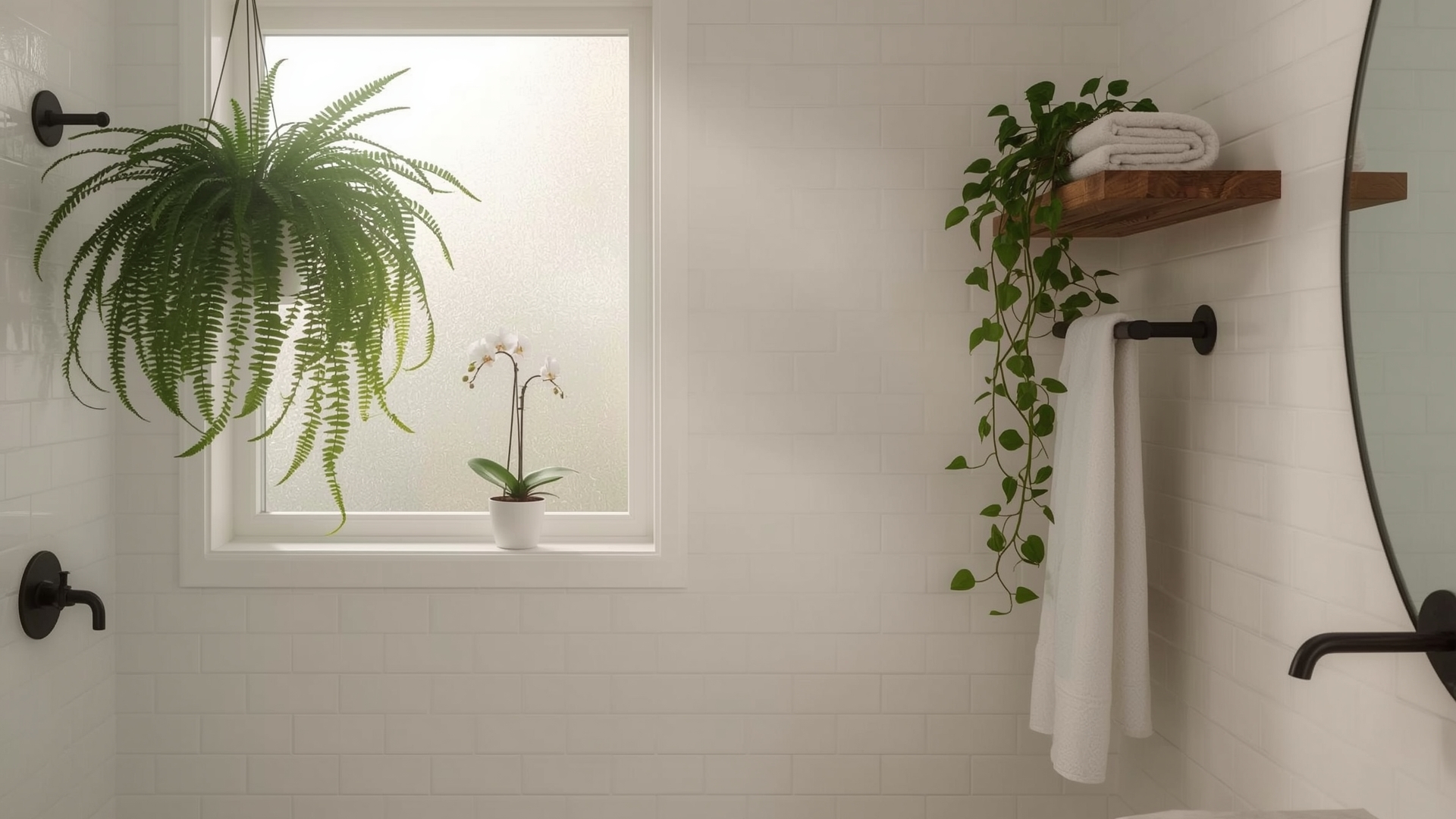
Quick Answer: Boston ferns, orchids, air plants, and golden pothos thrive in bathrooms. High humidity from showers replaces the need for frequent misting. Most bathroom plants need only low to medium indirect light and weekly watering, or none at all for air plants.
Bathrooms offer something most other rooms don’t: consistent humidity. Most homes sit at 30–50% relative humidity. Bathrooms spike to 60–80% after a shower. That’s a perfect environment for tropical plants that struggle elsewhere in the house.
Best Bathroom Plants by Light and Humidity
| Plant | Light Needed | Watering Frequency | Humidity Preference | Best Placement |
|---|---|---|---|---|
| Boston Fern | Medium indirect | 2–3x per week | 60–80% | Hanging near window |
| Air Plant (Tillandsia) | Bright indirect | Mist 2–3x per week | 50–70% | Shelf or small tray |
| Orchid (Phalaenopsis) | Bright indirect | Every 7–10 days | 50–70% | Windowsill |
| Golden Pothos | Low to medium indirect | Every 1–2 weeks | 40–60% | High shelf, trailing |
| Peace Lily | Low indirect | Every 1–2 weeks | 50–60% | Counter or floor |
What About Bathrooms Without Windows?
No window means no natural light. Your only realistic options are plants that tolerate very low light, like cast iron plants or ZZ plants, combined with a grow light. A small LED grow light left on for 12–14 hours per day fully replaces sunlight for most low-light species. Bulbs designed for this purpose use roughly 10–15 watts and cost around $15–$30.
How Do You Style Indoor Plants Like a Designer?
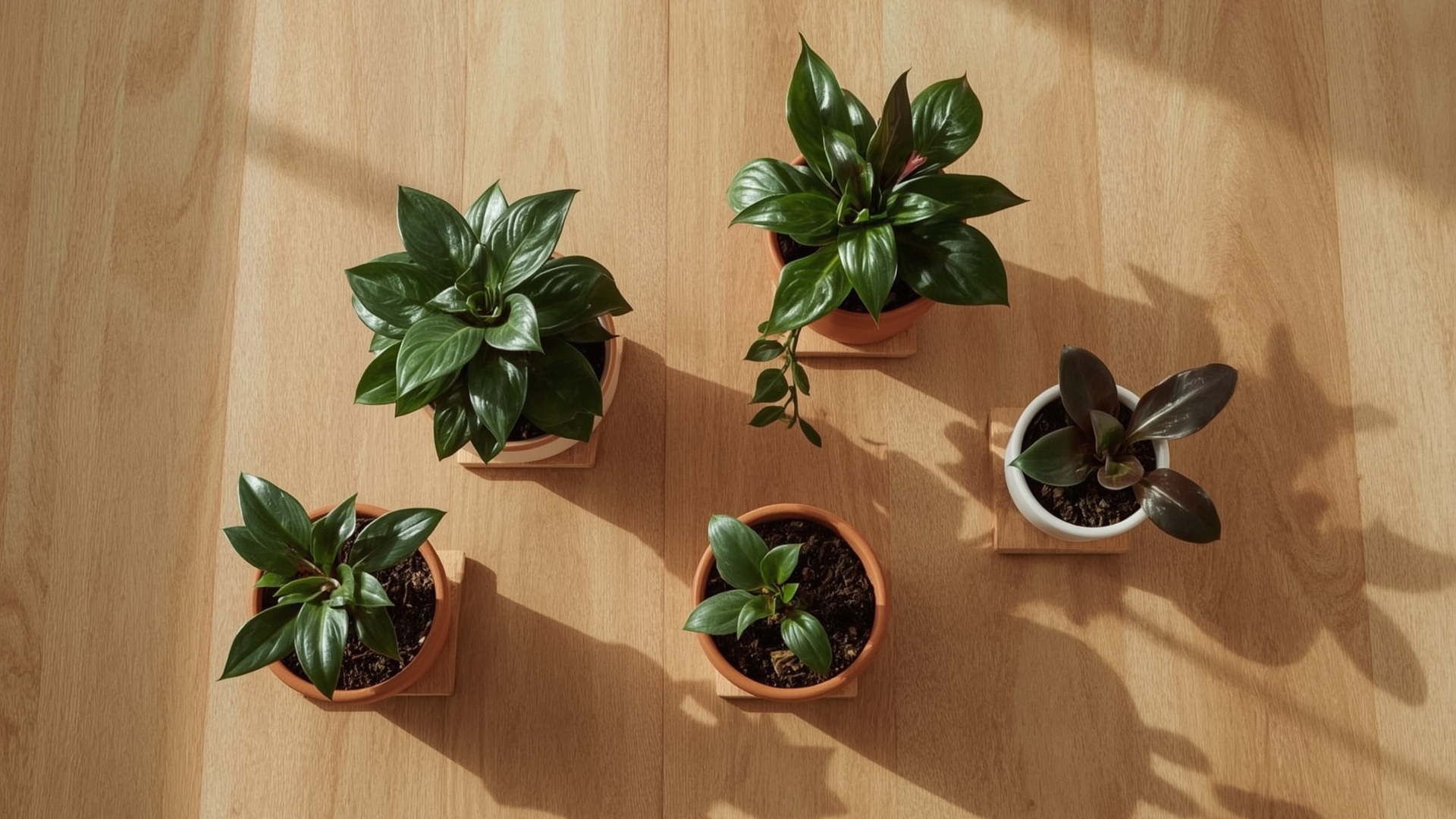
Quick Answer: Designers style indoor plants using height variation, consistent pot materials, and odd-numbered groupings. Place tall plants at the back or corner, medium plants at mid-level, and small plants on surfaces. Use three pots of the same material in different sizes for a cohesive look.
Most plant collections look cluttered because every pot is a different color, material, and style. Cohesion fixes that instantly.
The Three Design Principles That Make Plants Look Styled
Height variation: Never place plants of the same height next to each other. Stagger them so each plant is visible and creates a sense of depth. Use plant stands, stacked books, or tiered shelving to add levels where you don’t have natural height differences.
Pot consistency: Choose one or two pot materials and stick with them across a room. Terracotta, white ceramic, concrete, and woven baskets are all popular choices. Mixing all four in one space looks unintentional.
Odd-number groupings: Groupings of three, five, or seven plants look more natural and dynamic than even-numbered arrangements. This is a basic principle from floral design and interior styling that applies to plant collections.
Plant Styling by Room Aesthetic
| Room Aesthetic | Best Plant Choices | Pot Material | Styling Notes |
|---|---|---|---|
| Minimalist / Scandinavian | Monstera, rubber tree, snake plant | White ceramic, concrete | One large statement plant, negative space around it |
| Bohemian / Eclectic | Pothos, spider plant, trailing heartleaf philodendron | Woven baskets, terracotta | Layered heights, macramé hangers, mixed greenery |
| Cottagecore / Natural | Ferns, herbs, lavender, ivy | Terracotta, aged clay | Windowsill clusters, small bundles, dried herbs alongside |
| Modern Farmhouse | Fiddle-leaf fig, eucalyptus, succulents | White or cream ceramic, galvanized metal | Clean lines, neutral backgrounds, tall single specimens |
| Tropical / Maximalist | Bird of paradise, monstera, calathea | Rattan baskets, painted pots | Fill corners and surfaces, layer large leaves with small |
How Do You Propagate Indoor Plants at Home?
Quick Answer: Most popular houseplants propagate from stem cuttings placed in water. Cut just below a leaf node, remove lower leaves, and place in a glass of water near a bright window. Roots appear in two to four weeks. Pothos, philodendrons, and begonias are the easiest to propagate this way.
Propagation is the fastest way to grow your plant collection without spending more money. One healthy pothos can produce dozens of new plants each year. Spider plants produce baby plants called spiderettes that root with almost no effort.
Step-by-Step Guide to Water Propagation
- Choose a healthy stem. Look for a stem with at least two to three leaves and a visible node, which is the small bump where a leaf meets the stem.
- Cut just below the node. Use clean scissors or pruning shears. A 3- to 5-inch cutting works well for most plants.
- Remove lower leaves. Any leaves that will be submerged in water will rot. Strip them off before placing the cutting in water.
- Place in a clear glass of water. A clear vessel lets you watch root development. Change the water every three to five days to prevent bacteria buildup.
- Position near bright indirect light. Direct sun heats the water and can harm developing roots. A bright windowsill without harsh afternoon sun works well.
- Wait for roots to reach 1–2 inches. This usually takes two to four weeks. Once roots reach one to two inches, pot the cutting in moist potting mix.
Which Indoor Plants Are Easiest to Propagate?
- Pothos: Roots in water within 1–3 weeks. One of the most reliable propagation plants available.
- Heartleaf Philodendron: Same method as pothos, similar timeline.
- Spider Plant: Produces spiderettes that can be pinned directly into soil or rooted in water first.
- Begonia: Single leaf cuttings root in water or moist perlite in two to four weeks.
- Snake Plant: Leaf sections placed in water or soil root in four to eight weeks, though growth is slow.
- Succulents: Leaf cuttings laid on dry soil develop roots and new plants in three to six weeks.
Where Can You Buy Affordable Indoor Plants?
Quick Answer: Local nurseries, plant swaps, Facebook Marketplace, and online retailers like Etsy and The Sill offer affordable houseplants. Local nurseries stock healthier plants than big-box stores. Plant swaps and community groups often offer free or very low-cost cuttings from other plant owners.
Plant prices vary a lot depending on where you shop. The same snake plant that costs $8 at a local nursery might cost $22 at a boutique plant shop. Knowing where to look saves real money, especially when you’re building a collection.
Where to Buy Houseplants: Price and Quality Comparison
| Source | Price Range (Small Plant) | Plant Health Quality | Variety Selection | Best For |
|---|---|---|---|---|
| Local Nursery | $6–$25 | High (fast turnover) | Medium to high | Healthy starter plants |
| Big-Box Store (Home Depot, Lowe’s) | $4–$15 | Medium (varies by store) | Limited to common varieties | Budget basics like pothos, snake plant |
| Online Retailer (The Sill, Bloomscape) | $15–$60 | High (arrives healthy) | Very high | Rare varieties, gifts |
| Etsy (Independent Sellers) | $5–$40 | Medium to high | Very high, including rare plants | Unique varieties and cuttings |
| Facebook Marketplace / Plant Swaps | Free–$10 | Variable | Community-driven | Budget shopping, rare finds |
| Grocery Stores (Trader Joe’s, Whole Foods) | $4–$12 | Low to medium (high stress) | Very limited | Impulse buys, herbs, succulents |
What to Check Before You Buy a Houseplant
- Check under the leaves. Tiny dots, webbing, or sticky residue indicate pests like spider mites or scale insects. Don’t buy a plant with active pests.
- Look at the roots. Healthy roots are white or light tan. Brown, mushy roots mean root rot. If you can’t see the roots, check if the pot feels very heavy for its size, which can indicate waterlogged soil.
- Avoid plants on sale because they look rough. A heavily discounted plant that’s already stressed is harder to nurse back to health than a healthy plant at full price.
- Ask how recently the plant arrived. Plants at nurseries that arrived within the last week or two are often still adjusting. Plants that have been there three to four weeks are more stable.
How Do You Keep Indoor Plants Healthy Long-Term?
Quick Answer: Keep indoor plants healthy by matching light to plant needs, watering only when the top inch of soil is dry, fertilizing monthly from spring through fall, and repotting when roots circle the bottom of the pot. Most houseplants also benefit from wiping leaves with a damp cloth every four to six weeks.
The biggest shift in plant care mindset is moving from a calendar-based routine to a soil-check-based one. Watering on a fixed schedule ignores seasonal changes, pot size, and whether the plant is actively growing or dormant.
Common Indoor Plant Care Mistakes
- Overwatering: The number one plant killer. More plants die from too much water than too little. Yellow leaves, mushy stems, and a sour soil smell are the main signs.
- Wrong light placement: Moving a low-light plant to a sunny window causes leaf scorch. Moving a high-light plant to a dark corner causes slow decline over weeks or months.
- Pots without drainage holes: Standing water at the bottom of a pot leads to root rot within days to weeks. Always use pots with at least one drainage hole, or plant in a nursery pot and place it inside a decorative one.
- Skipping fertilizer: Soil nutrients deplete over time. A balanced liquid fertilizer diluted to half strength applied monthly from March through September keeps most houseplants growing well.
- Ignoring pests too long: Spider mites, fungus gnats, and mealybugs spread from plant to plant. Isolate any plant showing signs of infestation immediately and treat with neem oil or insecticidal soap.
Seasonal Plant Care Calendar
- Spring (March–May): Resume monthly fertilizing. Repot root-bound plants. Begin propagating cuttings as growth picks up.
- Summer (June–August): Increase watering frequency as heat and light increase. Watch for spider mites in dry, hot conditions.
- Fall (September–November): Taper fertilizing to every six weeks. Bring outdoor plants inside before nighttime temps drop below 50°F.
- Winter (December–February): Water less frequently. Stop fertilizing most houseplants. Keep plants away from cold drafts and heating vents.
Frequently Asked Questions About Indoor Plants for Home Decor
Are indoor plants safe for pets?
Not all of them. Pothos, philodendrons, and peace lilies are toxic to cats and dogs if eaten. Safe alternatives include spider plants, Boston ferns, calatheas, and areca palms. Always check the ASPCA toxic plant list before buying if you have pets at home.
How many plants does a room need to look decorated?
One large plant or three small plants is usually enough to make a room feel styled. More than that starts to look like a collection rather than a design choice. Start with one anchor plant and add smaller ones only if the space genuinely calls for it.
Do grow lights really work for indoor plants?
Yes. Full-spectrum LED grow lights replicate the wavelengths plants need for photosynthesis. They work well for low- to medium-light plants in rooms without windows. Run them 12–14 hours per day for results comparable to a bright indirect window.
What is the easiest indoor plant to keep alive?
The ZZ plant is widely considered the easiest indoor plant to keep alive. It stores water in its rhizomes, which are underground stems, so it tolerates weeks of no watering. It grows in low light and rarely gets pests.
How often should you repot a houseplant?
Most houseplants need repotting every one to two years. Signs it’s time include roots circling the bottom of the pot, roots growing out of drainage holes, or the plant drying out much faster than usual after watering. Move up one pot size at a time, not several sizes at once.
Can you use regular soil from outside for indoor plants?
Outdoor garden soil is too dense for container plants. It compacts over time, blocks drainage, and can introduce pests and pathogens. Use a commercial indoor potting mix instead. For succulents and cacti, add perlite to improve drainage further.