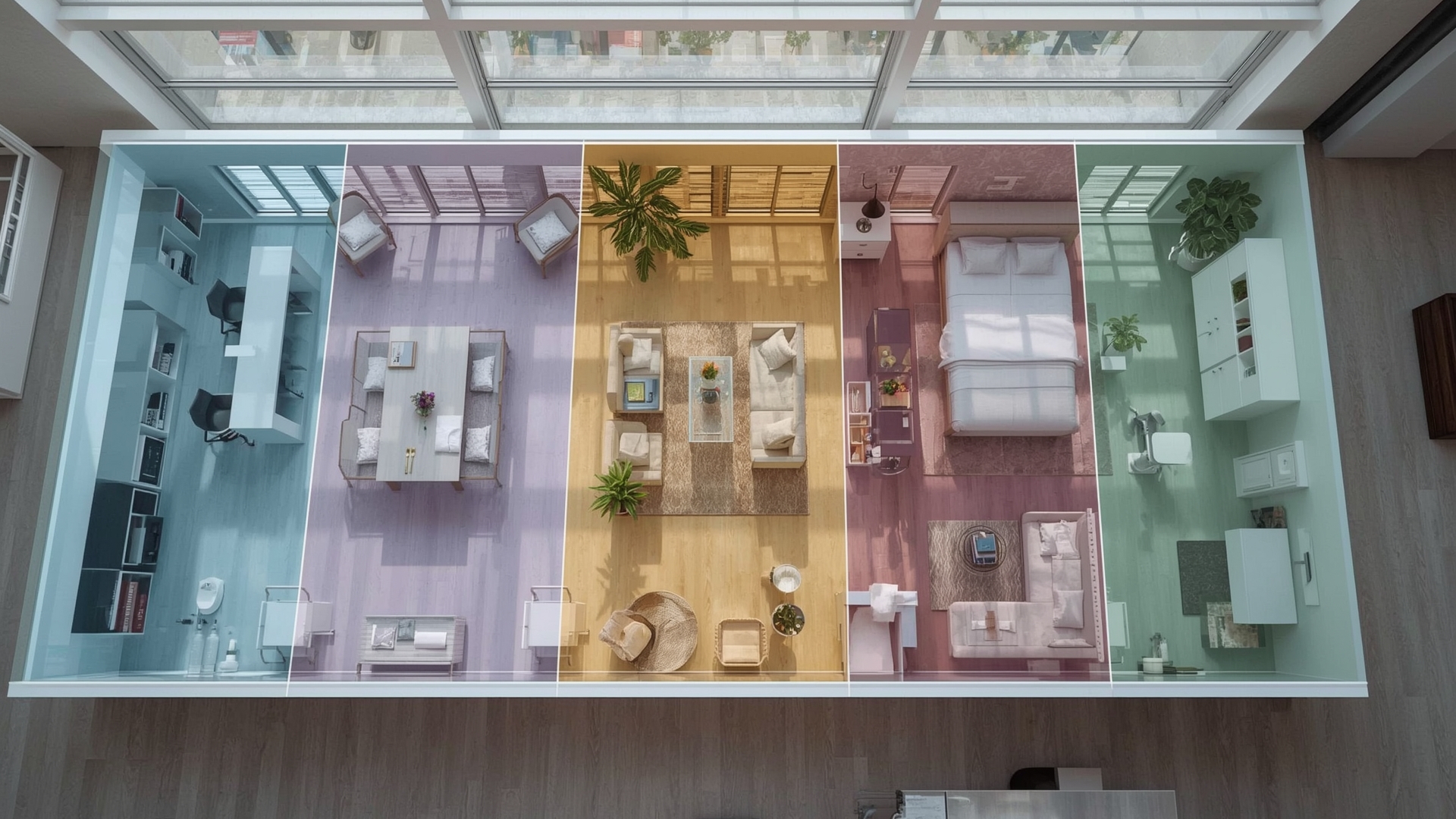
Cleaning the whole house at once is exhausting. You burn through a Saturday, feel great for about two days, and then watch it fall apart again by Wednesday. A zone-based cleaning schedule fixes that by breaking your home into smaller sections and spreading the work across the week.
Instead of cleaning everything every day, you clean one zone per day. Each zone gets focused attention on a rotating schedule. The result is a home that stays consistently clean with far less effort per session.
Key Takeaways
- Zones = rooms or areas of the home assigned to specific days so cleaning never piles up.
- Daily tasks stay under 10 minutes and apply to every zone — dishes, wipe-downs, quick pickups.
- Each zone gets a deep-clean day once per week on a rotating schedule.
- Monthly tasks cover appliances, baseboards, and other low-frequency jobs that are easy to forget.
- Zone rotation works for any home size — adjust the number of zones to fit your floor plan.
- A printed or digital schedule removes the mental load of deciding what to clean each day.
What Is a Zone-Based Cleaning Schedule?
Quick Answer: A zone-based cleaning schedule divides your home into 4 to 6 sections called zones. You assign each zone to a day of the week. That day, you focus all cleaning tasks on that one area instead of trying to tackle the whole house.
Think of it like dividing a big project into smaller phases. Instead of staring at a messy house and not knowing where to start, you already know: today is kitchen day, tomorrow is bathrooms.
The concept was popularized by home organization systems like FlyLady, which uses weekly zones to help overwhelmed homeowners build consistent habits. The core idea is simple — divide and conquer.
Zone cleaning works because it matches your energy to the task. A focused 20 to 30 minutes in one room beats a frantic 3-hour marathon that leaves you dreading next weekend.
How Is Zone Cleaning Different from Speed Cleaning?
Speed cleaning means moving through the whole house as fast as possible, usually before guests arrive. Zone cleaning is a long-term maintenance system, not a quick fix. Speed cleaning treats the symptoms. Zone cleaning prevents them.
How Do You Divide Your Home Into Cleaning Zones?
Quick Answer: Group rooms by location and how often they get dirty. A standard setup uses 5 zones: kitchen, bathrooms, living areas, bedrooms, and entryway/laundry. Each zone should take roughly the same amount of time to clean.
Your goal is balance. If one zone takes 2 hours and another takes 10 minutes, the schedule will feel uneven and you’ll start skipping days.
Here’s how to think about grouping:
- High-traffic zones (kitchen, main bathroom) need more frequent attention and should stand alone.
- Low-traffic zones (guest bedroom, home office) can be grouped together.
- Adjacent rooms with similar cleaning needs are natural pairs — like a hallway and entryway.
Standard 5-Zone Home Cleaning Layout
| Zone | Rooms Included | Assigned Day | Average Clean Time | Primary Focus |
|---|---|---|---|---|
| Zone 1: Kitchen | Kitchen, dining area | Monday | 25–35 min | Counters, appliances, sink, floors |
| Zone 2: Bathrooms | All bathrooms, powder room | Tuesday | 20–30 min | Toilet, sink, shower, mirror, floor |
| Zone 3: Living Areas | Living room, family room, hallways | Wednesday | 20–25 min | Dusting, vacuuming, surface wipe-downs |
| Zone 4: Bedrooms | All bedrooms, closets | Thursday | 20–30 min | Linen change, dusting, vacuuming |
| Zone 5: Entry and Utility | Entryway, laundry room, garage entry | Friday | 15–20 min | Floors, surfaces, laundry catch-up |
What Daily Tasks Should You Do in Every Zone?
Quick Answer: Daily tasks are maintenance habits that take under 10 minutes and apply everywhere. They include wiping surfaces, doing dishes, quick floor sweeps, and a 5-minute tidy. These prevent zones from becoming overwhelming before their assigned deep-clean day.
Daily habits are the backbone of any zone system. Without them, even a perfectly designed schedule falls apart because one zone can become a disaster by the time its day rolls around.
Keep daily tasks short and non-negotiable. These are not cleaning sessions. They are resets.
Universal Daily Maintenance Tasks
- Wipe kitchen counters after every meal (2 minutes)
- Wash or load dishes into the dishwasher before bed (5 minutes)
- Do a 5-minute tidy — pick up items that don’t belong where they are
- Wipe bathroom sinks after morning use (1 minute)
- Make beds each morning (3 minutes per bed)
- Take out trash when full, not when overflowing
- Sweep or Swiffer high-traffic floor areas
What Tasks Belong in the Kitchen Zone?
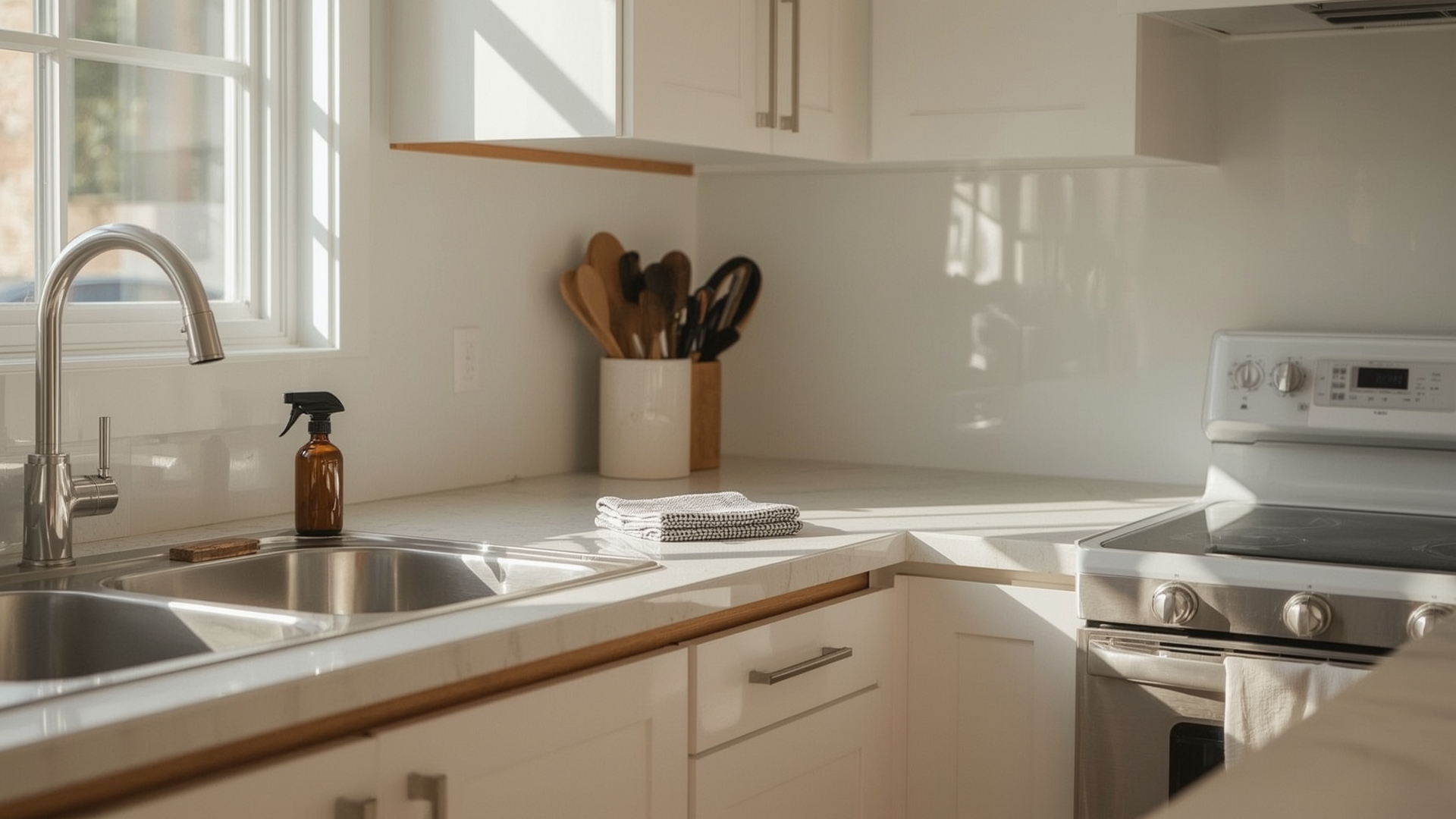
Quick Answer: The kitchen zone includes counters, stovetop, sink, microwave, refrigerator exterior, cabinet fronts, backsplash, and floors. Weekly deep-clean sessions take 25 to 35 minutes. Monthly tasks cover the oven interior, refrigerator interior, and range hood filter.
The kitchen is the highest-traffic zone in most homes. It also holds the most bacteria-prone surfaces, so it gets its own dedicated day rather than being grouped with other rooms.
Kitchen Zone Task Breakdown by Frequency
| Task | Frequency | Time Required | Tools Needed |
|---|---|---|---|
| Wipe counters and stovetop | Daily | 2–3 min | Microfiber cloth, all-purpose spray |
| Clean sink and drain | Weekly | 5 min | Dish soap, scrub brush |
| Wipe cabinet fronts | Weekly | 5–7 min | Damp microfiber cloth |
| Clean microwave interior | Weekly | 5 min | Damp cloth, mild cleaner |
| Mop or steam kitchen floor | Weekly | 10 min | Mop, floor cleaner |
| Deep-clean oven interior | Monthly | 30–45 min | Oven cleaner, gloves, scraper |
| Clean refrigerator interior | Monthly | 20–30 min | Baking soda solution, cloths |
| Degrease range hood filter | Monthly | 15 min | Hot water, dish soap, degreaser |
What Tasks Belong in the Bathroom Zone?
Quick Answer: The bathroom zone covers toilet, sink, mirror, shower or tub, floor, and storage areas like medicine cabinets. Weekly deep-cleaning takes 20 to 30 minutes total. Monthly tasks include grout scrubbing, drain clearing, and washing shower curtain liners.
Bathrooms are small but time-intensive. The key is to clean top to bottom — dust or wipe shelves first, then the sink, then the toilet, then the floor. This way, anything that falls during cleaning gets picked up last.
Bathroom Zone Task Breakdown by Frequency
| Task | Frequency | Time Required | Product Type |
|---|---|---|---|
| Wipe sink and faucet | Daily | 1–2 min | All-purpose spray |
| Clean toilet bowl and seat | Weekly | 5 min | Toilet bowl cleaner, brush |
| Scrub shower walls and tub | Weekly | 8–10 min | Bathroom cleaner, scrub brush |
| Wipe mirror and light fixtures | Weekly | 3 min | Glass cleaner, microfiber cloth |
| Mop bathroom floor | Weekly | 5 min | Disinfectant floor cleaner |
| Scrub tile grout | Monthly | 15–20 min | Grout brush, baking soda paste |
| Wash shower curtain liner | Monthly | 30 min (machine wash) | Washing machine, mild detergent |
What Tasks Belong in the Living Area Zone?
Quick Answer: The living area zone covers dusting furniture and shelves, vacuuming rugs and upholstery, wiping down remote controls and light switches, and cleaning windows and blinds. Weekly sessions run 20 to 25 minutes. Monthly tasks include washing throw pillows and deep-vacuuming under cushions.
Living rooms collect dust, pet hair, and clutter faster than almost any other space. The trick here is to work in a circle around the room — start at one corner and move around so you never double back over a surface you already cleaned.
Living Area Zone Weekly Checklist
- Dust all surfaces including shelves, TV stands, and coffee tables
- Vacuum rugs, area rugs, and carpet
- Wipe down light switches, remote controls, and door handles
- Fluff and straighten couch cushions
- Wipe any glass surfaces (TV screen, coffee table glass)
- Empty small trash bins or recycle bins
- Vacuum upholstered furniture
What Tasks Belong in the Bedroom Zone?
Quick Answer: The bedroom zone covers changing bed linens, dusting nightstands and dressers, vacuuming floors and under the bed, and wiping down mirrors and light switches. Weekly sessions take 20 to 30 minutes. Monthly tasks include washing pillows, dusting ceiling fan blades, and vacuuming under the bed frame.
Bedrooms are often neglected because they look clean if the bed is made. But dust and allergens build up fast under furniture and on surfaces. Keeping this zone on a weekly schedule helps people with allergies significantly.
Bedroom Zone Task Breakdown by Frequency
| Task | Frequency | Time Required | Notes |
|---|---|---|---|
| Make bed | Daily | 3–5 min | Include straightening pillows and throws |
| Change bed linens | Weekly | 10–15 min | Wash sheets at 60°C to kill dust mites |
| Dust nightstands and dressers | Weekly | 5 min | Microfiber cloth traps dust rather than spreading it |
| Vacuum floor and under furniture | Weekly | 8–10 min | Use a vacuum with a HEPA filter for allergen control |
| Wash pillows | Monthly | 45–60 min (machine wash) | Check care labels — most can be machine washed |
| Dust ceiling fan blades | Monthly | 5 min | Use a pillowcase to trap dust while wiping |
| Clean under bed frame | Monthly | 10 min | Use a long flat vacuum attachment |
What Tasks Belong in the Entry and Utility Zone?
Quick Answer: The entry and utility zone includes the entryway, mudroom, laundry room, and garage entry. Tasks cover sweeping floors, wiping down surfaces, organizing shoes and coats, and cleaning the washing machine and dryer. Weekly sessions run 15 to 20 minutes.
This zone is easy to overlook because it’s not where you spend much time. But it’s the first thing guests see when they walk in, and it’s where dirt enters your home. Keeping it clean reduces the amount of dust and grime that travels to other zones.
Entry and Utility Zone Weekly Checklist
- Sweep or vacuum entryway and mudroom floors
- Wipe down entryway bench or shelf
- Organize shoes, bags, and outerwear
- Wipe down the washing machine exterior and lid
- Clean out the dryer lint trap (should be every use)
- Check laundry area for stray items or buildup
- Wipe door handles and light switches in these areas
How Do You Create a Monthly Deep-Cleaning Rotation?
Quick Answer: A monthly deep-clean rotation adds one or two heavy tasks to your normal zone schedule. You assign these tasks to specific weeks so nothing gets forgotten. Each zone has 3 to 5 monthly tasks that rotate through the four weeks of the month.
Monthly tasks are the jobs nobody wants to do weekly but that genuinely need to happen. Think refrigerator interiors, baseboards, inside cabinets, and light fixtures. If you don’t schedule them, they don’t happen.
One simple system: assign your monthly zone tasks to Week 1, Week 2, Week 3, and Week 4 of each month. Each week, you add one extra task to the relevant zone’s regular session.
Monthly Deep-Clean Tasks by Zone
- Kitchen: Clean oven, degrease range hood, wipe inside refrigerator, clean out pantry shelves
- Bathrooms: Scrub grout, wash shower curtain liner, clean exhaust fan cover, check and replace toiletry expiry dates
- Living Areas: Wash throw blankets and pillow covers, dust ceiling corners and light fixtures, wipe down baseboards
- Bedrooms: Wash pillows, rotate or flip mattress, dust ceiling fan, vacuum under bed
- Entry and Utility: Clean washing machine drum with a cleaning tablet, wipe dryer interior, reorganize coat closet
How Do You Adjust a Zone Schedule for Different Home Sizes?
Quick Answer: Small homes with 1 to 2 bedrooms can use a 3-zone system cleaned in 3 days. Larger homes with 4 or more bedrooms may need 6 or 7 zones. The rule is to keep each zone’s weekly deep-clean under 35 minutes so the schedule stays sustainable.
A zone system should reduce stress, not create a new job. If your zones are too large, you’ll dread zone days. If they’re too small, you’ll run out of things to do and lose the habit.
Zone System Scaling Guide
| Home Size | Recommended Zones | Days Needed | Weekly Time Commitment | Weekend Buffer |
|---|---|---|---|---|
| Studio or 1-bedroom | 3 zones | 3 days | 45–60 min total | Not needed |
| 2-bedroom apartment | 4 zones | 4 days | 60–90 min total | Optional catch-up |
| 3-bedroom house | 5 zones | 5 days | 90–120 min total | Light reset day |
| 4+ bedroom house | 6–7 zones | 6 days | 120–150 min total | Catch-up or rest |
How Do You Get Your Family Involved in Zone Cleaning?
Quick Answer: Assign each family member ownership of one or two zones based on age and ability. Kids as young as 6 can handle simple tasks like wiping surfaces or vacuuming. Clear ownership means one person is responsible for each zone being done each week.
Zone cleaning is one of the easiest household systems to delegate because the tasks are already separated. You don’t need to explain a whole-house cleaning routine. You just say: this zone is yours this week.
Rotate zone ownership monthly so no one gets stuck with the same undesirable zone every time. A simple chart on the fridge works better than any app for most families.
Age-Appropriate Zone Tasks for Kids
- Ages 6–8: Wipe baseboards, put away shoes in entryway, dust low shelves, pick up living room clutter
- Ages 9–11: Vacuum living room, clean bathroom sink and mirror, load and unload dishwasher
- Ages 12–14: Full bathroom clean, kitchen counters and stovetop wipe-down, take out trash
- Ages 15+: Full zone ownership with weekly and monthly tasks
How Do You Stay Consistent With a Zone Cleaning Schedule?
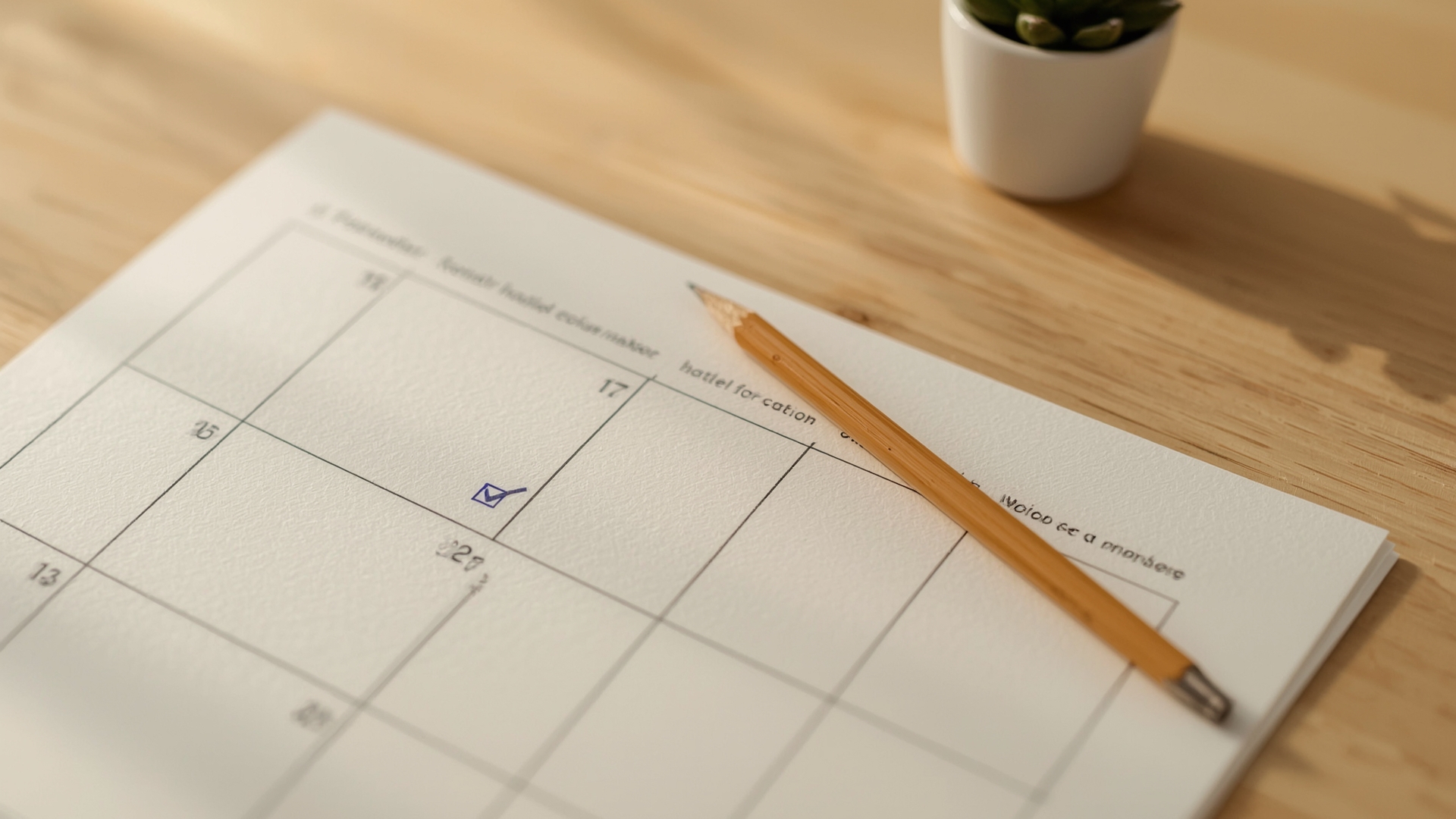
Quick Answer: Consistency comes from attaching zone cleaning to an existing habit, keeping sessions under 30 minutes, and having your supplies already in each zone. Missing one day is fine. Missing the whole week breaks the habit. The goal is progress, not perfection.
The biggest mistake people make is treating one missed day as a failure. It isn’t. Zone schedules are designed to be flexible. If you miss bathroom Tuesday, do it Wednesday. The system catches up.
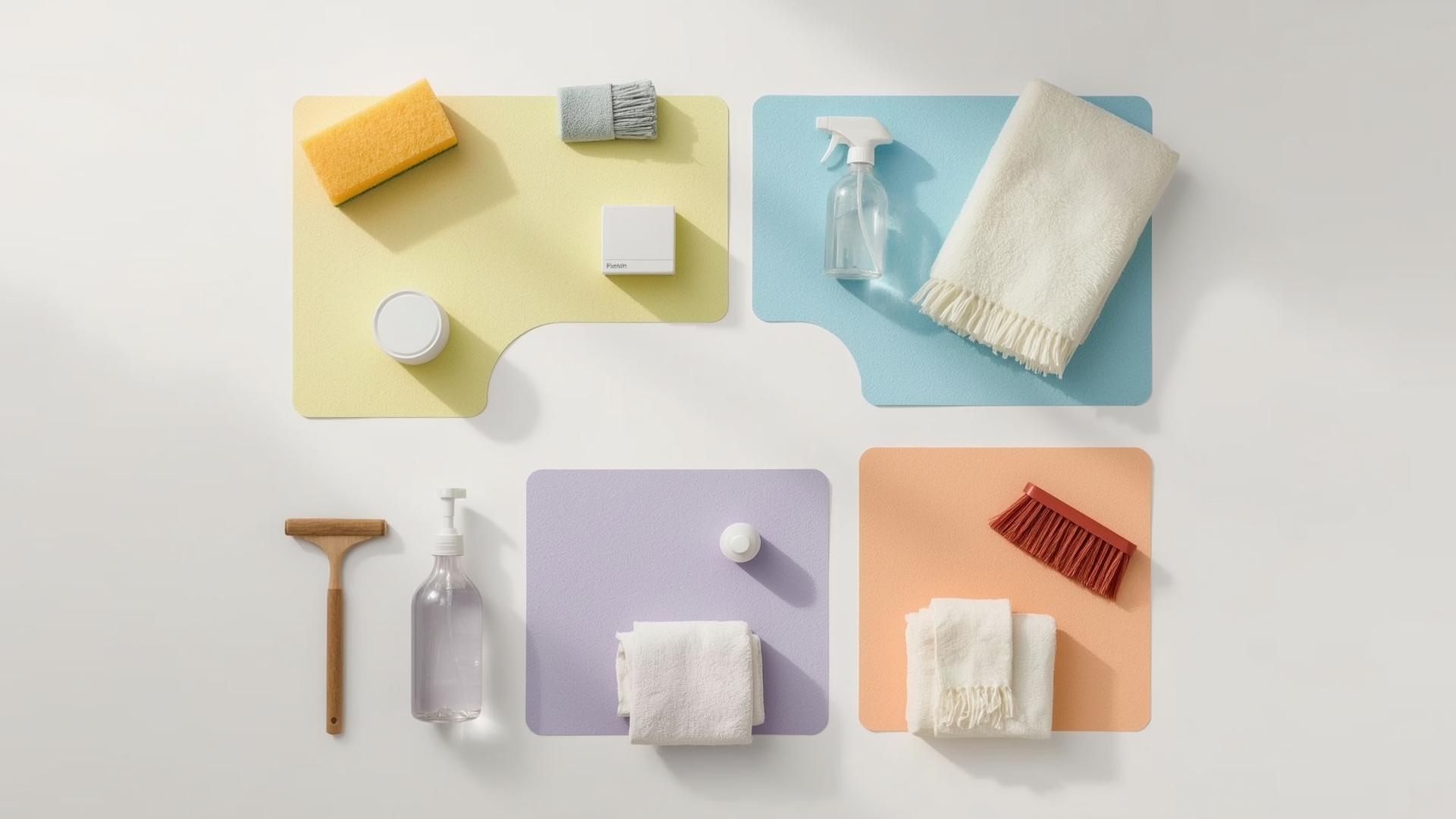
Having cleaning supplies stored inside each zone removes the friction of gathering supplies before you start. A small caddy under every bathroom sink and one in the kitchen cuts setup time to zero.
Tips for Building the Zone Cleaning Habit
- Habit stack: Attach zone cleaning to something you already do daily, like after dinner or before the kids get home from school
- Set a timer: A 20-minute timer makes the task feel finite and stops you from over-cleaning
- Print your schedule: A visible chart beats a phone app for most people because you can’t dismiss it
- Start with one zone: If the whole system feels overwhelming, just start with the kitchen zone for two weeks
- Track streaks: A simple calendar with checkmarks builds momentum quickly
Frequently Asked Questions
What is the best day of the week to start zone cleaning?
Monday is the most popular start day because it creates a clean week. But the best day is whichever day you’re most likely to stick with. If your week is unpredictable at the start, begin on Wednesday instead.
How long does zone cleaning take each week in total?
For a 3-bedroom home, zone cleaning takes roughly 90 to 120 minutes spread across 5 days. That works out to about 20 to 25 minutes per day. This does not include daily maintenance tasks, which add another 5 to 10 minutes.
Can zone cleaning work if you have pets?
Yes, but you may need to vacuum more frequently than once per week in zones with heavy pet traffic. Adding a quick daily vacuum pass to your pet’s favorite zones — usually the living area and bedroom — keeps hair and dander from building up between deep-clean days.
Should you clean all zones every week or rotate them?
Clean all zones every week for maintenance. The rotation concept applies to monthly deep-clean tasks, not weekly cleaning. Skipping a zone entirely for a week usually means it becomes overwhelming the following week.
What cleaning supplies should you keep in each zone?
Each zone needs a small caddy with an all-purpose spray, microfiber cloths, and a trash bag. Bathrooms also need a toilet brush and bathroom cleaner. Kitchens need a degreaser and scrub brush. Storing supplies in the zone eliminates setup time.
How is zone cleaning different from a spring cleaning routine?
Spring cleaning is a once-a-year deep clean of the entire home. Zone cleaning is a weekly maintenance system designed to prevent the need for a big seasonal overhaul. A home on a consistent zone schedule rarely needs a traditional spring clean.