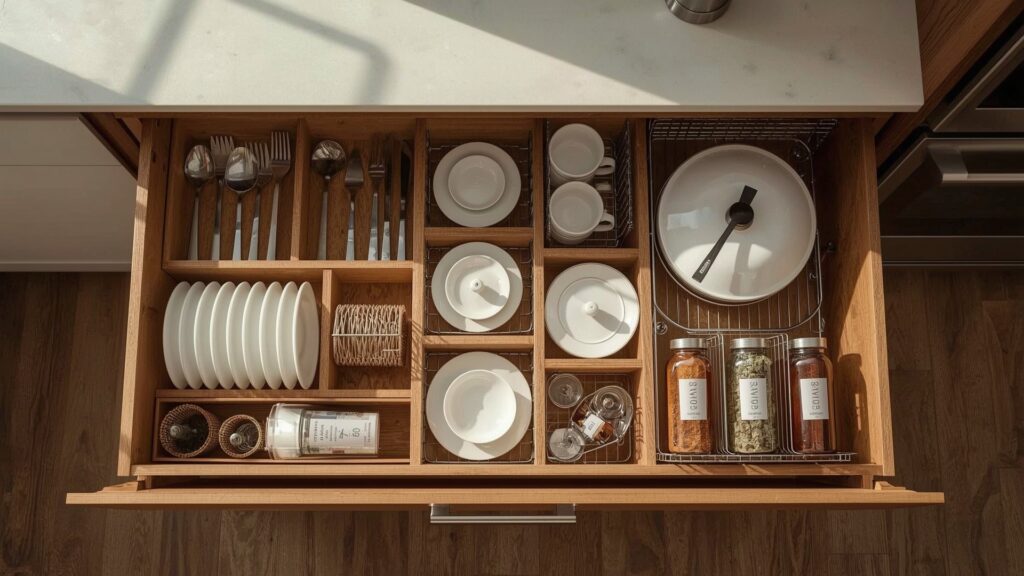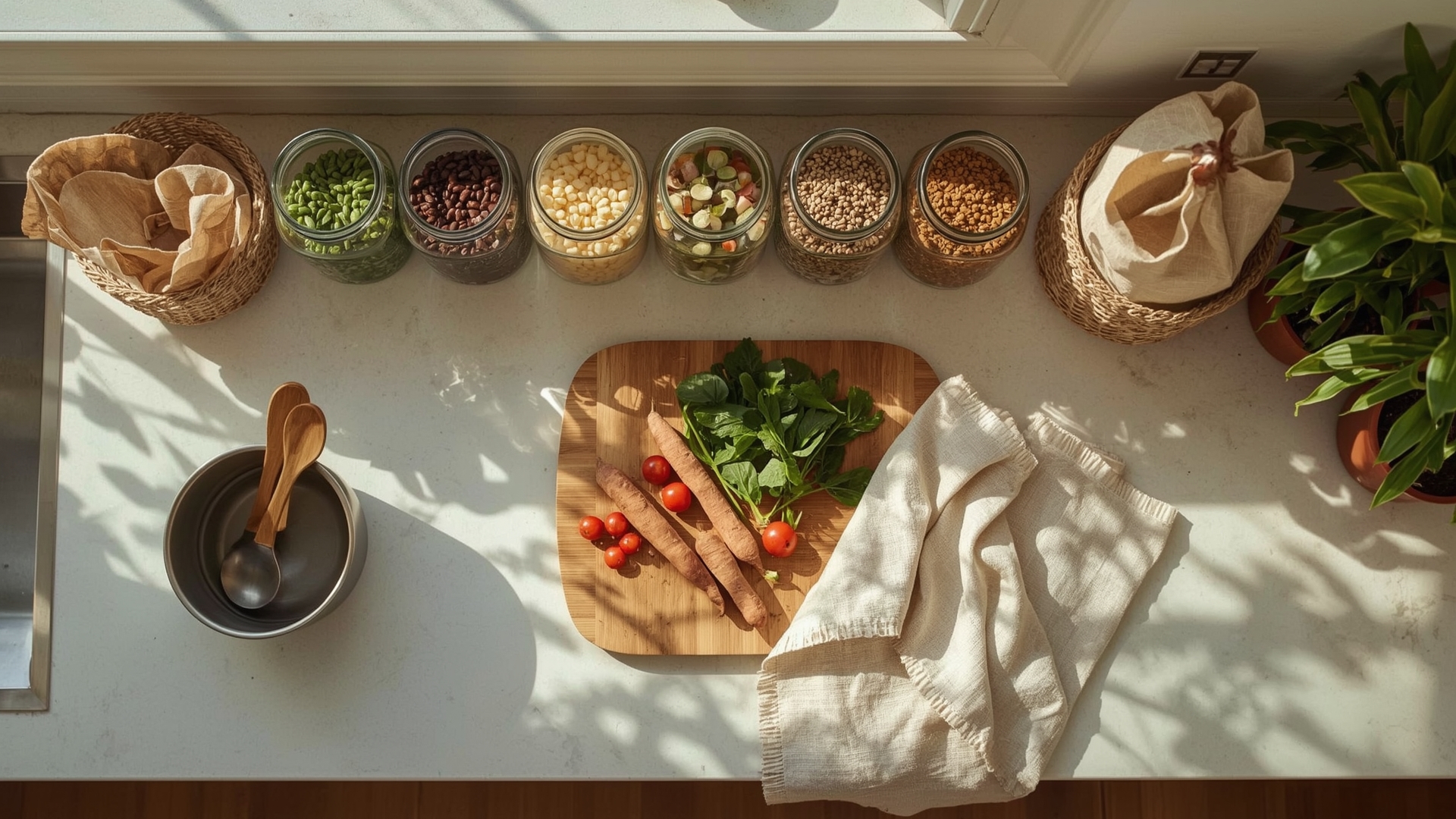
Your kitchen creates more waste than any other room in the house. Packaging, expired food, single-use containers, and forgotten scraps all pile up fast. A zero waste kitchen organization system tackles two problems at once: it keeps your kitchen tidy and reduces the trash you send to landfill every week.
This isn’t about buying a matching set of bamboo containers and calling it done. Real zero waste organization starts with using what you already have, rethinking how food is stored, and setting up simple systems that prevent waste before it starts.
Key Takeaways
- Reuse glass jars as your first storage move — they’re free, airtight, and last for decades.
- Audit before you organize — knowing what you already own prevents buying duplicates and wasting food.
- Bulk buying reduces packaging waste more than any eco-friendly container purchase.
- Compost bins belong in the kitchen — a countertop crock makes daily composting a 10-second habit.
- Beeswax wraps and silicone lids replace most single-use plastic wrap and bags.
- Clear, labeled containers reduce food waste because you can see what’s there before it goes bad.
- A “use it first” shelf in the fridge and pantry cuts spoilage more than any storage product.
What Does Zero Waste Kitchen Organization Actually Mean?
Quick Answer: Zero waste kitchen organization means setting up storage systems that reduce landfill waste — by reusing containers, buying in bulk, composting scraps, and eliminating single-use packaging. The goal is less trash, not a perfect-looking kitchen.
The term “zero waste” can feel intimidating. Very few households produce literally zero waste. A more realistic framing: low waste organization. You’re building habits and systems that send significantly less to the bin each week.
There are three pillars to this approach. First, refuse what you don’t need (single-use bags, excess packaging). Second, reuse what you already have (jars, containers, cloth). Third, return organic material to the earth through composting. Organization is the structure that makes all three of these easy to do every day.
How Do You Start a Kitchen Waste Audit?
Quick Answer: A kitchen waste audit means tracking everything you throw away for one week. Check your bin, note the categories (food scraps, packaging, single-use plastic), then target the biggest sources first. Most households find food scraps and plastic packaging top the list.
Before you buy a single storage product, spend one week looking at what you’re actually throwing away. Pull your bin apart (yes, really) and sort it into categories. You’ll likely find three main groups: food that went bad before you used it, plastic packaging from store-bought products, and single-use items like cling wrap and zip-lock bags.
This audit tells you exactly where to focus. If most of your waste is food, you need better visibility systems and a “use it first” shelf. If it’s packaging, bulk buying is your biggest lever. If it’s single-use plastics, swapping to reusable alternatives makes the most impact.
Common Kitchen Waste Categories
- Food scraps (vegetable peels, fruit cores, eggshells, coffee grounds)
- Expired or spoiled food (produce, leftovers, forgotten pantry items)
- Single-use plastic bags and cling wrap
- Cardboard and plastic food packaging
- Paper towels and disposable napkins
- Single-serve or individually wrapped snacks
How Can You Reuse Glass Jars for Kitchen Storage?
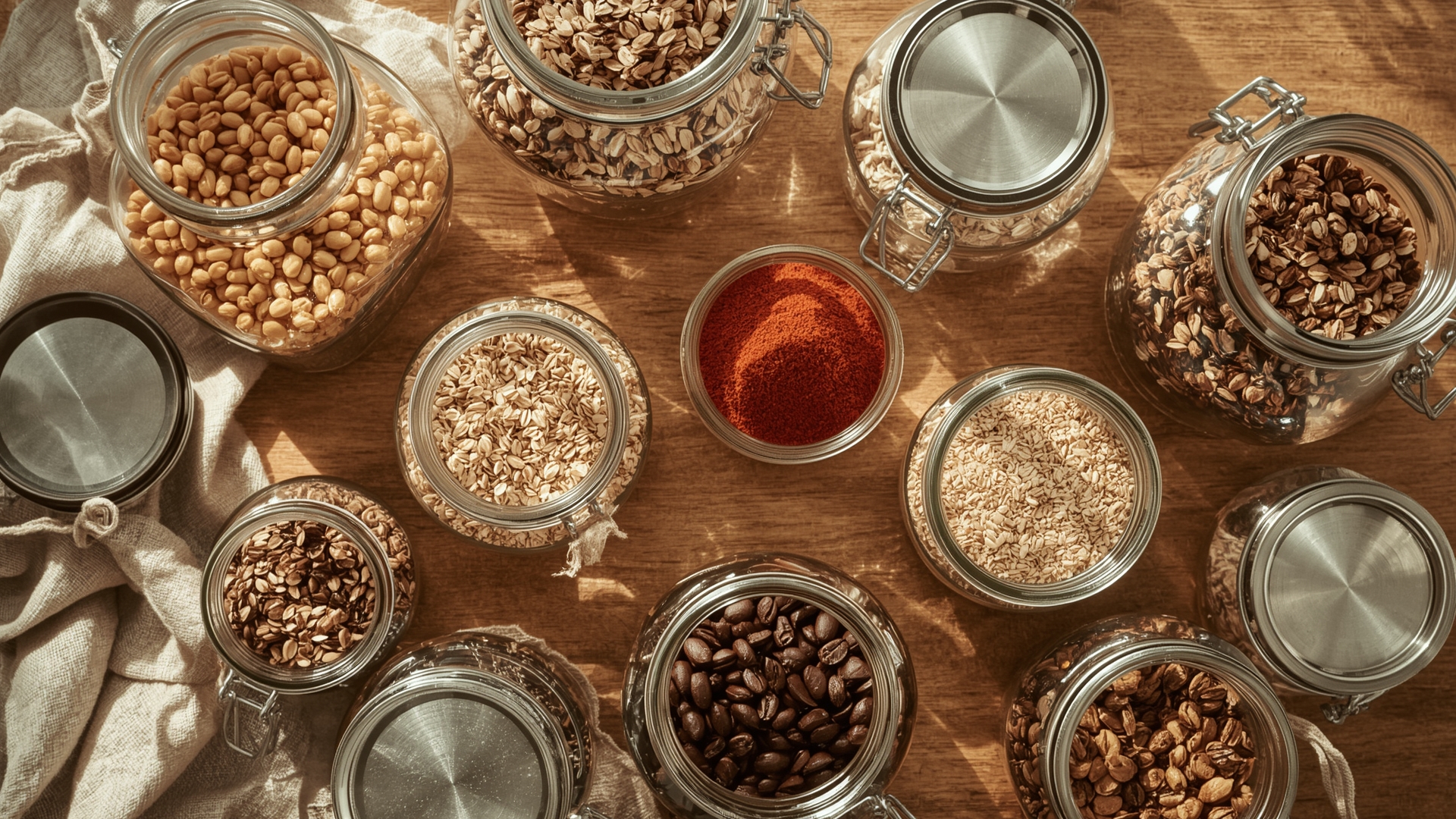
Quick Answer: Rinse and save glass jars from pasta sauce, jam, pickles, and salsa. They store dry goods, leftovers, bulk items, and fridge meal prep containers for free. Wide-mouth mason jars are the most versatile size for pantry and fridge use.
Glass jars are the backbone of a zero waste kitchen. You already pay for them when you buy jarred food — so save them. A pasta sauce jar stores dried lentils. A pickle jar holds overnight oats. A jam jar becomes a salad dressing shaker.
Wide-mouth jars (70mm opening) are the most useful because you can actually get your hand in to clean them. Standard-mouth jars work well for liquids. Jars with metal lids create a decent airtight seal. If you want a better seal for dry goods, swap the lids for plastic storage lids designed for mason jars — these cost around $1–2 each and fit both Ball and Kerr jar brands.
Best Uses for Reused Glass Jars by Size
| Jar Size | Original Source | Best Storage Use | Lid Type Needed |
|---|---|---|---|
| 4 oz (small) | Baby food, jam | Spices, seeds, small nuts | Original metal lid |
| 8 oz (half-pint) | Jam, nut butter | Overnight oats, salad dressing, snacks | Metal or plastic storage lid |
| 16 oz (pint) | Salsa, pickles | Grains, flour, leftover soups | Wide-mouth plastic storage lid |
| 24–32 oz (quart) | Pasta sauce, pickles | Bulk dry goods, large batch leftovers | Wide-mouth plastic storage lid |
| 64 oz (half-gallon) | Juice, fermented goods | Flour, sugar, coffee beans | Metal band + flat lid or plastic lid |
What Eco-Friendly Containers Actually Replace Single-Use Plastic?
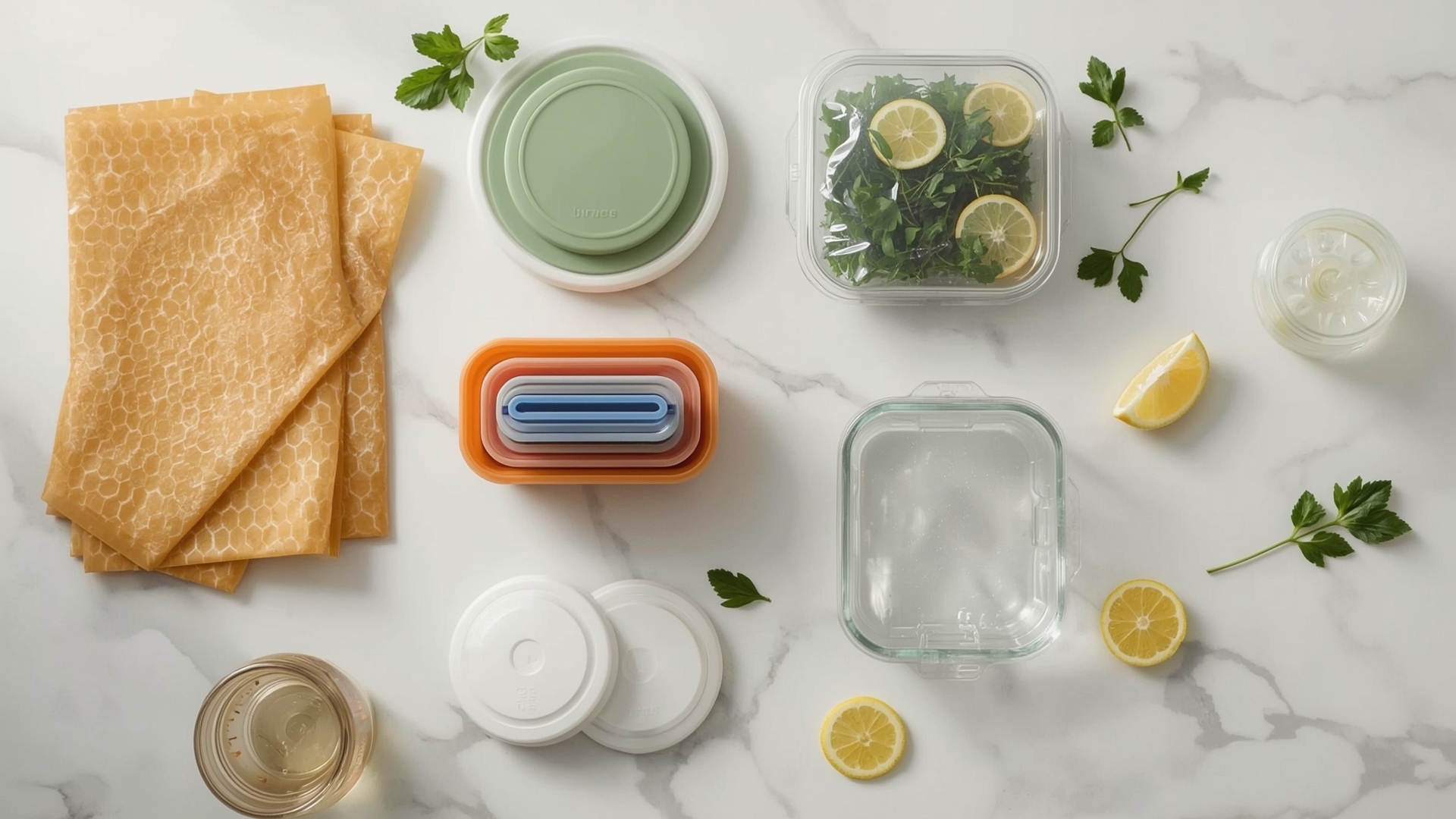
Quick Answer: Beeswax wraps replace cling wrap, silicone stretch lids replace plastic wrap on bowls, reusable silicone bags replace zip-lock bags, and glass containers with snap lids replace plastic takeout containers. Each swap saves hundreds of single-use items per year.
Plastic wrap and zip-lock bags are convenient, but they’re used once and thrown away. A few targeted swaps make a big difference without changing how you cook or store food.
Beeswax wraps are cotton fabric coated in beeswax and tree resin. They mold to the shape of bowls, wrap around cut produce, and cover dishes in the fridge. They’re not suitable for raw meat or hot foods, but they handle most everyday wrapping tasks. They last 6–12 months with cold-water washing and need replacing when they stop sticking to themselves.
Silicone stretch lids fit over bowls, pots, and cut produce (like half an avocado or onion) without any wrapping. A set of six covers sizes from 2.5 to 11 inches and costs around $12–20. They last 5+ years and go in the dishwasher.
Reusable silicone bags hold snacks, sandwiches, marinated proteins, and frozen fruit. They work in the dishwasher, freezer, and most can handle sous vide temperatures up to 400°F. A set of four costs $15–25 and replaces hundreds of zip-lock bags annually.
Eco-Friendly Container Comparison: EAV Table
| Container Type | Replaces | Lifespan | Cost Range | Temperature Safe | Dishwasher Safe |
|---|---|---|---|---|---|
| Beeswax wrap | Cling wrap, plastic bags | 6–12 months | $10–18 for 3-pack | Cold only (below 40°F) | No (cold water hand wash) |
| Silicone stretch lids | Plastic wrap on bowls | 5+ years | $12–20 for 6-pack | Up to 450°F | Yes |
| Reusable silicone bags | Zip-lock bags | 3–5 years | $15–25 for 4-pack | Up to 400°F | Yes |
| Glass containers with snap lids | Plastic takeout containers | 10+ years | $25–45 for set of 5 | Oven safe up to 400°F (without lid) | Yes |
| Cloth produce bags | Plastic produce bags | 3–5 years | $8–15 for 5-pack | Room temperature | Yes (mesh bag setting) |
| Stainless steel containers | Plastic food storage | 20+ years | $20–50 per container | Fridge, freezer safe | Yes (most brands) |
How Does Bulk Buying Reduce Kitchen Packaging Waste?
Quick Answer: Buying dry goods from bulk bins eliminates individual packaging entirely. You bring your own jars or cloth bags, fill them with grains, nuts, spices, and legumes, and pay by weight. One bulk shopping trip can eliminate 10–20 pieces of plastic packaging.
Bulk bins at grocery stores and food co-ops let you buy exactly the amount you need in your own container. No box, no bag, no plastic wrap. You pay per ounce or pound. Common bulk items include rolled oats, brown rice, lentils, chickpeas, almonds, cashews, coffee, and spices.
Call your store ahead to confirm their container policy. Many stores weigh your empty container at the register (called a tare weight) so you’re only charged for the food. Bring your reused glass jars or cloth bags. Label each jar with the bin number and price per pound using a small piece of masking tape — this speeds up checkout.
Pantry Items Best Suited for Bulk Buying
- Whole grains: rolled oats, brown rice, farro, barley, quinoa
- Legumes: lentils, black beans, chickpeas, split peas
- Nuts and seeds: almonds, cashews, sunflower seeds, pumpkin seeds
- Baking staples: all-purpose flour, almond flour, sugar, baking soda
- Dried fruit: raisins, apricots, cranberries, dates
- Spices and herbs: cumin, paprika, cinnamon, dried oregano
- Pantry basics: coffee, loose-leaf tea, cocoa powder, nutritional yeast
How Should You Organize Your Pantry to Prevent Food Waste?
Quick Answer: Use a FIFO system — First In, First Out. Newer items go to the back, older items come forward. A dedicated “use it first” shelf or bin holds items expiring soon. Clear containers and consistent labeling with dates reduce spoilage by keeping food visible.
Most food gets thrown away because it’s forgotten, not because it’s inedible. It was pushed to the back of the pantry. The label faced the wrong way. It got buried under newer purchases. A zero waste pantry system fixes this with visibility and rotation.
The “Use It First” Zone
Designate one shelf or bin in your pantry specifically for items that need to be used soon. This could be a small basket labeled “Eat Me First” or simply the front row of your pantry shelf. Any item within two weeks of expiry goes here. Any leftover from a bulk buy that’s running low goes here. When planning meals, start with this zone.
How to Label Jars and Containers Effectively
Label every jar with the contents and the date it was filled. Masking tape and a permanent marker cost almost nothing and peel off cleanly when the jar is empty. For pantry staples, write the “filled on” date. For leftovers, write the “use by” date (3 days for fridge, 3 months for freezer as a general guide).
Chalkboard labels are reusable and look clean on glass jars. They cost $5–12 for a pack of 24 and wipe off with a damp cloth. Round labels work well for jar lids so you can identify contents from above when jars are stored on shelves below eye level.
Zero Waste Pantry Organization: EAV Table
| Storage Method | Best For | Shelf Life Improvement | Cost | Reusable |
|---|---|---|---|---|
| Glass jar with airtight lid | Grains, legumes, nuts, spices | Extends 2–4x over open bags | Free (reused) or $1–3 new | Yes, indefinitely |
| Cloth produce bags (fridge) | Leafy greens, herbs, carrots | Adds 3–7 extra days | $8–15 for 5-pack | Yes, machine washable |
| Beeswax wrap (fridge) | Cut produce, cheese, bowls | Adds 2–5 extra days | $10–18 for 3-pack | Yes, 6–12 months |
| Masking tape labels | Jars, containers, bags | Reduces forgotten food waste | $2–4 per roll | No (but minimal waste) |
| Chalkboard labels | Permanent jars and containers | Reduces forgotten food waste | $5–12 for 24-pack | Yes, wipe and rewrite |
How Do You Set Up a Kitchen Composting System?
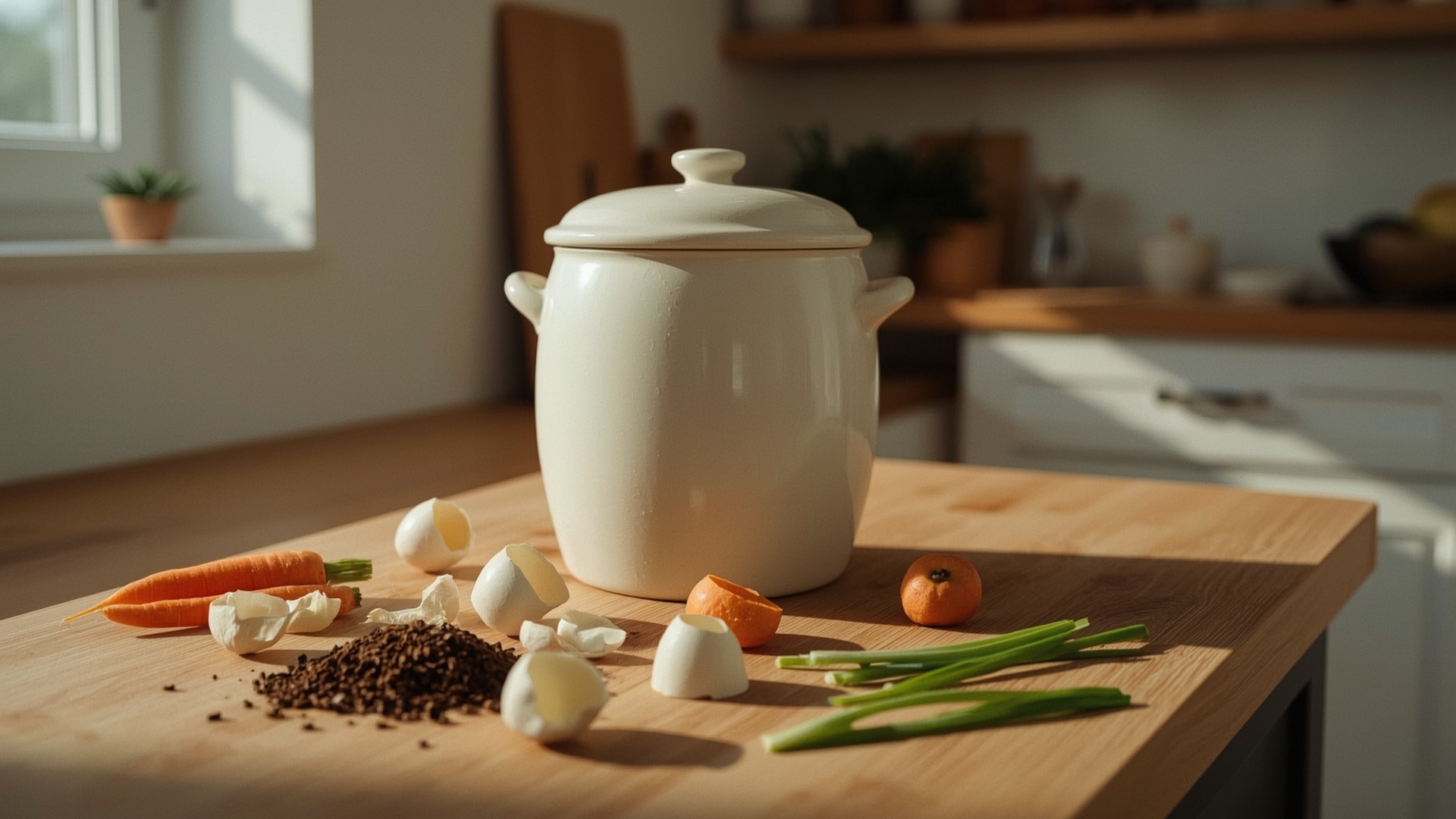
Quick Answer: Start with a small countertop compost crock (1–1.5 gallon capacity) next to the cutting board. Empty it every 2–3 days into an outdoor bin or municipal compost pickup. Compostable scraps include fruit, vegetables, eggshells, coffee grounds, and paper towels.
Composting is the most impactful single habit in a zero waste kitchen. Food scraps make up roughly 30% of household landfill waste. When scraps go to landfill, they release methane, a greenhouse gas more potent than CO2 in the short term. When composted correctly, those same scraps become nutrient-rich soil amendment.
You don’t need a yard to compost. Countertop compost crocks feed into community compost programs, municipal food waste pickup, or vermicomposting bins (using worms) that work in apartments. A simple ceramic or stainless steel crock with a charcoal filter lid controls odor effectively — the filter needs replacing every 3–6 months and costs $5–10.
What Can and Can’t Go in a Home Compost Bin
| Compost Category | What to Include | What to Avoid | Reason to Avoid |
|---|---|---|---|
| Fruit and vegetables | All peels, cores, seeds, rinds | Citrus in large amounts (worm bins) | Too acidic for worms |
| Grains and legumes | Cooked plain rice, pasta, bread | Seasoned or oily grains | Attracts pests |
| Dairy and meat | Not in home bins | All dairy, meat, fish, bones | Attracts pests, creates odor |
| Coffee and tea | Grounds, paper filters, loose tea | Staples, plastic tea bags | Non-compostable materials |
| Paper | Unbleached paper towels, napkins | Bleached or glossy paper | Chemicals disrupt decomposition |
| Eggshells | All eggshells | N/A | Always compostable |
Composting Options by Living Situation
- House with yard: Outdoor tumbler bin or open pile. Tumblers cost $50–150 and produce finished compost in 4–8 weeks with regular turning.
- Apartment or no yard: Vermicomposting (worm bin) works indoors with minimal odor. A Worm Factory 360 bin costs $90–130 and processes scraps silently in 60–90 days.
- Curbside pickup available: Check your municipality. Many cities added food scrap pickup programs. Use a countertop crock to collect between pickups.
- Community garden or drop-off: Search for local compost drop-off sites through local food co-ops or urban farming organizations.
How Do You Organize a Zero Waste Fridge?
Quick Answer: Zone your fridge so leftovers stay at eye level, produce goes in designated drawers with cloth bags, and a clear “use it first” shelf holds anything expiring within 3 days. See-through glass containers replace opaque plastic so nothing gets forgotten.
Fridge organization and food waste are directly connected. Studies consistently show that the food most likely to get thrown away is the food you can’t see. Opaque containers, overstuffed shelves, and produce buried in crisper drawers create invisible food that spoils before you notice it.
Zero Waste Fridge Zone System
- Top shelf (eye level): Leftovers in clear glass containers, labeled with use-by dates. This is prime real estate — put what needs eating soonest here.
- Middle shelf: Dairy, eggs, opened condiments in original glass jars.
- Bottom shelf: Raw proteins (kept in sealed glass containers on a tray to catch drips).
- Crisper drawers: One for high-humidity produce (leafy greens, herbs in damp cloth bags), one for low-humidity produce (apples, carrots, peppers).
- Door shelves: Condiments, nut butters, drinks. These experience the most temperature fluctuation, so avoid storing dairy or eggs here.
- “Use It First” tray: A small tray on the top or middle shelf for anything within 3 days of spoiling.
Which Paper Towel Alternatives Work Best in a Kitchen?
Quick Answer: Unpaper towels — reusable cloth squares cut from old t-shirts or flannel fabric — handle most kitchen cleanup tasks. Swedish dishcloths absorb 20x their weight and replace 17 paper towel rolls each. A stack of 10–12 cloth towels handles a full week before washing.
Paper towels seem small, but the average household uses 80+ rolls per year. That’s around $60–100 annually and a significant amount of wood pulp, water, and packaging.
Swedish dishcloths are a cellulose-cotton blend that looks and feels like a thick paper towel but rinses clean and dries fast. They resist odors better than sponges because they dry so quickly. Each cloth costs $6–10 and replaces about 17 paper towel rolls. They’re compostable at end of life.
DIY unpaper towels cost almost nothing. Cut old flannel shirts or cotton t-shirts into 10×10 inch squares. Hem the edges (optional) or leave them raw — flannel won’t fray much. Stack them in a basket where you’d normally keep paper towels. Toss the used ones into the wash with your regular laundry.
How Do You Reduce Packaging Waste When Grocery Shopping?
Quick Answer: Bring reusable bags, cloth produce bags, and clean jars for bulk purchases. Choose products in glass or cardboard over plastic when available. Buy the largest size you’ll actually use — fewer large packages mean less packaging per serving than many small ones.
Packaging waste starts at the store, not at the bin. Small habit changes at the point of purchase make a bigger dent than sorting and recycling after the fact.
Grocery Shopping Habits That Cut Packaging Waste
- Bring your own produce bags — skip the single-use plastic ones at the store
- Choose glass jars over plastic tubs (pasta sauce, nut butter, yogurt)
- Buy the family-size version of frequently used items instead of individual packs
- Shop at farmers’ markets where produce is often packaging-free
- Avoid pre-cut or pre-washed produce in plastic containers — whole items have less packaging
- Use your own containers at deli counters and fish counters (call ahead to confirm the store allows it)
- Skip bottled water — filter tap water into a glass pitcher or use a countertop filter
What Are the Best Zero Waste Swaps for a Kitchen on a Budget?
Quick Answer: The highest-impact free swaps are reusing glass jars for storage, cutting cloth rags from old t-shirts, and starting a compost bin with a bucket you already own. Paid swaps with the best value are silicone stretch lids ($12–20) and a Swedish dishcloth set ($15–25).
Zero waste doesn’t require a zero waste haul. Buying a new set of eco-friendly products to replace perfectly functional plastic ones is its own kind of waste. The most sustainable approach is to use what you have until it wears out, then replace it with something durable and low-waste.
Zero Waste Kitchen Swaps: Cost vs. Impact
| Swap | Replaces | Upfront Cost | Annual Savings | Difficulty |
|---|---|---|---|---|
| Reuse glass jars | New storage containers | $0 | $20–60 | Very easy |
| DIY cloth rags | Paper towels | $0 | $60–100 | Very easy |
| Silicone stretch lids (6-pack) | Plastic wrap on bowls | $12–20 | $10–20 | Easy |
| Beeswax wraps (3-pack) | Cling wrap and plastic bags | $10–18 | $15–30 | Easy |
| Swedish dishcloths (set of 5) | Paper towels | $25–40 | $40–80 | Easy |
| Countertop compost crock | Throwing scraps in trash | $20–50 | N/A (environmental) | Easy |
| Bulk bin shopping | Packaged dry goods | $0 (bring your jars) | $50–150 | Moderate |
How Do You Maintain a Zero Waste Kitchen Long-Term?
Quick Answer: Consistency beats perfection. Build one habit at a time — start with a compost crock, then switch to cloth towels, then add bulk buying. A weekly 5-minute fridge scan to catch produce before it spoils prevents more waste than any organizational overhaul.
Most people start strong and fade out within a month. That’s usually because they tried to change everything at once. The sustainable approach (in every sense of the word) is to layer in changes gradually until they feel automatic.
Pick your biggest waste category from your audit and solve that one thing first. Once it’s a habit — meaning you do it without thinking — add the next change. Composting, once set up, takes about 30 seconds a day. Bulk buying takes one extra step at the store. Each habit compounds over time without adding real effort to your day.
Monthly Zero Waste Kitchen Maintenance Checklist
- Check pantry jar labels — rotate items expiring soon to the front
- Replace compost crock charcoal filter if odors develop (every 3–6 months)
- Wash beeswax wraps with cool water and gentle soap — never hot water
- Inspect silicone bags for cracks or seal damage — replace if compromised
- Scan fridge crisper drawers for forgotten produce
- Wash cloth towels and dishcloths on a hot cycle weekly
- Check bulk pantry jars for moisture or pests — especially in humid climates
Frequently Asked Questions
Can you use plastic containers in a zero waste kitchen?
Yes, if you already own them. Throwing away usable plastic to replace it with glass creates more waste, not less. Continue using your existing plastic containers until they crack or degrade. Replace them with glass or stainless steel when they wear out.
How do you store herbs without plastic in the fridge?
Treat fresh herbs like flowers. Trim the stems and place them in a small glass jar with an inch of water. Cover loosely with a cloth produce bag or a reused bread bag and refrigerate. Cilantro, parsley, and basil stored this way last 1–2 weeks instead of 3–4 days in plastic packaging.
What is vermicomposting and does it smell?
Vermicomposting uses red wiggler worms to break down food scraps inside a contained bin. A well-maintained worm bin smells like damp soil, not rotting food. It works in apartments, closets, or under the sink. The worms produce a nutrient-rich material called worm castings used as fertilizer.
Is bulk bin shopping actually cheaper than packaged food?
Often yes, but not always. Bulk almonds, rolled oats, and spices are typically 20–40% cheaper per ounce than branded packaged versions. Specialty items like organic superfoods may cost more at bulk bins. Bring a price-per-ounce comparison when you shop to evaluate each item.
How do you deal with food scraps that can’t be composted at home?
Meat, fish, dairy, and oily foods don’t work well in home compost bins. Many municipal pickup programs accept these through separate food waste bins. Some communities have drop-off sites for hard-to-compost items. Check local resources — many urban areas expanded food scrap programs in recent years.
What is the single most effective zero waste kitchen habit?
A weekly fridge scan prevents more waste than any container purchase. Spend five minutes every week pulling everything forward, checking dates, and moving anything near expiry to eye level. This one habit can cut household food waste by 30–50% on its own.