You don’t need a big budget to have a home that feels pulled together and personal. With the right approach, a few smart swaps and some creative effort can completely transform a room — for under $100 in many cases. The key is knowing where to spend, where to save, and how to make low-cost items look intentional.
This guide covers every room in your home. You’ll find specific ideas, real price ranges, DIY projects you can finish in a weekend, and styling strategies that make cheap look chic.
Key Takeaways
- Thrift stores and discount retailers are the highest-value sources for affordable decor — prices run 60–90% lower than retail.
- Paint is the single most impactful low-cost change you can make in any room, with a gallon costing $30–$60.
- Mixing textures and layering creates a styled look without expensive furniture — pillows, throws, and rugs do the heavy lifting.
- DIY projects like gallery walls, floating shelves, and upcycled furniture can cost under $30 and look custom.
- Trending styles in 2026 — warm minimalism, earthy tones, and natural materials — all work well with budget-friendly sourcing.
- One statement piece per room anchors the space and makes everything else look more expensive by association.
What Are the Best Affordable Home Decor Strategies That Actually Work?
Quick Answer: The most effective affordable decor strategies are painting walls, layering textiles, shopping secondhand, and adding one focal-point piece per room. These four moves cost under $150 total and deliver the most visible change per dollar spent.
Most people overspend on decor because they try to change everything at once. A smarter approach is to identify the one or two things that will have the biggest visual impact per room and start there.
The hierarchy of impact goes: paint first, then lighting, then textiles, then accessories. If you follow that order, you’ll get the most transformation for the least money.
How to Prioritize Decor Upgrades by Visual Impact
- Paint: $30–$60 per gallon, covers 350–400 sq ft, changes the entire mood of a room
- Lighting: A new pendant or floor lamp ($20–$80) shifts the atmosphere more than most furniture
- Textiles: Throw pillows ($8–$25 each), blankets ($15–$40), and area rugs ($30–$120) add warmth and color
- Wall art: Framed prints from digital downloads ($0–$5 per print, frames from thrift stores $2–$10)
- Plants: Small indoor plants ($5–$15) bring life and texture to any corner
What’s the “One Statement Piece” Rule?
Every room needs one anchor — a piece that draws the eye first. It could be a bold-colored couch, an oversized mirror, a large piece of wall art, or a dramatic light fixture. When you have one strong focal point, budget items around it look intentional instead of cheap.
This rule works because the eye naturally seeks contrast. A $15 wicker basket from a discount store looks thoughtfully placed next to a striking vintage mirror. Without that anchor, the basket just looks like a basket.
How Can You Decorate on a Budget Using Thrift Stores and Secondhand Finds?
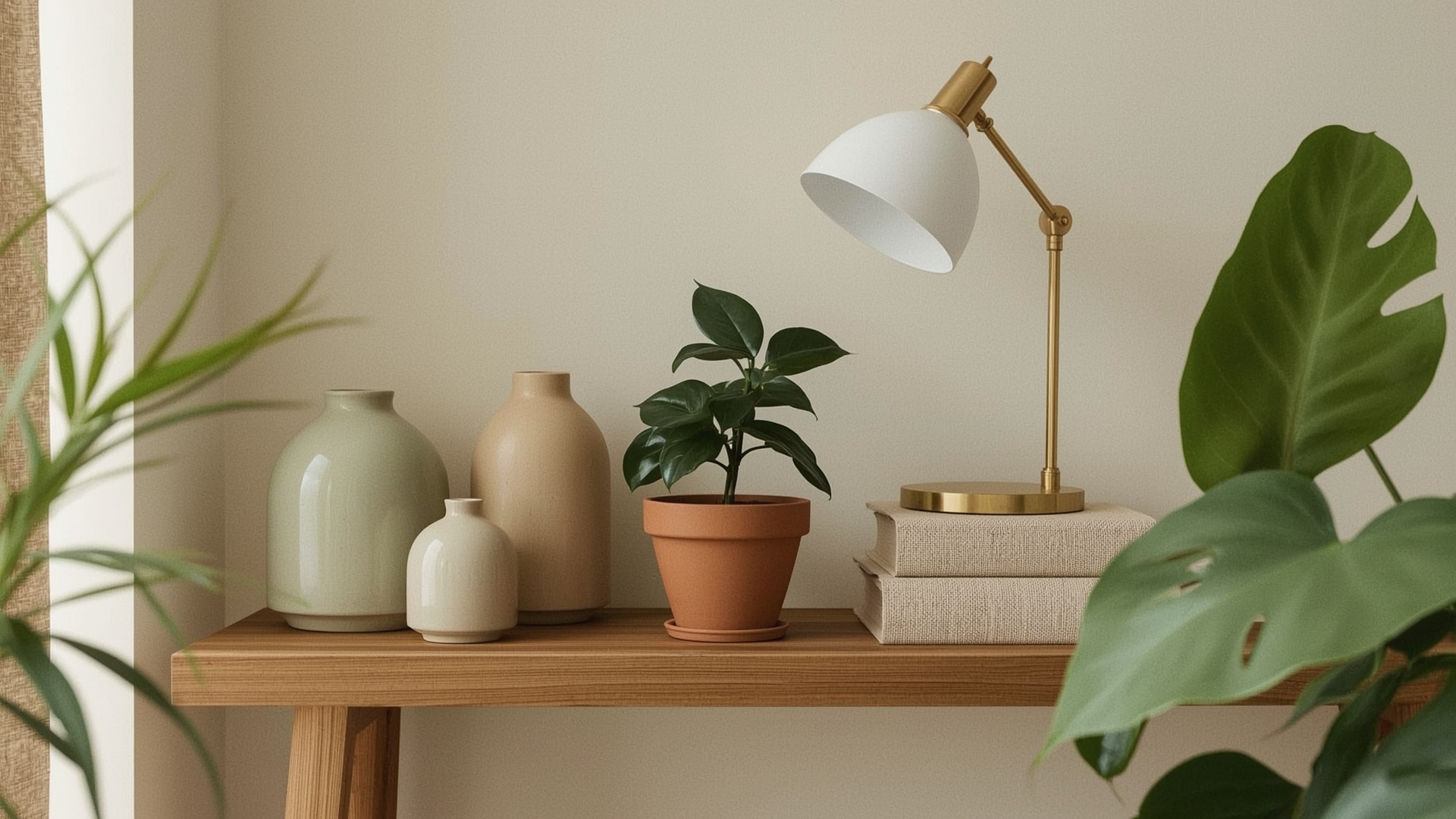
Quick Answer: Thrift stores offer furniture, frames, vases, and textiles at 60–90% below retail. The best finds are solid wood furniture, ceramic vases, mirrors, and lamps — items that clean up easily and look high-end with minimal effort.
Secondhand shopping is the single biggest lever in budget decorating. Goodwill, Facebook Marketplace, estate sales, and local buy-nothing groups are all viable sourcing channels. The trick is knowing what to look for and what to avoid.
What to Buy Secondhand (and What to Skip)
| Item | Thrift Store Price Range | Retail Equivalent | Buy Secondhand? | Notes |
|---|---|---|---|---|
| Solid wood furniture | $15–$80 | $150–$600 | Yes | Sand and repaint to refresh |
| Mirrors | $5–$30 | $50–$300 | Yes | Clean glass, paint frame if needed |
| Ceramic vases and pots | $2–$10 | $20–$80 | Yes | Easy to clean, always useful |
| Lamps (base only) | $5–$20 | $40–$150 | Yes | Replace shade with new one ($10–$25) |
| Upholstered sofas/chairs | $30–$150 | $300–$1,200 | Cautiously | Check for odors, stains, pet hair |
| Mattresses and pillows | Any price | N/A | No | Hygiene concern — always buy new |
How to Make Secondhand Finds Look Expensive
The fastest way to elevate a thrift store find is to paint it. A can of spray paint ($5–$8) can turn a dated brass lamp into a matte black statement piece in 20 minutes. Chalk paint ($15–$20 per quart) works on wood furniture without sanding and gives a smooth, custom finish.
Grouping items in odd numbers (3, 5, or 7) also makes collections look intentional. Three mismatched thrifted vases in different heights, grouped on a shelf, look like a curated vignette — not a random pile.
Which DIY Home Decor Projects Give You the Most Bang for Your Buck?
Quick Answer: Gallery walls, floating shelves, painted furniture, and fabric-covered accent pieces are the highest-ROI DIY projects. Most cost $10–$40 in materials and can be completed in one afternoon with basic tools.
DIY decor gets a bad reputation because people try overly ambitious projects. The best budget DIY projects are simple, forgiving, and fast. Here are the ones worth your time.
DIY Gallery Wall
A gallery wall transforms a blank space into a visual centerpiece. You can build one entirely from free or low-cost materials. Print artwork from free sites like Unsplash or use personal photos. Frames from thrift stores cost $2–$5 each. Spray paint them the same color for a cohesive look.
Lay your arrangement on the floor first. Once you like it, use paper templates and painter’s tape to map it on the wall before hammering. This prevents extra holes and saves frustration.
DIY Floating Shelves
Floating shelves add storage and display space without furniture. A basic pine board from a hardware store costs $8–$15 for a 6-foot length. Cut to size, sand, stain or paint, and mount with shelf brackets ($3–$8 per pair). Total cost for a 3-shelf setup: $30–$50.
DIY Fabric Projects
You don’t need to sew to use fabric in your decor. An oversized piece of fabric ($5–$15 per yard) can become a tapestry (tack it to the wall), a table runner, or a pillow cover with iron-on hem tape. No needle required.
DIY Budget Project Cost Comparison
| Project | Materials Cost | Time Required | Skill Level | Visual Impact |
|---|---|---|---|---|
| Gallery wall (6–9 frames) | $15–$40 | 2–3 hours | Beginner | High |
| Floating shelves (3 shelves) | $30–$50 | 3–4 hours | Beginner/Intermediate | High |
| Painted furniture piece | $15–$25 | 4–6 hours | Beginner | Very High |
| Fabric wall tapestry | $10–$20 | 30 minutes | Beginner | Medium-High |
| Painted accent wall | $25–$45 | 3–5 hours | Beginner | Very High |
What Are the Best Affordable Decor Ideas for the Living Room?
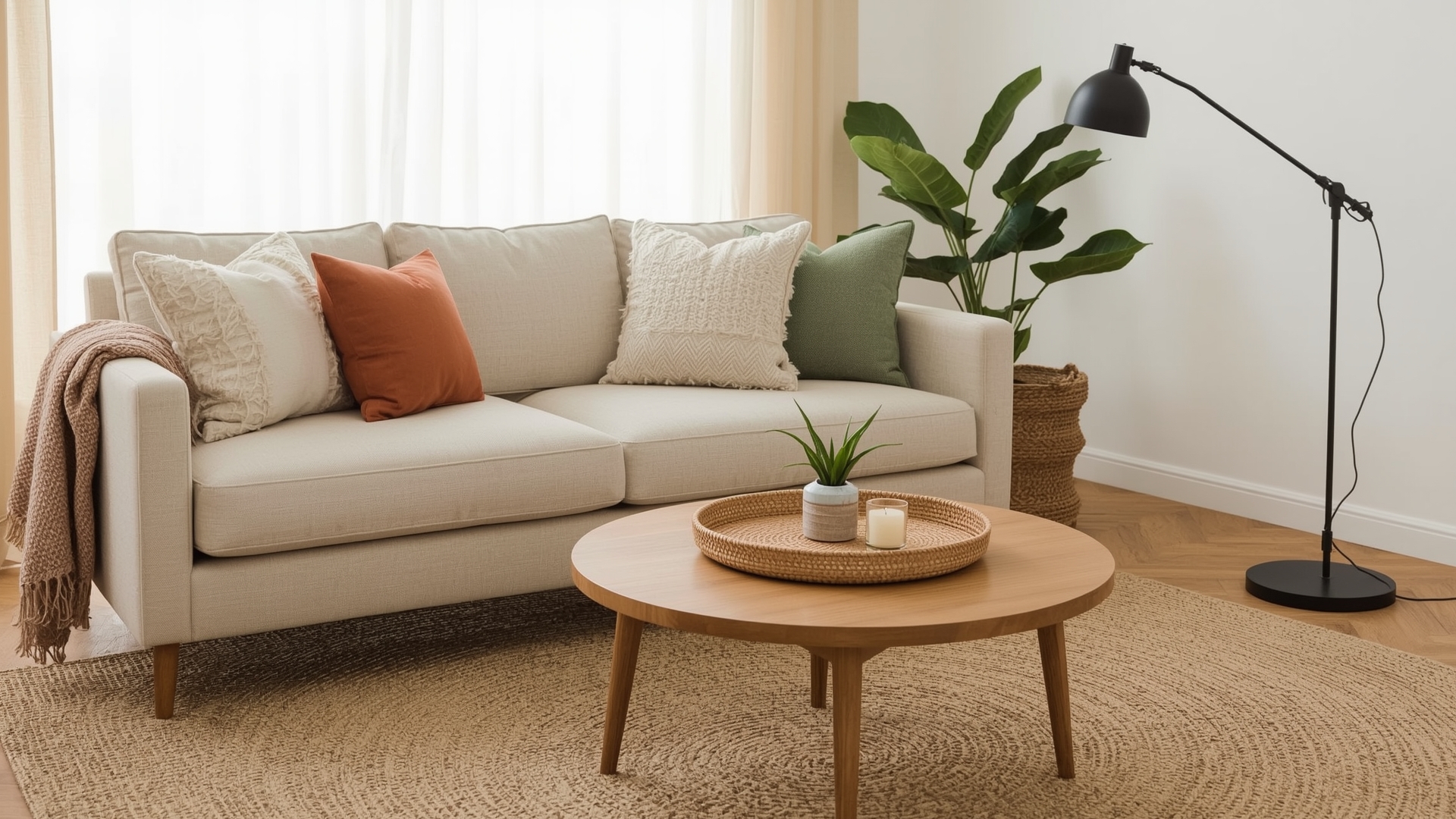
Quick Answer: Layering rugs, adding throw pillows in two or three coordinating colors, hanging an oversized mirror, and adding a floor lamp transforms a living room for $60–$150 total — without replacing any furniture.
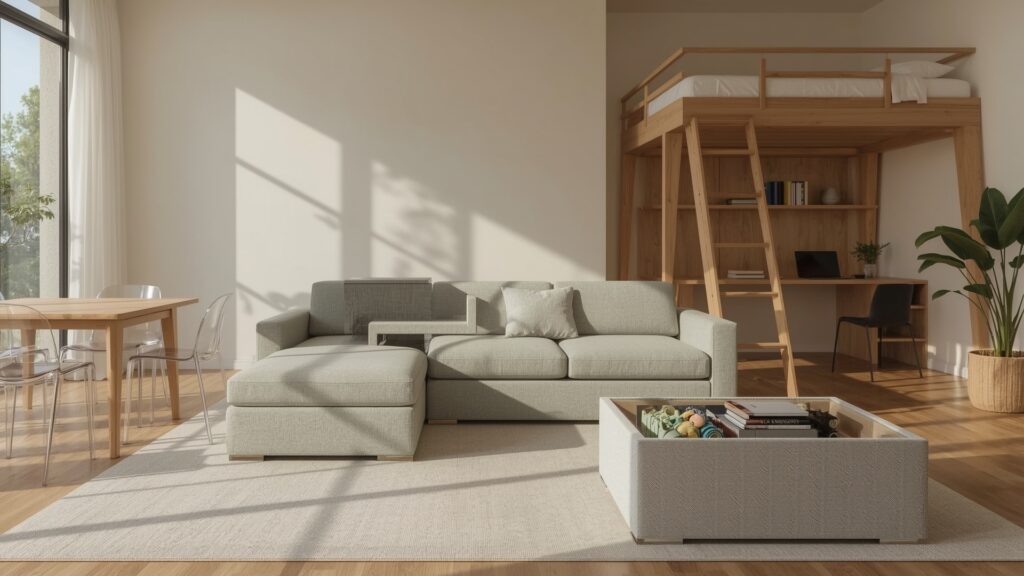
The living room is where most people want to see the most change. Fortunately, it’s also the easiest room to transform with textiles alone.
How to Style a Living Room Sofa on a Budget
Your sofa is likely the most expensive piece you own. Make it look intentional without buying a new one. Start with a throw blanket draped over one arm ($15–$35). Add three to five throw pillows in coordinating colors — two solids, one pattern works well as a formula.
If your sofa shows wear, a fitted sofa cover ($30–$70) is a low-cost fix. Look for ones in neutral linen or velvet textures — they photograph and style better than cheaper polyester versions.
Affordable Living Room Decor by Category
| Item | Budget Pick | Price Range | Where to Buy |
|---|---|---|---|
| Area rug (5×7) | Jute or flatweave | $35–$90 | IKEA, Amazon, Rugs USA |
| Throw pillows (set of 2) | Solid linen or velvet | $18–$40 | H&M Home, TJ Maxx, Amazon |
| Floor lamp | Arc or tripod style | $35–$75 | IKEA, Walmart, thrift stores |
| Oversized mirror | Leaning floor mirror | $40–$90 | IKEA, HomeGoods, Facebook Marketplace |
| Decorative tray | Wood or rattan | $8–$20 | Dollar Tree, HomeGoods, thrift stores |
How Do You Decorate a Bedroom for Under $100?
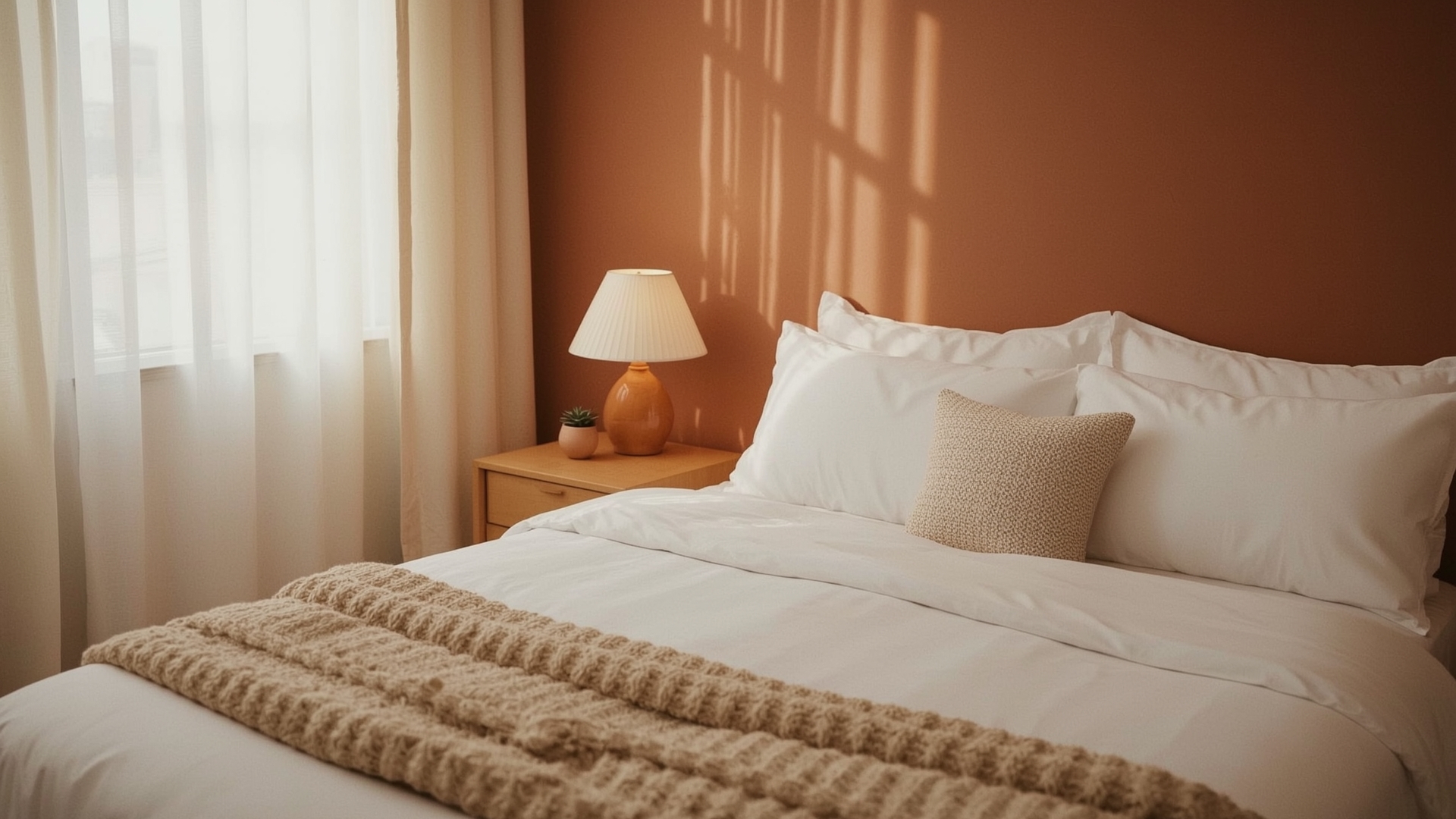
Quick Answer: You can transform a bedroom for under $100 by focusing on bedding, lighting, and one wall treatment. A new duvet cover ($25–$45), string lights or a bedside lamp ($15–$30), and a framed print or painted accent wall does it.
The bedroom is your most personal space. It also tends to be the most overlooked — people spend on living rooms and kitchens and forget the room they’re in every morning and night.
Bedding Is the Biggest Visual Element in a Bedroom
Your bed takes up 40–60% of the visual real estate in a typical bedroom. That makes bedding your highest-impact investment. A quality duvet cover from IKEA (the Kungsblomma or Nallenäva lines) runs $25–$40 and looks expensive. White, cream, and warm beige work with almost every wall color.
Layer with two euro shams (26×26 pillow covers, $10–$20 each) and two standard pillowcases. Add one textured throw at the foot of the bed. This creates a hotel-style layered look for under $80.
Bedroom Lighting on a Budget
Overhead lights are harsh. Replacing them isn’t always an option in rentals. The fix is layered lighting: a bedside lamp ($15–$30), a string of warm LED lights ($8–$15), or a battery-powered sconce ($20–$35). These warm sources make any room feel cozy and expensive — regardless of what the furniture cost.
What Wall Treatments Work in a Bedroom Without a Big Budget?
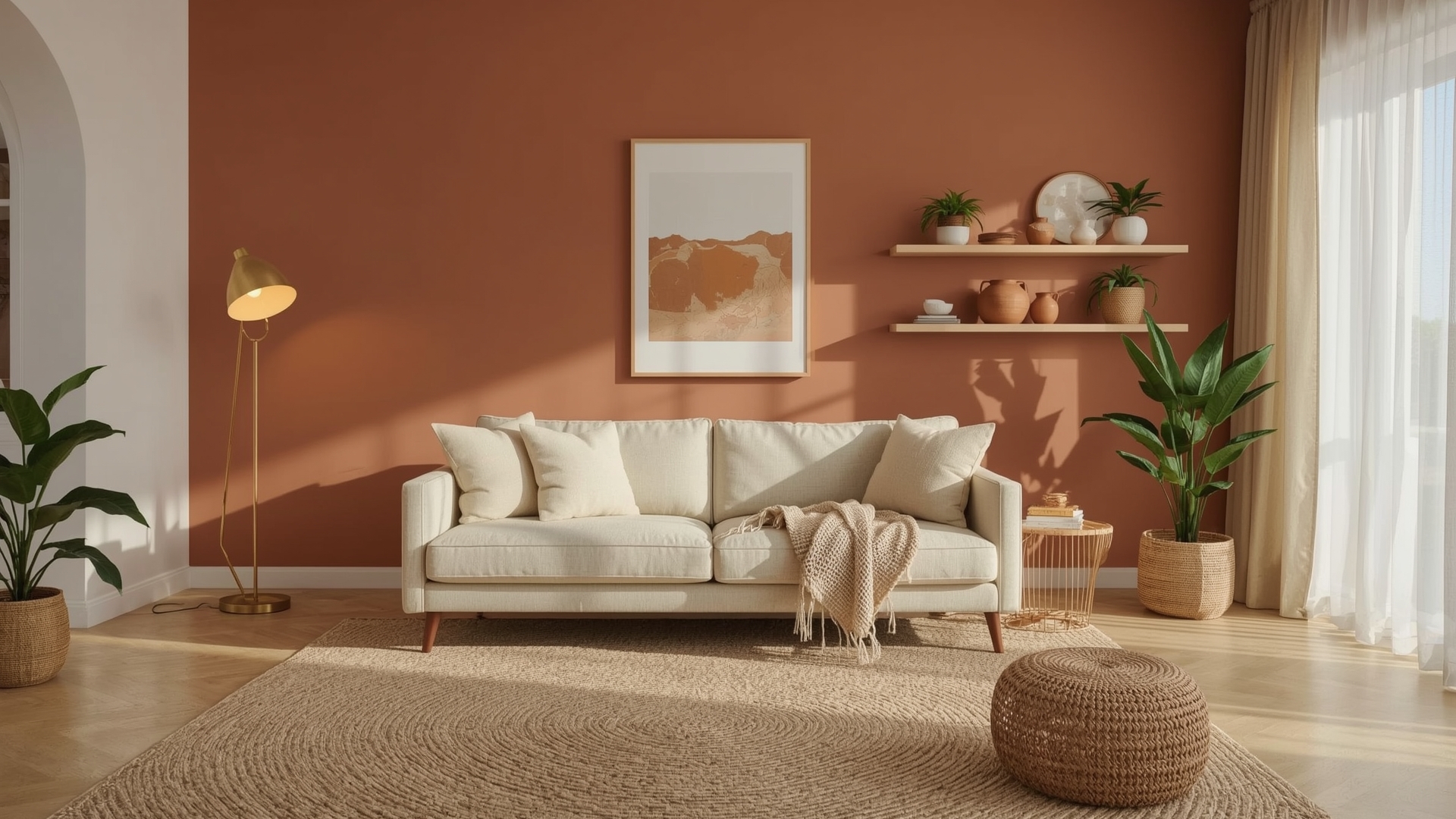
An accent wall behind the bed is the most impactful single change in a bedroom. Paint it a deep earthy tone — terracotta, sage green, dusty blue, or warm charcoal. One gallon covers the wall and costs $30–$55.
If you rent and can’t paint, removable peel-and-stick wallpaper ($15–$35 per roll) creates the same effect. It peels off cleanly when you move, leaving no damage behind.
What Are Budget-Friendly Kitchen and Dining Room Decor Ideas?
Quick Answer: Kitchens and dining rooms transform fastest with new cabinet hardware, open shelving displays, and table styling. Cabinet pulls cost $1–$4 each, a full kitchen update runs $20–$60, and it’s one of the highest-ROI changes in any home.
You can’t always renovate a kitchen. But you can make it look intentional with styling choices that cost almost nothing.
Swapping Cabinet Hardware Is a Weekend Upgrade
Cabinet handles and pulls are the jewelry of a kitchen. Standard hardware from big-box stores costs $1–$3 per pull. Black matte hardware on white or light wood cabinets gives a modern, designer-style look. For a kitchen with 20 cabinet doors and drawers, the total cost is $20–$60 and a few hours of work with a screwdriver.
How to Style Open Shelves in a Kitchen
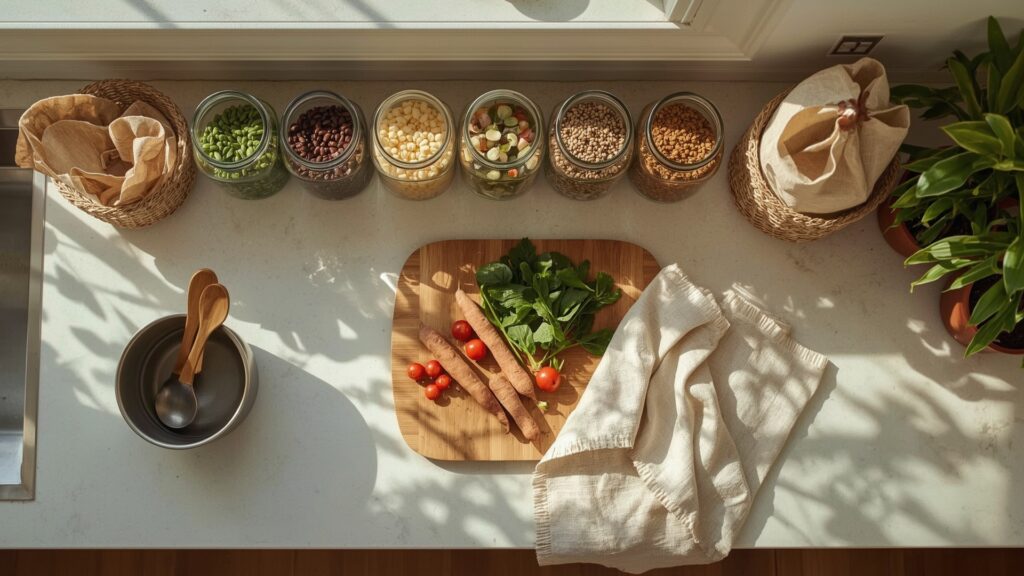
Open shelving looks best when it’s functional and intentional. Group items by material: stack white ceramic bowls together, line up matching glass jars, add a small plant or two. The formula is: 70% functional items, 30% decorative. This keeps it from looking cluttered or staged.
Dining Table Styling for Under $30
A simple centerpiece changes how a dining area feels. A wooden bowl ($8–$15) filled with fruit or decorative balls, a candle cluster ($5–$12), or a small plant in a ceramic pot ($10–$20) anchors the table. Add a linen table runner ($10–$18) and your table looks ready for guests — every day.
What Trending Decor Styles Work Well on a Budget?
Quick Answer: Warm minimalism, cottagecore, and earthy maximalism are the leading styles right now — and all three naturally favor secondhand finds, natural materials, and DIY elements, making them ideal for budget decorating.
Following trends doesn’t mean buying new. Most 2026 decor trends actually favor exactly the kind of items you find at thrift stores and discount shops.
Warm Minimalism
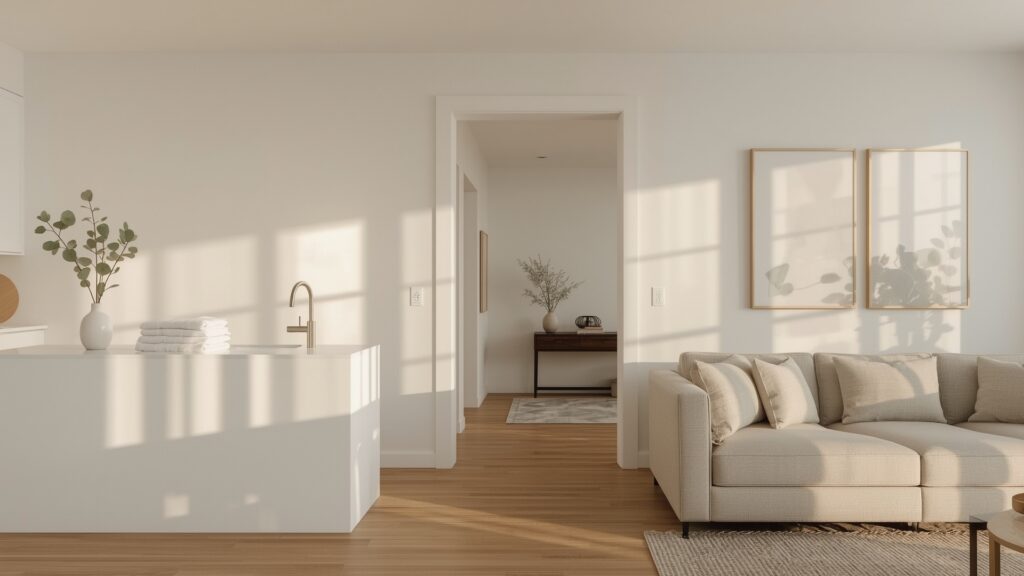
Warm minimalism is the move away from cold, sterile white spaces toward minimal furniture with warm tones — cream, oat, terracotta, warm wood. It’s easy to achieve on a budget because it requires fewer items, not more. Edit your space down, add warm lighting, and swap cool-toned accessories for earthy ones.
Cottagecore and Natural Textures
Cottagecore draws on vintage aesthetics, natural materials, and a lived-in comfort. Linen, rattan, dried flowers, ceramic, and unfinished wood are the core materials. All of these are thrift store staples and are available at discount shops like HomeGoods, TJ Maxx, and World Market year-round.
Earthy Color Palettes That Work in Any Room
| Color | Pairs Well With | Best Room Use | Paint Brand Option | Approx. Cost Per Gallon |
|---|---|---|---|---|
| Terracotta | Cream, warm white, sage | Living room, bedroom | Benjamin Moore Earthen Path | $55–$65 |
| Sage Green | Warm wood, linen, tan | Kitchen, bedroom, office | Sherwin-Williams Rosemary | $50–$60 |
| Warm Beige/Oat | Almost everything | Any room | Behr Pale Straw | $30–$45 |
| Dusty Blue | White trim, natural wood | Bedroom, bathroom | PPG Faded Denim | $35–$50 |
| Warm Charcoal | Brass accents, cream | Office, bedroom accent wall | Sherwin-Williams Urbane Bronze | $50–$60 |
How Can You Make a Small Space Look More Expensive?
Quick Answer: In small spaces, scale and light matter most. Use fewer, larger items instead of many small ones, hang curtains high and wide, add mirrors to reflect light, and keep the floor as clear as possible. These changes cost under $80 total.
Small spaces suffer most from clutter and poor scale. Ironically, adding more decor usually makes a small room look smaller. The goal is strategic, not minimal — every item earns its place.
Curtain Placement Is a Free Design Trick
Hanging curtain rods 4–6 inches above the window frame (or at ceiling height) makes ceilings look taller. Extending the rod 6–10 inches past the window on each side makes the window look wider. You don’t need new curtains — just move the hardware. A pack of curtain rod brackets costs $5–$12.
Mirrors Multiply Light and Space
A large mirror hung across from a window reflects natural light and makes a room feel twice as big. Thrift stores reliably stock mirrors in all sizes. A 24×36 inch framed mirror from Goodwill costs $5–$15. That same mirror at retail runs $60–$150.
Vertical Space Is Underused in Most Homes
Most people decorate horizontally. But vertical space — the wall above eye level — is free real estate. Tall bookshelves, stacked art, or a climbing plant on a trellis draws the eye up and makes ceilings feel higher. This costs nothing if you already own shelves, or $15–$30 for a secondhand bookcase.
Where Are the Best Places to Buy Affordable Home Decor?
Quick Answer: The best sources for affordable home decor are thrift stores (Goodwill, Salvation Army), discount retailers (HomeGoods, TJ Maxx, IKEA), and online marketplaces (Facebook Marketplace, Craigslist, OfferUp) for secondhand furniture and decor under $50.
Not all budget sources are equal. Some are better for furniture, others for small accessories. Knowing which store to use for which item saves time and money.
Best Stores by Decor Category
- IKEA: Furniture basics, textiles, lighting — best for flat-pack furniture under $100
- HomeGoods / TJ Maxx: Throw pillows, candles, vases, mirrors, small furniture — always rotating stock
- Target (Threshold and Studio McGee lines): Stylish basics at mid-range prices ($10–$80)
- Amazon: Area rugs, string lights, basic frames, command hooks — shop by reviews carefully
- Dollar Tree / Five Below: Faux plants, basic frames, candle holders, small decorative objects
- Facebook Marketplace: Furniture, mirrors, rugs — negotiate prices, pick up locally
- Goodwill / Salvation Army: Lamps, frames, ceramics, wood furniture — best value per dollar
What Home Decor Mistakes Make Budget Items Look Cheap?
Quick Answer: The most common mistakes are buying too many small items, mismatching scales, using too many colors, and neglecting lighting. Fixing these costs nothing — it’s about editing what you already have, not adding more.
Budget decor looks cheap when it lacks intention. These mistakes are easy to make and just as easy to fix.
The 5 Most Common Budget Decor Mistakes
- Too many small items: A cluster of tiny decorative objects reads as clutter. Consolidate and keep only what earns its space.
- Wrong rug size: A rug that’s too small floats in the middle of the room. In a living room, all front legs of furniture should sit on the rug.
- Too many colors: Stick to a palette of 3 colors per room (1 dominant, 1 secondary, 1 accent). Random color mixing reads as chaotic.
- Only overhead lighting: Overhead lights flatten a room. Layer in floor lamps, table lamps, or LED strips at lower heights.
- Art hung too high: Gallery standard is eye level — roughly 57–60 inches from the floor to the center of the piece. Most people hang art too high.
Frequently Asked Questions
How much does it realistically cost to redecorate a living room on a budget?
A living room refresh using thrift store finds, budget retailers, and one or two DIY projects typically runs $75–$200. This covers a new rug, throw pillows, wall art, and a lamp. Furniture replacement adds more, but isn’t necessary for a significant transformation.
Can you decorate a whole apartment for under $500?
Yes — especially if you shop secondhand and prioritize high-impact changes. Allocate roughly $150 for the living room, $100 for the bedroom, $75 for the kitchen, and $75 for a bathroom. That leaves $100 for plants, candles, and small accessories across the whole space.
What’s the best paint color for making a small room feel bigger?
Light warm neutrals like oat, cream, and warm white reflect the most light and expand a space visually. Cool grays can feel stark. If you want color, soft sage green and dusty blue work well without closing in the walls. Finish matters too — eggshell reflects more light than flat paint.
Is peel-and-stick wallpaper worth it for renters?
Peel-and-stick wallpaper is one of the best investments for renters. It costs $15–$35 per roll, installs in under an hour, and removes without damaging walls. Quality varies by brand — Tempaper and NuWallpaper are the most consistently reviewed for clean removal.
How do you make IKEA furniture look more expensive?
The most effective upgrades are swapping out handles and pulls ($1–$4 each), adding trim or molding with wood glue ($10–$20), and placing furniture on a quality rug. An IKEA KALLAX unit with new brass hardware on a jute rug looks completely different from the floor model.
What indoor plants are best for decorating on a budget?
Pothos, snake plants, and spider plants are the top choices. They cost $5–$15 at most garden centers and home improvement stores. All three are low-maintenance, grow quickly, and work in low-light conditions. Propagating them (rooting cuttings in water) eventually gives you free plants to fill more spaces.