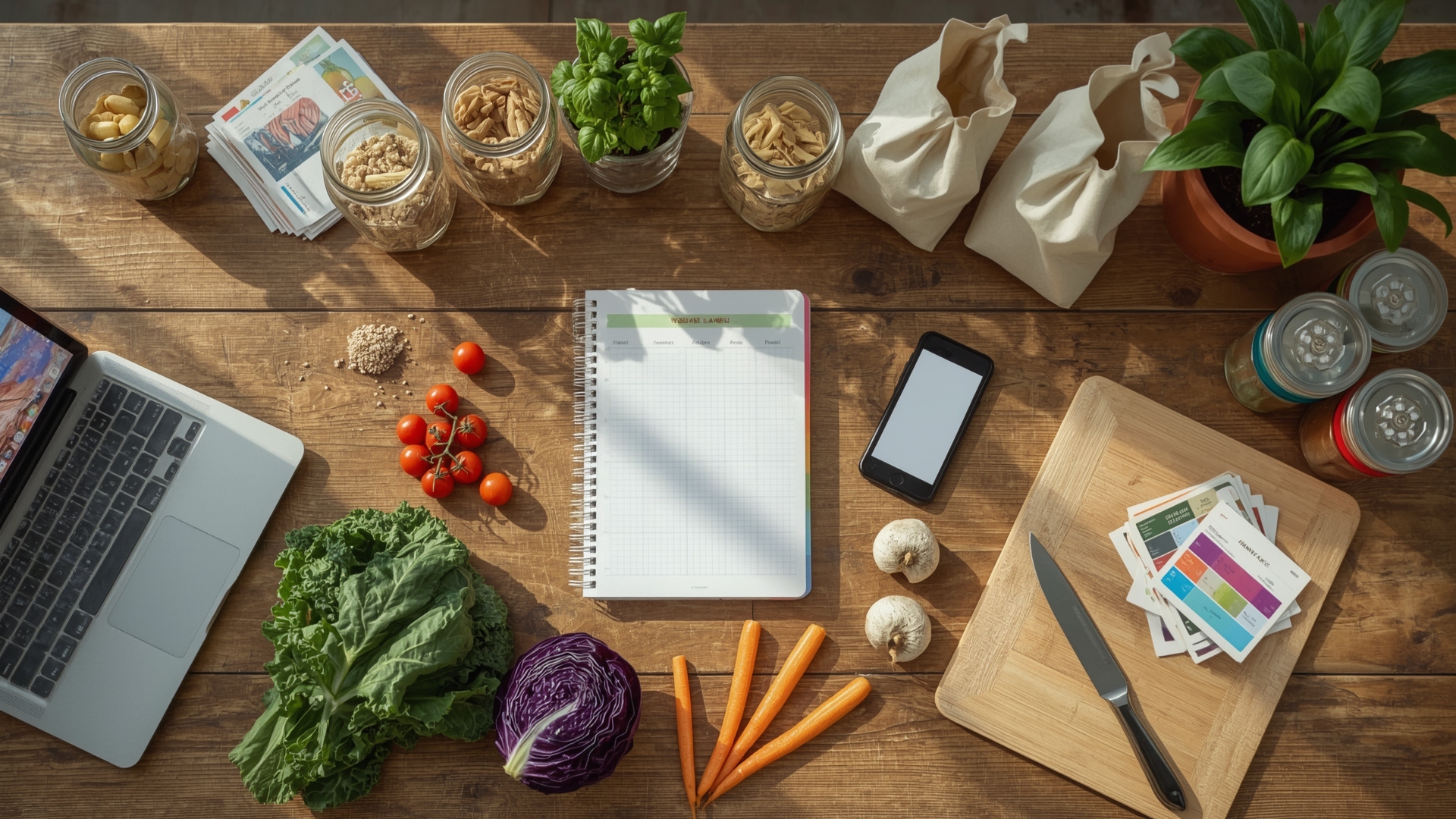
Meal planning sounds like something only super-organized people do. But the truth is, it’s one of the simplest habits you can build to save money, reduce food waste, and stop asking “what’s for dinner?” every single night.
You don’t need a fancy system or hours of prep. You need a clear process. This guide walks you through that process step by step, from checking your pantry to cooking in batches so your week runs smoother.
Key Takeaways
- Start with a pantry inventory before writing a single meal idea. It saves money and prevents buying duplicates.
- Plan 5 dinners max as a beginner. Leave room for leftovers and one flexible night.
- Build your grocery list by store section, not by meal. This cuts shopping time significantly.
- Batch cooking one or two staples on the weekend makes weeknight meals faster and less stressful.
- A repeating meal rotation is the beginner’s best shortcut. You don’t need new recipes every week.
- Families need a theme-night system to get everyone on board without resistance.
What Is Meal Planning and Why Does It Actually Help?
Quick Answer: Meal planning means deciding what you’ll eat for the week before you shop. It reduces daily decision fatigue, cuts grocery spending by 20-30%, and shrinks food waste by giving every ingredient a purpose before it enters your kitchen.
Every time you stand in front of the fridge wondering what to make, you’re spending mental energy. Multiply that by 21 meals a week and it adds up fast.
Meal planning moves those decisions to one focused session instead of spreading them across every evening. Studies on household food budgeting consistently show that planned shoppers spend less and waste less than unplanned shoppers.
For families especially, the benefit goes beyond cost. It reduces the “I don’t want that” mealtime conflict because everyone knows what’s coming.
What Problems Does Meal Planning Solve?
- Decision fatigue: Making dinner choices when you’re hungry and tired leads to takeout. Planning removes the decision entirely.
- Budget overruns: Unplanned shopping adds impulse buys. A list built from a plan keeps the cart focused.
- Food waste: Vegetables bought without a plan often rot. A plan assigns every item a purpose.
- Nutrition drift: Without a plan, meals default to convenience foods. Planning lets you build in balanced options.
How Do You Start a Pantry Inventory Before Planning Meals?
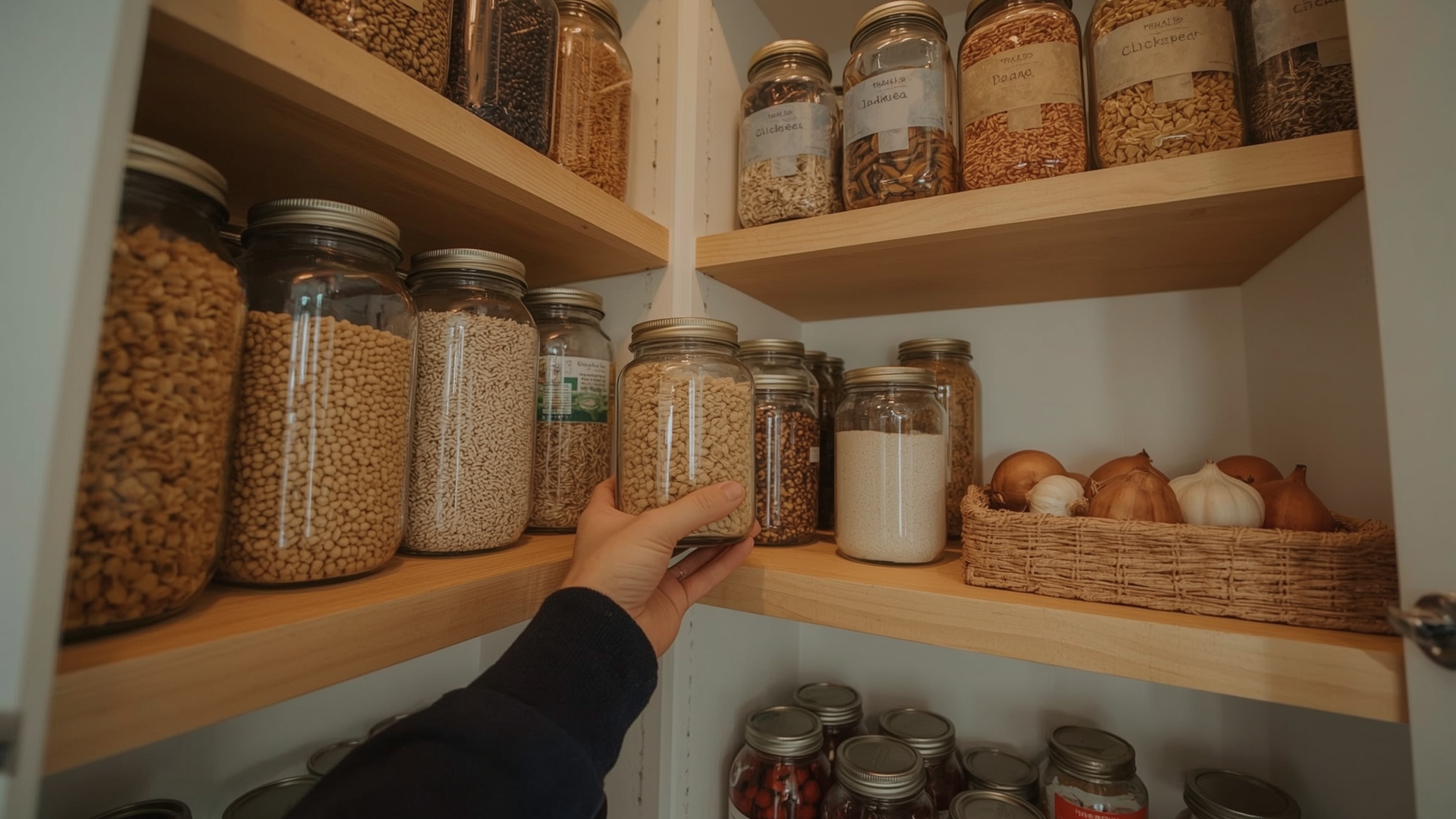
Quick Answer: A pantry inventory means checking what you already own before planning. Open every cabinet, check the freezer, and list usable items. This prevents duplicate purchases and often reveals 2-3 meals you can build without buying anything new.
Most beginners skip this step and immediately open a recipe app. That’s backwards. Your pantry is the starting point, not recipes.
A pantry inventory takes about 15 minutes and pays off immediately. You’ll likely find canned beans, pasta, frozen proteins, and condiments you forgot you had.
How to Do a Quick Pantry Inventory
- Check the freezer first. Frozen proteins (chicken, ground beef, fish) are often already there.
- List shelf-stable staples. Canned goods, dried pasta, rice, lentils, oats.
- Note what’s almost expired. These items get used first in your plan.
- Check the fridge for produce. Anything fresh needs to be used within the first 2 days of your plan.
- Write it down. A simple notes app or paper list is fine. You just need visibility.
Pantry Staple Categories Worth Tracking
| Category | Common Items | Average Shelf Life | Meal Uses |
|---|---|---|---|
| Canned proteins | Tuna, chickpeas, black beans | 2-5 years | Salads, tacos, soups |
| Grains | White rice, pasta, oats, quinoa | 1-3 years | Sides, bowls, breakfast |
| Frozen proteins | Chicken breasts, ground beef, shrimp | 3-12 months | Stir fry, tacos, pasta |
| Canned vegetables | Diced tomatoes, corn, green beans | 2-4 years | Soups, sides, casseroles |
| Sauces and condiments | Soy sauce, salsa, pasta sauce, broth | 6-24 months | Flavor base for most meals |
| Dried legumes | Lentils, split peas, dry beans | 1-2 years | Soups, stews, grain bowls |
How Do You Build a Weekly Meal Plan From Scratch?
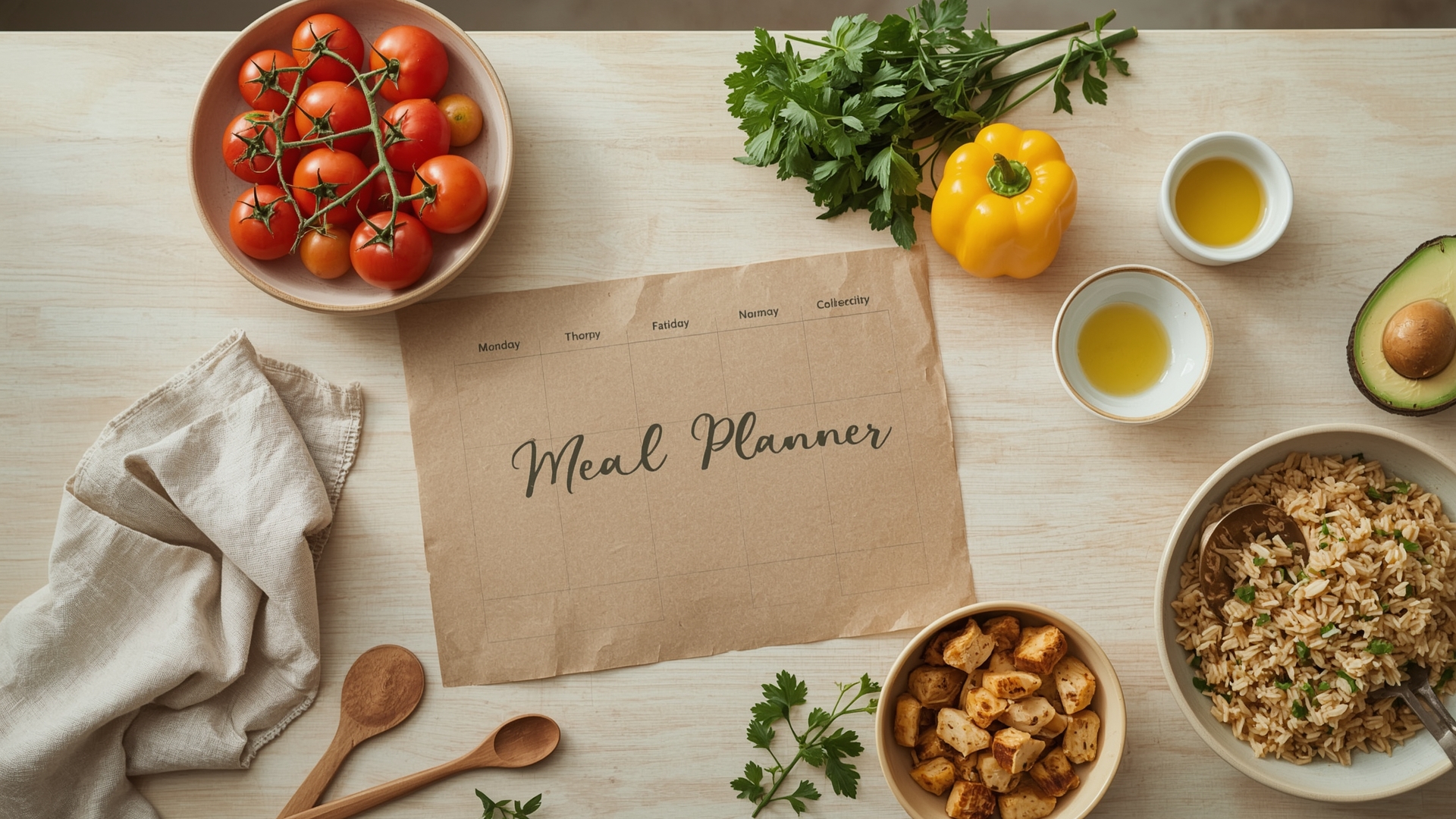
Quick Answer: Start by planning 5 dinners using what you already have, then add in breakfasts and lunches as repeats. Assign meals to specific days based on your schedule. Busy nights get the fastest meals. The whole process takes 20-30 minutes.
Beginners often try to plan all 21 meals at once. That’s overwhelming and unnecessary. Focus on dinners first. Breakfasts and lunches can repeat without anyone complaining.
A Simple Weekly Meal Planning Framework
- Review your week’s schedule. Which nights are busy? Which nights do you have time to cook?
- Assign fast meals to busy nights. Busy nights = 20-minute meals like tacos, pasta, or sheet pan proteins.
- Use pantry staples as the base. Build meals around what you already have, then fill gaps with fresh ingredients.
- Plan one batch-cooking meal. Something like a big pot of soup or roasted chicken that covers 2 nights.
- Leave one night flexible. This handles leftovers, unexpected plans, or takeout without derailing your budget.
- Repeat breakfast and lunch. Pick 2 breakfast options and 2 lunch options for the whole week. Done.
Weekly Meal Plan Template for Beginners
| Day | Breakfast | Lunch | Dinner | Cook Time |
|---|---|---|---|---|
| Monday | Oatmeal + fruit | Sandwiches | Sheet pan chicken + veggies | 30 min |
| Tuesday | Eggs + toast | Leftovers | Pasta with marinara + sausage | 20 min |
| Wednesday | Oatmeal + fruit | Sandwiches | Tacos (ground beef or beans) | 20 min |
| Thursday | Eggs + toast | Leftovers | Stir fry with rice | 25 min |
| Friday | Oatmeal + fruit | Sandwiches | Homemade pizza or flexible night | 25 min |
| Saturday | Pancakes | Soup from batch cook | Grilled protein + salad | 30 min |
| Sunday | Eggs + toast | Soup from batch cook | Batch cook day + simple meal | 60-90 min |
What Is a Meal Rotation and Why Should Beginners Use One?
A meal rotation is a set of 10-15 meals your family already likes and will eat without complaints. You cycle through them instead of finding new recipes every week.
This removes the creative pressure from planning. You’re not inventing a menu. You’re scheduling familiar meals onto a calendar.
Start by writing down every meal your household already eats and enjoys. That list is your rotation. Fill in your weekly plan from that list first.
How Do You Build a Grocery List That Actually Works?
Quick Answer: Build your grocery list by store section, not by meal. Group produce together, proteins together, and pantry items together. This cuts shopping time by 30-40% and prevents backtracking through the store. Check your pantry inventory first to avoid buying duplicates.
A disorganized grocery list is just a list of ingredients in random order. You end up crisscrossing the store and missing things anyway.
A section-organized list follows the layout of the store. Most grocery stores follow a similar path: produce, meat, dairy, frozen, pantry aisles.
How to Build a Section-Organized Grocery List
- Start with your meal plan. Write every ingredient each meal needs.
- Cross-reference your pantry inventory. Remove anything you already have.
- Group remaining items by store section. Produce, proteins, dairy, frozen, pantry, bakery.
- Add household basics separately. Keep food and non-food items in different sections.
- Note quantities clearly. “Chicken” is vague. “2 lbs chicken breast” is actionable.
Grocery List Organization by Store Section
| Store Section | Common Items | Beginner Tip |
|---|---|---|
| Produce | Spinach, peppers, onions, garlic, fruit | Buy versatile vegetables that work in multiple meals |
| Meat and seafood | Chicken breast, ground beef, shrimp | Buy in bulk when on sale, freeze the extra |
| Dairy | Eggs, milk, cheese, yogurt, butter | Check fridge before shopping. Eggs hide. |
| Frozen | Frozen vegetables, edamame, frozen fruit | Frozen veggies are nutritionally equal to fresh and cheaper |
| Pantry aisles | Pasta, canned goods, oils, spices, sauces | Only buy what your plan calls for. Pantry staples add up fast. |
| Bakery and bread | Sandwich bread, tortillas, wraps | Tortillas are the most versatile item in this section |
Should You Use a Grocery App or Paper List?
Both work. The format matters less than the organization. Grocery apps like AnyList, OurGroceries, or even a shared notes app let multiple family members add items in real time.
Paper lists work fine if only one person shops. The key is keeping the list visible during the week so family members can add items as they notice them running low.
What Is Batch Cooking and How Do Beginners Get Started?

Quick Answer: Batch cooking means preparing large amounts of one or two staple ingredients at once. You cook a big batch of rice, roasted vegetables, or shredded chicken on Sunday, then use those components across multiple weeknight meals. This cuts weeknight cooking time by 50% or more.
Batch cooking doesn’t mean cooking every single meal for the week on Sunday. That’s meal prepping, and it’s a different (more demanding) system.
Batch cooking for beginners means picking 1-3 foundational ingredients and cooking them in large quantities. Those ingredients then become flexible components for multiple meals.
Best Batch Cooking Staples for Beginners
| Staple | Batch Size | Cook Time | Fridge Life | Meals It Supports |
|---|---|---|---|---|
| Cooked white rice | 6-8 cups cooked | 20 min | 5 days | Stir fry, bowls, fried rice, side dish |
| Shredded chicken breast | 3-4 lbs | 25-30 min (Instant Pot) | 4-5 days | Tacos, sandwiches, soups, pasta, salads |
| Roasted vegetables | 2-3 sheet pans | 25-35 min at 425°F | 4-5 days | Grain bowls, wraps, omelets, sides |
| Hard boiled eggs | 12 eggs | 12 min | 7 days (unpeeled) | Breakfast, snacks, salads, lunch boxes |
| Dried beans (cooked) | 4-6 cups cooked | 45-90 min | 5 days | Soups, tacos, grain bowls, hummus |
| Pasta (cooked plain) | 1 lb dry pasta | 10 min | 4-5 days | Pasta dishes, cold pasta salads, soups |
How Should Beginners Structure a Batch Cooking Session?
A batch cooking session works best when you run multiple things simultaneously. You don’t cook one item, wait, then cook the next. You overlap them.
Start the longest cook item first. A pot of dried beans or a whole chicken takes the most time. While those cook, roast vegetables and boil eggs.
A basic Sunday batch session for a family of four takes about 60-90 minutes and produces components for 4-5 dinners and multiple lunches.
Batch Cooking vs. Full Meal Prepping: What’s the Difference?
Batch cooking = cook ingredients in bulk, assemble meals during the week. More flexible. Less time up front.
Full meal prepping = cook and portion entire meals in advance. Less flexible. More time up front. Better for people with very rigid schedules.
Beginners almost always do better with batch cooking. It gives you control during the week without locking you into meals you may not feel like eating.
How Do You Make Meal Planning Work for the Whole Family?
Quick Answer: Involve family members in the planning process. Let kids pick one dinner per week from the rotation. Use theme nights like Taco Tuesday or Pasta Thursday to create structure everyone recognizes. Consistency removes the daily negotiation about what to eat.
The biggest obstacle to family meal planning is resistance. If the meals are unfamiliar or people feel excluded from decisions, they opt out.
The fix is simple: give everyone a small amount of ownership. That doesn’t mean a family vote on every meal. It means each person has a say in one or two meals per week.
Theme Nights as a Family Meal Planning Strategy
Theme nights assign a category to each day of the week instead of a specific meal. This gives structure while keeping flexibility.
- Monday: Soup or salad night
- Tuesday: Taco/Mexican night
- Wednesday: Pasta or grain bowl night
- Thursday: Asian-inspired night
- Friday: Pizza or choose-your-own night
- Saturday: Grill or cook-together night
- Sunday: Batch cook + simple meal
Within each theme, the specific meal can rotate. Taco night might be ground beef tacos one week and shrimp tacos the next. The theme stays consistent. The variety lives inside it.
How to Handle Picky Eaters During Meal Planning
Don’t plan meals around avoidance. Instead, plan meals with components that can be customized. Taco bars, grain bowls, and stir fries all let each person assemble what they want.
The goal isn’t to make a separate meal for each person. The goal is to build your rotation around flexible meals where no one goes hungry even if they skip one component.
What Are the Most Common Meal Planning Mistakes Beginners Make?
Quick Answer: The most common beginner mistakes are over-planning too many meals at once, skipping the pantry inventory step, planning ambitious recipes on busy nights, and abandoning the system after one hard week. Start small with 5 dinners and expand only after the habit feels natural.
Beginner Meal Planning Mistakes and How to Fix Them
| Mistake | Why It Happens | The Fix |
|---|---|---|
| Planning too many new recipes | Excitement at the start | Stick to 1 new recipe per week max. Fill the rest from your rotation. |
| Skipping the pantry check | Feels like an extra step | Do the pantry inventory first, every time. It takes 10 minutes. |
| Matching complex meals to busy nights | Not accounting for schedule | Check your calendar before assigning meals to days. |
| Buying ingredients that only work for one meal | Recipe-first thinking | Plan around versatile ingredients that cross multiple meals. |
| No flexible night built in | Over-optimism about the week | Always leave one night open for leftovers or takeout. |
| Quitting after a hard week | Perfectionism | A partial plan is better than no plan. Adjust and keep going. |
How Much Does Meal Planning Actually Save Each Week?
Quick Answer: Meal planning typically saves families $50-$150 per week depending on household size and previous spending habits. Savings come from fewer impulse purchases, less food waste, and reduced takeout spending. The average American family wastes roughly $1,500 in food per year, most of which meal planning prevents.
The savings aren’t just from buying less. They come from three areas working together.
First, you stop buying ingredients that never get used. Second, you stop ordering takeout on nights when there’s “nothing to eat” even though the fridge is full. Third, your batch-cooked staples reduce the per-serving cost of each meal significantly.
Average Weekly Grocery Budget by Family Size With Meal Planning
| Family Size | Without Meal Planning (Avg.) | With Meal Planning (Avg.) | Weekly Savings |
|---|---|---|---|
| 1 person | $150-$200 | $75-$120 | $50-$80 |
| 2 people | $250-$350 | $150-$220 | $80-$130 |
| Family of 4 | $400-$600 | $250-$375 | $100-$200 |
| Family of 6 | $600-$800 | $375-$520 | $150-$280 |
These ranges assume a mix of grocery and occasional takeout. Your actual savings will depend on your starting habits, local grocery costs, and how consistently you follow the plan.
How Do You Stay Consistent With Meal Planning Long-Term?
Quick Answer: Consistency comes from reducing friction, not relying on motivation. Schedule your planning session at the same time each week, keep your meal rotation list visible, and use a repeating template instead of starting from scratch every Sunday. Habit, not willpower, sustains the system.
Most beginners plan well for 2-3 weeks, then drift back to old habits. The reason is almost always friction, not lack of interest.
If planning takes 45 minutes every week, you’ll skip it when life gets busy. If it takes 15 minutes because you have a rotation list and a template, you’ll do it even on hard weeks.
How to Build the Meal Planning Habit
- Pick one planning day and stick to it. Sunday works for most families because shopping can happen Sunday afternoon.
- Keep your meal rotation list in a fixed place. A notes app, a printed list on the fridge, or a whiteboard all work.
- Use a repeating weekly template. Same format every week. Fill in the blanks, don’t rebuild the structure.
- Review what worked last week. Spend 5 minutes noting what got skipped or swapped. Adjust your plan accordingly.
- Stack the habit on something you already do. Plan your meals while having your morning coffee. Attach the new habit to an existing one.
When Should You Upgrade Your Meal Planning System?
Stick with the basic system for at least 4-6 weeks before adding complexity. Once planning feels easy and your rotation is solid, you can layer in extras like a monthly deep-pantry inventory, a seasonal recipe swap, or a more detailed batch cooking schedule.
Adding complexity too early is what breaks most beginner systems. Master the simple version first.
Frequently Asked Questions
How long does meal planning take each week?
For beginners, the first session takes about 30-45 minutes. Once you have an established meal rotation and a template, it drops to 15-20 minutes. The grocery list takes another 10 minutes if you build it right after planning.
Do I need special tools or apps to start meal planning?
No special tools are required. A pen and paper work fine. If you want a digital option, a shared notes app like Google Keep or Apple Notes handles both the meal plan and the grocery list without any learning curve.
What is the difference between meal planning and meal prepping?
Meal planning is deciding what you’ll eat for the week. Meal prepping is physically preparing those meals in advance. Beginners often confuse them. You can plan meals without prepping a single thing ahead of time.
How do I handle nights when the plan falls apart?
That’s what the flexible night is for. Every weekly plan should include one night reserved for leftovers or last-minute changes. When a plan falls apart, you fall back to that flexible slot instead of abandoning the whole week.
How many meals should a beginner plan per week?
Start with 5 dinners. Keep breakfasts and lunches simple and repeating. Planning all 21 meals at once overwhelms beginners and leads to quitting. Build the dinner habit first, then add other meals over time.
How does meal planning reduce food waste?
Every ingredient you buy gets assigned to a specific meal before it enters your home. That means vegetables, proteins, and pantry items all have a purpose. Without a plan, fresh produce often expires before anyone decides to use it. The pantry inventory step ensures you use what you already have before buying more.