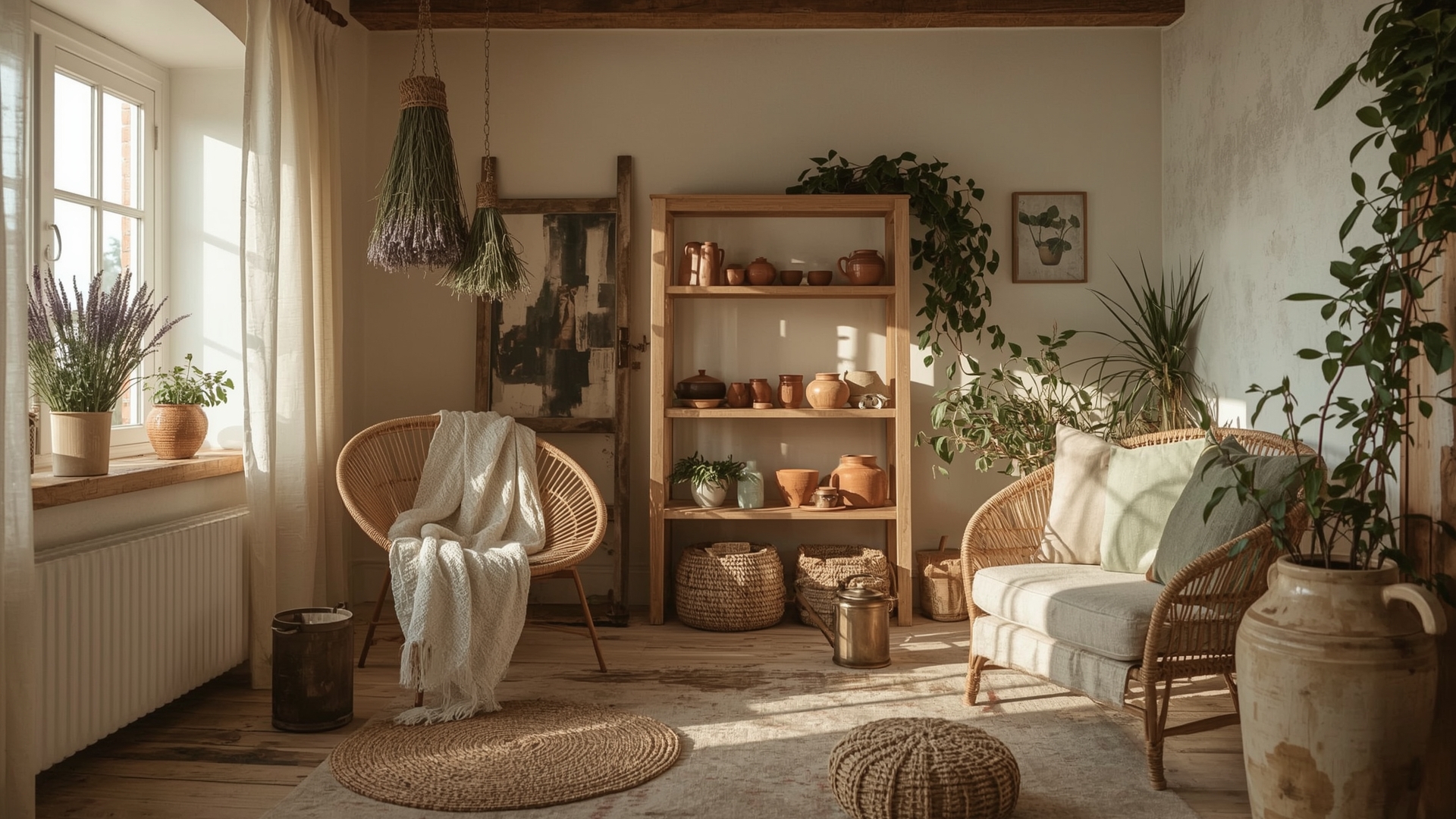
Cottagecore is a design aesthetic rooted in slow living, natural materials, and the quiet romance of the countryside. It pulls from vintage farmhouse charm, English garden cottages, and folk art traditions — think dried flowers hanging from wooden beams, linen curtains catching the morning light, and mismatched ceramics on open shelves.
The beauty of this style is that it works in any space, whether you rent a studio apartment or own a three-bedroom home. You do not need a thatch roof to achieve the look. You just need the right textures, the right layers, and a willingness to mix old with new.
Key Takeaways
- Natural materials are the foundation. Rattan, linen, jute, raw wood, and terracotta form the core of cottagecore styling.
- Each room has a distinct role. The kitchen leans rustic and functional, the bedroom leans soft and romantic, and the living room leans warm and layered.
- DIY projects stretch your budget. Dried flower bundles, decoupage ceramics, and linen pillow covers cost very little and add significant visual character.
- Imperfection is intentional. Cottagecore embraces worn edges, mismatched pieces, and handmade items over polished uniformity.
- Plants and botanicals are non-negotiable. Fresh herbs, trailing vines, and wildflower arrangements reinforce the nature-forward aesthetic.
- Thrifting is your best sourcing strategy. Vintage markets, estate sales, and secondhand shops produce authentic pieces at low cost.
What Is the Cottagecore Aesthetic and Why Is It So Popular?
Quick Answer: Cottagecore is a design style inspired by rural cottage living. It uses natural textures like linen and rattan, muted earthy colors, vintage ceramics, and botanical elements to create a warm, handmade, and slow-living atmosphere.
The cottagecore movement grew from social media communities that romanticized simpler, nature-connected lifestyles. As a design style, it translates that fantasy into physical spaces.
Its core visual language includes muted greens, creams, dusty roses, and warm browns. Materials stay natural and unprocessed. Shapes lean organic rather than geometric. Nothing looks too new or too perfect.
People are drawn to it because it feels like a counterpoint to modern minimalism and fast-trend interiors. There is warmth in the imperfection. There is comfort in the layering. It rewards collecting slowly rather than buying everything at once.
How Does Cottagecore Differ from Farmhouse Style?
Farmhouse decor tends toward shiplap, galvanized metal, and a cleaner black-and-white palette. Cottagecore is softer, more botanical, and more whimsical. Where farmhouse is structured and tidy, cottagecore is layered and slightly wild. Think of farmhouse as a working barn versus cottagecore as a garden fairy tale.
What Colors and Materials Define the Cottagecore Palette?
Quick Answer: Cottagecore relies on sage green, cream, dusty rose, warm terracotta, and soft lavender. Key materials include raw linen, rattan, jute, unfinished wood, hand-thrown ceramics, and aged brass hardware.
| Element | Specific Options | Common Use | Price Range |
|---|---|---|---|
| Wall Color | Sage green, warm cream, soft white | All rooms | $30–$70 per gallon |
| Textiles | Raw linen, cotton muslin, wool knit | Curtains, pillows, throws | $15–$80 per yard |
| Natural Weaves | Rattan, jute, seagrass, bamboo | Furniture, rugs, baskets | $20–$300 per piece |
| Ceramics | Hand-thrown stoneware, earthenware | Kitchen, shelving, vases | $8–$60 per piece |
| Hardware | Aged brass, oil-rubbed bronze, wrought iron | Cabinets, doors, light fixtures | $5–$25 per knob |
| Flooring Accent | Jute rugs, hand-woven wool runners | Living room, bedroom, kitchen | $40–$250 per rug |
Which Paint Brands Offer the Best Cottagecore Colors?
Farrow and Ball’s “Mizzle,” “Mole’s Breath,” and “Hardwick White” match the aesthetic closely. Benjamin Moore’s “October Mist” (sage green) became a widely recognized cottagecore color. Behr’s “Silent Slumber” and “Dusty Miller” also deliver the soft, organic tones this style needs.
How Do You Style a Cottagecore Living Room?
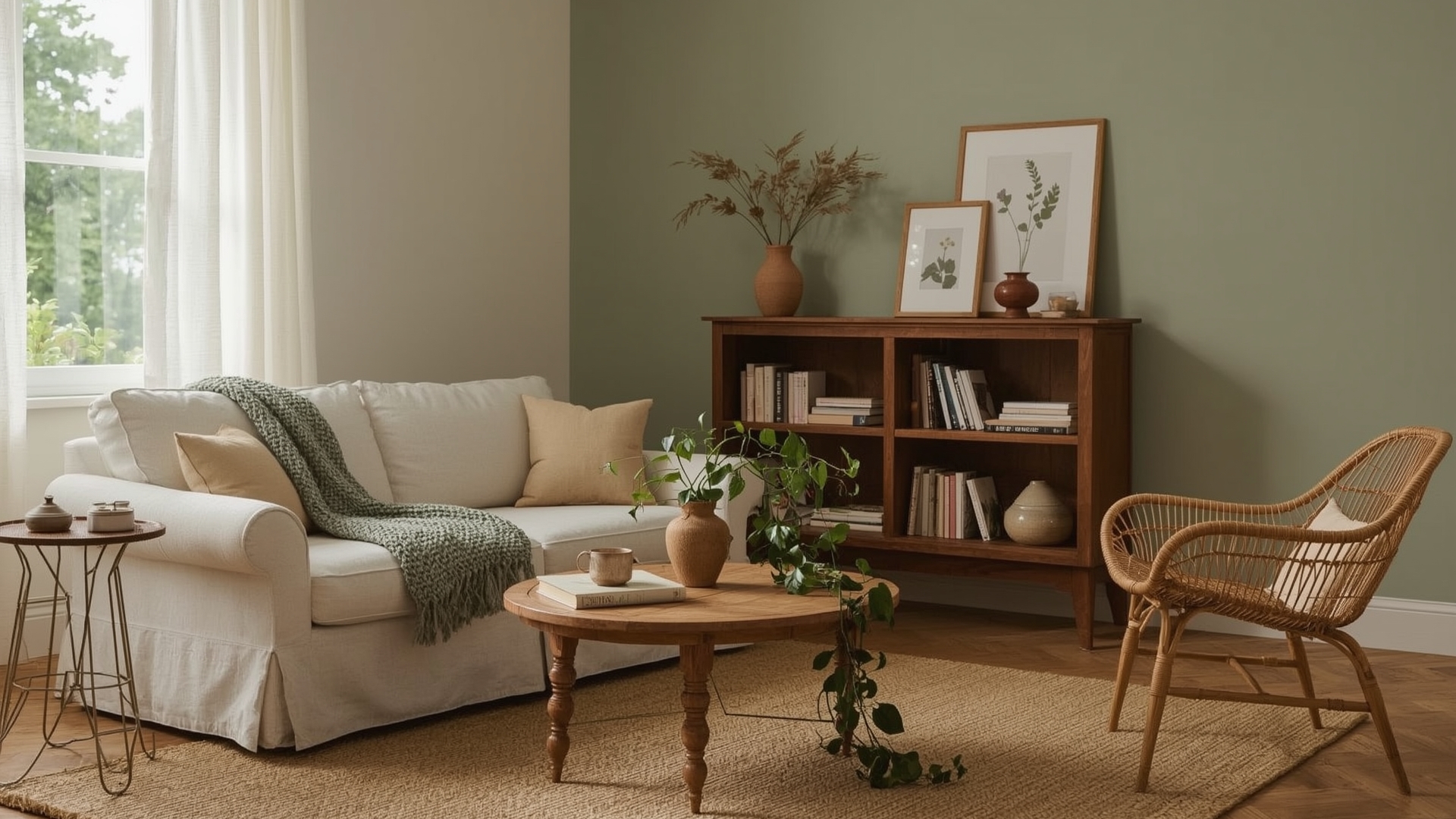
Quick Answer: A cottagecore living room uses a linen or velvet sofa in cream or sage, layered wool and knit throws, rattan side tables, and botanical prints on the walls. Add dried flower arrangements and mismatched vintage candleholders to complete the look.
The living room is where cottagecore layering does its best work. You build the space from the ground up, starting with a natural-fiber rug like jute or wool sisal.
From there, anchor the seating area with a sofa in cream, oat, or dusty sage linen. Linen is the preferred fabric because it wrinkles naturally, which reinforces the lived-in, relaxed character of the style.
What Furniture Pieces Work Best in a Cottagecore Living Room?
Look for furniture with visible wood grain, curved edges, and woven cane or rattan panels. A rattan accent chair, a wooden coffee table with turned legs, and an antique-style bookcase filled with vintage books and ceramic vases all serve the aesthetic well.
Avoid metal-framed furniture with sharp geometric lines. If you already own modern pieces, you can soften them with natural textile covers, botanical stems in glass vases, and stacked books with linen spines.
How Do You Style Cottagecore Shelves and Vignettes?
Cottagecore shelving tells a visual story. Mix ceramic vessels in varying heights with pressed botanical prints in simple wooden frames. Tuck a small stack of vintage hardcover books next to a trailing pothos or a small fern in a terracotta pot.
Use odd numbers. Three items grouped together feel more organic than two or four. Leave breathing room between clusters so the arrangement does not feel cluttered.
What Makes a Bedroom Feel Cottagecore?
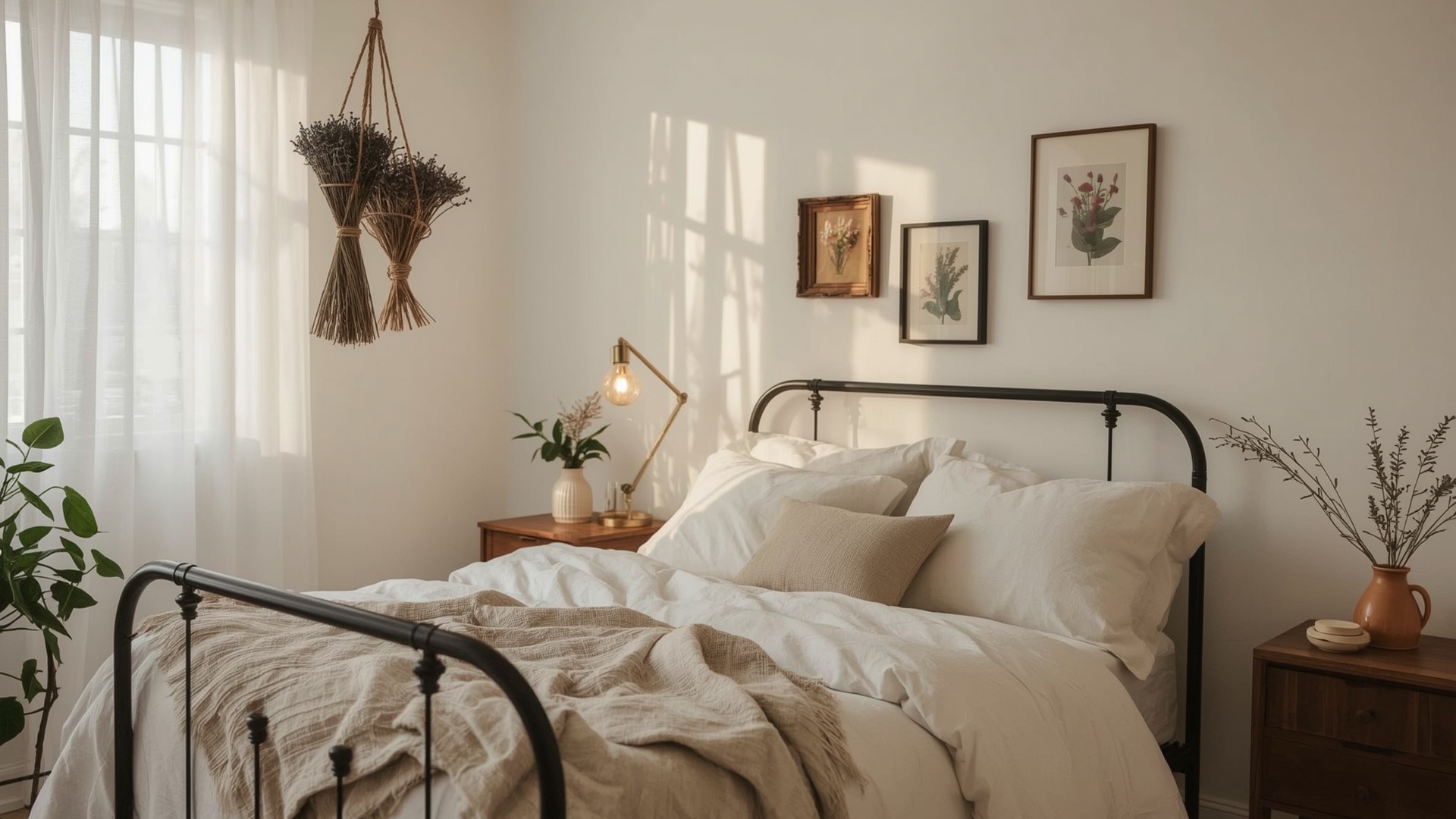
Quick Answer: A cottagecore bedroom centers on a linen or cotton duvet in soft white or sage, a wooden or iron bed frame, dried flower bundles hung above the headboard, and sheer linen curtains that filter light softly rather than block it out.
| Element | Cottagecore Choice | What to Avoid | Approximate Cost |
|---|---|---|---|
| Bed Frame | Aged wood, wrought iron, cane headboard | Glossy lacquered wood, metal platform | $150–$800 |
| Bedding | Washed linen duvet, cotton muslin sheets | Polyester microfiber, printed jersey | $60–$250 |
| Window Treatment | Sheer linen panels, cotton voile | Blackout curtains, roller blinds | $30–$100 per panel |
| Lighting | Edison bulb table lamp, rattan pendant | Chrome recessed lighting, LED strips | $25–$120 |
| Accent Decor | Dried lavender bundles, pressed flower frames | Abstract art prints, neon signs | $10–$50 |
How Do You Add Botanical Elements to a Cottagecore Bedroom?
Dried flower bundles are the most effective botanical accent in a cottagecore bedroom. Lavender, eucalyptus, baby’s breath, and wheat stalks all dry well and hold their form for months.
Hang them above the headboard with a loop of twine, or tuck them into a ceramic pitcher on the nightstand. You can also press flowers between books, frame them under glass, and arrange them in a gallery wall above the dresser.
How Do You Create a Cottagecore Kitchen?
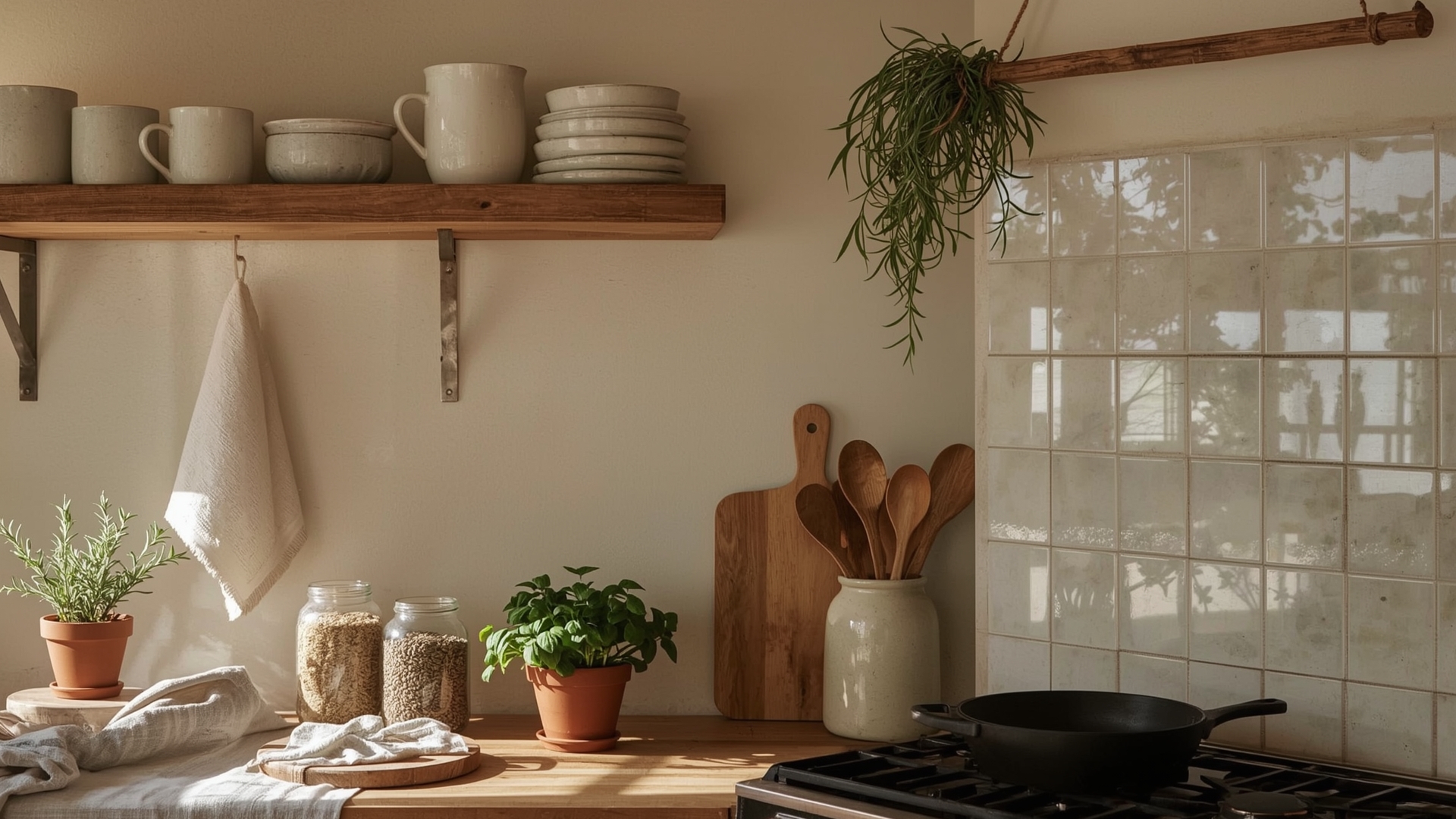
Quick Answer: A cottagecore kitchen features open wooden shelves displaying hand-thrown ceramics and glass jars filled with pantry staples. Add a ceramic sink if possible, hang a linen dish towel on an iron hook, and keep fresh herbs growing in terracotta pots on the windowsill.
The kitchen is where cottagecore connects most directly to daily life. It rewards functional beauty — things that look good because they are used regularly.
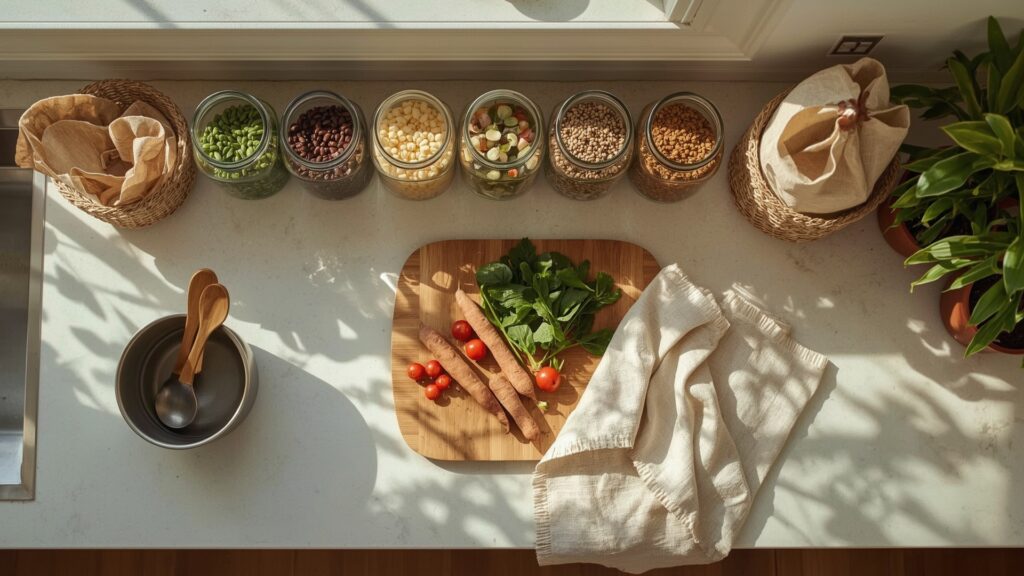
Open shelving is central to the cottagecore kitchen. When you display your pantry staples in labeled glass jars, your ceramic mugs on wooden pegs, and your cast iron pan on a wall hook, the kitchen becomes a visual expression of slow, intentional living.
What Accessories Reinforce the Cottagecore Kitchen Aesthetic?
Wooden cutting boards leaned against the backsplash, ceramic crocks holding wooden spoons, a hand-painted tile trivet, and a small enamelware pot on the stove all read as authentically cottagecore.
Avoid stainless steel appliances where possible. If you cannot replace them, soften their presence with plants, wooden accents, and linen storage baskets nearby.
How Do Herbs and Plants Fit into the Cottagecore Kitchen?
Growing herbs directly in the kitchen is one of the simplest ways to achieve the aesthetic. Rosemary, thyme, basil, and mint planted in small terracotta pots on a windowsill cost very little and add both visual warmth and practical function.
A hanging herb rack made from a wooden dowel and twine reinforces the handmade quality the style values. You can hang dried herbs, braided garlic, or dried chili peppers the same way.
How Do You Style a Cottagecore Bathroom on a Budget?
Quick Answer: Swap plastic accessories for wicker baskets, ceramic soap dishes, and glass apothecary jars. Add a linen or cotton waffle-weave towel, a wooden bath tray, and a small potted fern or trailing ivy to bring the cottagecore aesthetic into the bathroom.
| Current Item | Cottagecore Replacement | Cost | Impact |
|---|---|---|---|
| Plastic soap dispenser | Hand-thrown ceramic dispenser | $12–$35 | High |
| Chrome towel ring | Aged brass or wrought iron hook | $8–$25 | Medium |
| Synthetic bath mat | Woven cotton or jute mat | $20–$60 | High |
| Fluorescent bulb | Warm Edison bulb (2700K) | $5–$15 | Very High |
| Plastic storage bin | Wicker or rattan basket | $15–$45 | High |
What Are the Best DIY Cottagecore Decor Projects?
Quick Answer: Top DIY cottagecore projects include dried flower bundles, decoupage ceramic pots, linen pillow covers sewn from fabric remnants, pressed flower frames, and hand-painted terracotta pots. Most cost between $5 and $30 in materials and take under two hours to complete.
How Do You Make a Dried Flower Bundle?
Cut fresh lavender, eucalyptus, or wildflowers when they are at peak bloom. Bundle 8 to 12 stems together, wrap the base tightly with twine or a rubber band, and hang them upside down in a warm, dry spot for two to three weeks.
Once dry, they hold their shape and color for six to twelve months. Replace bundles seasonally to keep the aesthetic fresh without significant cost.
How Do You Create Cottagecore Pressed Flower Art?
Place fresh flowers between two sheets of parchment paper inside a heavy book. Stack additional books on top and leave them for two to three weeks. Once fully pressed and dried, arrange the flowers on watercolor paper and secure them with a thin layer of decoupage glue.
Frame behind glass in a simple wood frame. A set of three matching frames with different botanical specimens makes an elegant gallery wall for under $40 total.
How Do You Sew a Linen Pillow Cover Without Advanced Skills?
An envelope-style pillow cover requires no zipper and very basic sewing. Cut a piece of washed linen fabric to 1.5 times the width of your pillow insert and the same height plus 3 inches. Fold the two short ends inward, hem them, then fold the fabric around the insert with the hemmed edges overlapping at the back. Stitch the sides closed.
Fabric remnants and off-cuts from craft stores cost as little as $3 to $8 per yard. One yard of linen typically makes one standard pillow cover.
Where Do You Source Authentic Cottagecore Pieces Without Overspending?
Quick Answer: The best sources for cottagecore decor are estate sales, thrift stores, Facebook Marketplace, Etsy handmade shops, and vintage markets. These locations provide authentic aged pieces, handmade ceramics, and natural-fiber textiles at significantly lower prices than retail stores.
| Source | Best Items to Find | Average Savings vs. Retail | Best For |
|---|---|---|---|
| Estate Sales | Ceramics, glassware, textiles, furniture | 50–80% | Authentic vintage pieces |
| Thrift Stores | Frames, vases, books, linens | 60–90% | Budget decor and frames |
| Etsy | Handmade ceramics, dried flowers, prints | 0–30% | Handmade and unique items |
| Facebook Marketplace | Furniture, rugs, wooden shelves | 40–70% | Larger furniture pieces |
| Farmers Markets | Fresh herbs, seasonal dried flowers | 20–50% | Botanicals and seasonal stems |
| Craft Supply Stores | Linen fabric, twine, terracotta pots | 10–40% | DIY project materials |
What Should You Look for When Thrifting for Cottagecore Decor?
Prioritize natural materials. Ceramic, glass, wood, and wicker pieces from any decade fit the aesthetic. Avoid hard plastic, chrome, or acrylic items even if they are cheap.
Look specifically for hand-thrown or imperfect ceramics, woven baskets of any size, wooden frames with visible grain, and glass bottles or apothecary jars. Vintage linen napkins and tablecloths can be repurposed as pillow covers, curtains, or table runners.
How Do You Layer Rattan and Natural Textures Without Overwhelming a Room?
Quick Answer: Limit rattan to two or three pieces per room, like a chair, a pendant light, and a small tray. Balance woven textures with soft linen and smooth ceramics so the room feels collected and natural rather than themed or overdone.
Texture layering is a skill. The goal is contrast, not matching. A rattan chair feels richer next to a smooth linen sofa than next to another woven basket chair.
Follow the rule of three textures per zone. For example, in a reading corner: a rattan chair (woven), a linen throw (soft), and a ceramic mug on a wooden side table (smooth and hard). Three distinct textures in one small area create visual depth without chaos.
How Does Rattan Furniture Fit Cottagecore Styling Specifically?
Rattan is a natural vine harvested primarily in Southeast Asia. It bends without breaking, making it ideal for woven furniture frames. In cottagecore spaces, rattan appears most often as accent chairs, pendant light shades, headboards, mirror frames, and small shelving units.
Its warm honey tone pairs naturally with sage green walls, cream linens, and terracotta accents. It ages gracefully, which aligns with the cottagecore preference for pieces that show their history.
How Do You Start a Cottagecore Aesthetic If You Are Decorating from Scratch?
Quick Answer: Start with paint in a muted earthy tone, then add a linen textile layer. From there, introduce one rattan piece, one plant, and one handmade or vintage ceramic. Build room by room rather than decorating everything at once.
The biggest mistake new cottagecore decorators make is trying to achieve the full look in one shopping trip. The aesthetic actually looks better when it develops over time.
Give yourself a three-phase approach. Phase one covers the bones: wall color, a natural-fiber rug, and curtains. Phase two adds character: a rattan piece, a few ceramics, and one botanical element. Phase three adds depth: dried flowers, vintage books, pressed flower art, and layered textiles.
What Is the Fastest Way to Add Cottagecore Style to a Rental?
Focus on removable and portable elements. A large jute rug can transform a laminate floor. Linen curtain panels hung from a tension rod require no wall damage. Rattan baskets, ceramic vases, and dried flower bundles create the aesthetic without any permanent changes.
Removable botanical wallpaper panels can add a feature wall without landlord approval in most leases. Look for peel-and-stick options in watercolor floral or botanical fern prints.
Frequently Asked Questions
Is cottagecore the same as shabby chic?
They share some overlap but differ in tone. Shabby chic leans toward distressed white painted furniture and florals with a feminine, vintage-French influence. Cottagecore is more earthy, botanical, and folklore-inspired. It embraces natural, raw materials rather than painted and distressed finishes.
Can cottagecore work in a modern apartment?
Yes. The key is layering natural textures over modern architectural bones. A sage green throw on a modern sofa, a rattan pendant over a flat-ceiling dining area, and potted ferns on a floating shelf can shift the atmosphere significantly without structural changes.
What is the best plant for cottagecore decor?
Trailing pothos, maidenhair ferns, English ivy, and rosemary are the most cottagecore-compatible plants. They grow organically rather than in rigid shapes, which reinforces the wild-garden quality the aesthetic values. Terracotta pots are the ideal vessel for all of them.
How do I keep cottagecore from looking cluttered?
Edit carefully. Every surface should have breathing room between objects. Group items in clusters of three, leave space between clusters, and avoid filling every shelf from edge to edge. The goal is a curated collection, not a maximalist display.
What kind of lighting works best for cottagecore spaces?
Warm bulbs in the 2700K to 3000K color temperature range are essential. Edison-style bulbs inside rattan shades or amber glass pendants cast the soft, golden light that reinforces the cozy, low-tech atmosphere. Avoid cool-white or daylight bulbs, which read as clinical in a cottagecore room.
What is a realistic budget to start a cottagecore bedroom makeover?
A meaningful transformation can happen for $150 to $400 when you combine thrifted furniture with new linen bedding and a few DIY projects. The biggest cost is usually bedding. Sourcing the bed frame secondhand and making your own botanical decor brings the total well within a modest budget.