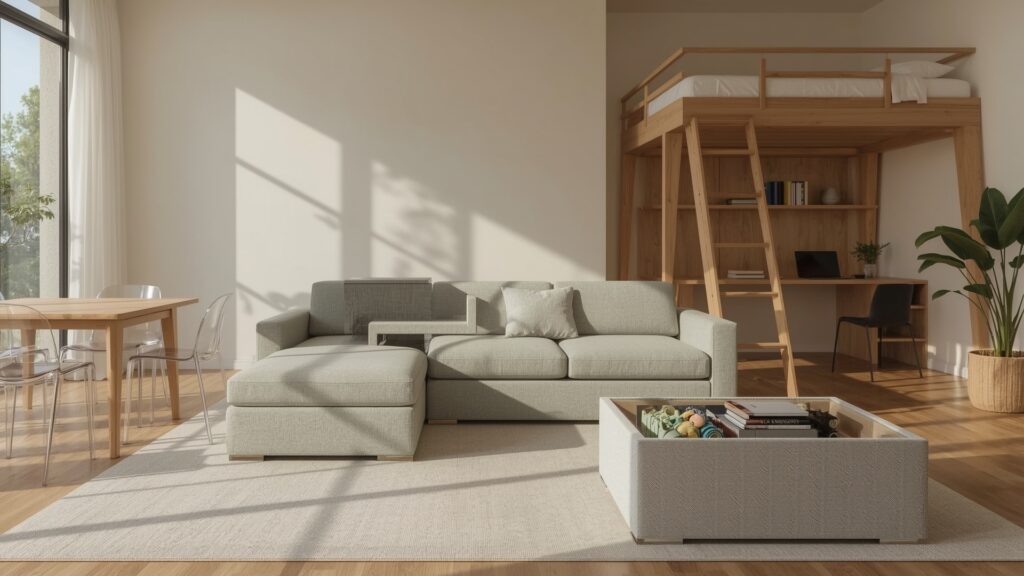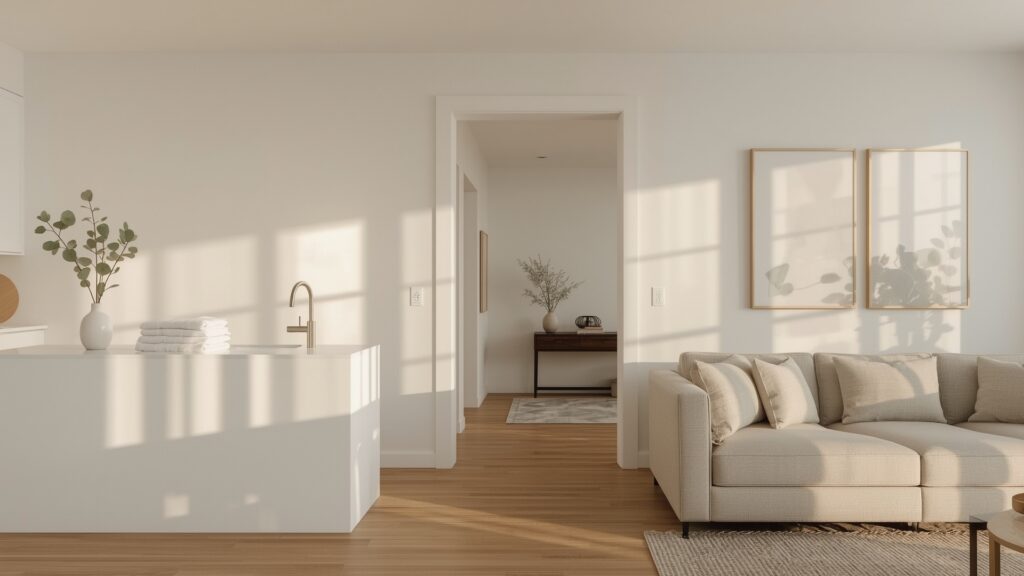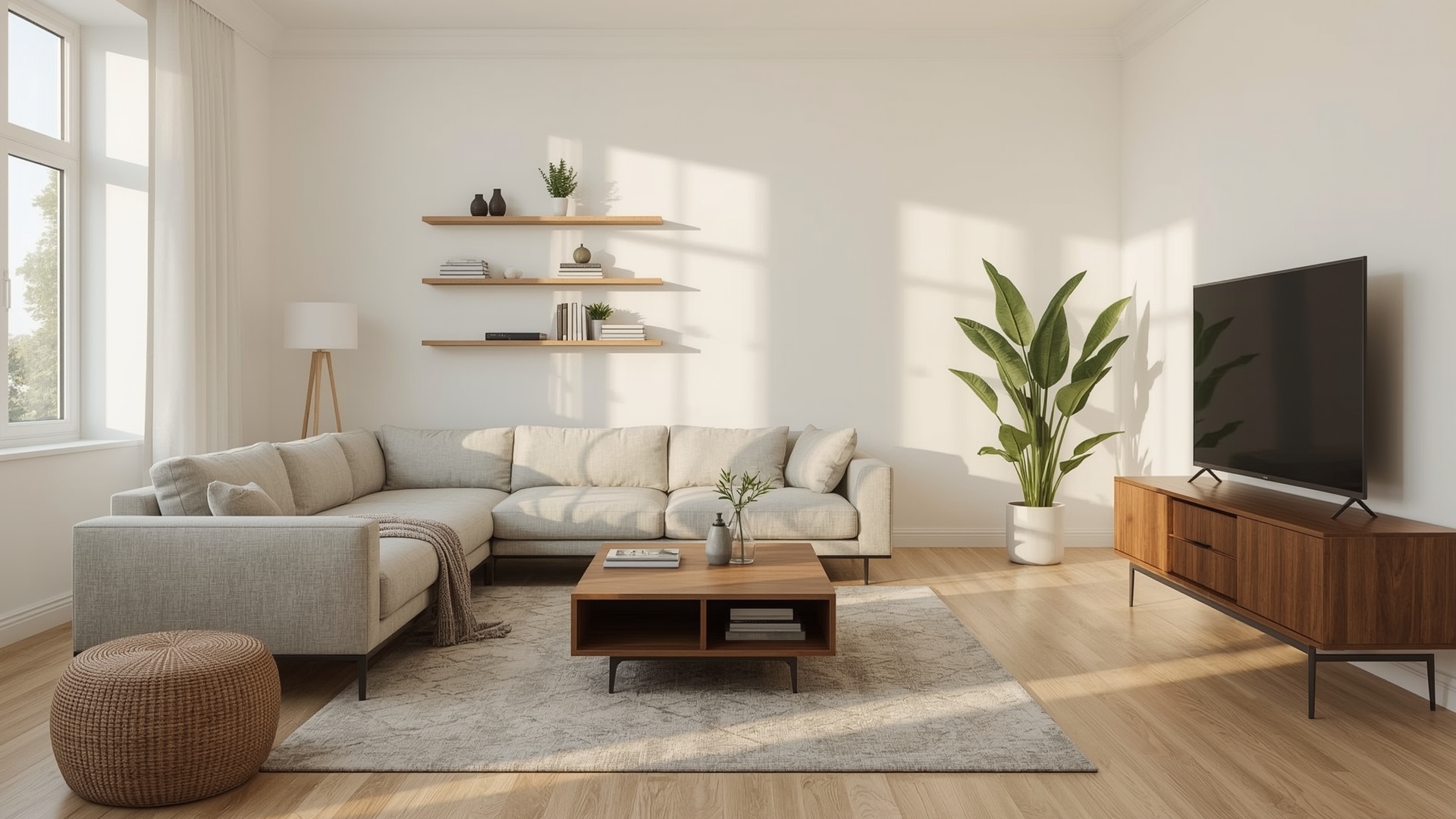
Small homes force a simple choice: every piece of furniture either earns its space or wastes it. The best storage furniture does both jobs at once — it gives you a place to sit, sleep, or gather, and it hides the clutter that makes small rooms feel even smaller. This guide covers the smartest multi-function picks, real price ranges, and room-by-room solutions so you can shop with confidence.
Key Takeaways
- Multi-function furniture is your highest-value investment in a small home — one piece that stores, seats, and displays beats three single-purpose pieces every time.
- Vertical space is almost always underused. Floor-to-ceiling shelving can triple your storage without adding square footage.
- Entryways and living rooms offer the biggest immediate return on storage furniture upgrades.
- Budget picks start around $40–$80 for ottomans and benches; solid multi-function pieces for families typically run $150–$600.
- Hidden storage beats open storage in high-traffic family spaces because it reduces visual clutter, which makes rooms feel larger.
- Material matters for durability: engineered wood handles humidity better than solid pine in enclosed storage spaces.
What Is Storage Furniture and Why Does It Matter in Small Homes?
Quick Answer: Storage furniture is any piece that combines a functional role (seating, sleeping, display) with built-in storage space. In small homes, it replaces multiple single-purpose items, freeing floor space and reducing visual clutter without sacrificing comfort or style.
Standard furniture fills floor space. Storage furniture earns it. A coffee table with lift-top storage replaces both the table and a separate storage bin. A bed frame with drawers eliminates the need for a dresser. That trade is the entire logic behind choosing storage-first pieces in a compact home.
The core benefit is not just about hiding stuff. It is about maintaining a sense of calm in a space that could easily feel chaotic. Visual clutter — items without a dedicated home — makes small rooms feel smaller. When storage is built into the furniture itself, everything has a place, and the room reads as larger than it is.
How Storage Furniture Differs from Regular Furniture
Regular furniture has one job. A sofa is for sitting. A bookshelf is for display. Storage furniture has at least two jobs. A storage ottoman seats guests, stores blankets, and can serve as a coffee table. That multi-function design is what makes it worth the premium in small spaces.
Which Types of Storage Furniture Work Best in Small Living Rooms?
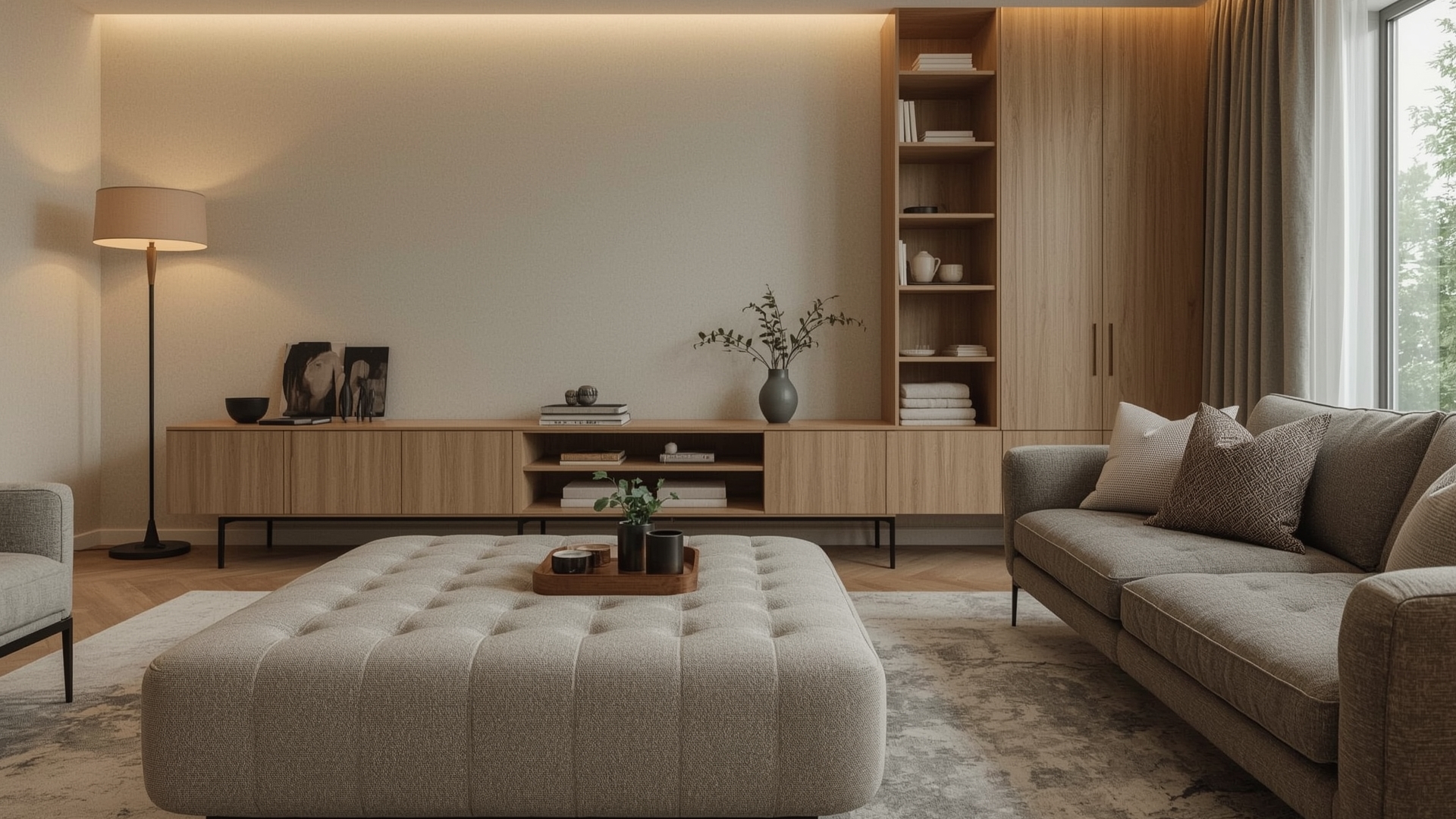
Quick Answer: The top picks for small living rooms are storage ottomans, lift-top coffee tables, media consoles with closed cabinets, and built-in wall shelving. These pieces handle the most common storage needs — blankets, remotes, toys, books — without adding bulk to the room.
The living room is usually the hardest-working room in a small home. It handles TV time, homework, guests, and family hangouts all at once. That means clutter builds fast. Storage furniture designed for this room needs to look intentional, not industrial.
Storage Ottomans: The Most Versatile Living Room Pick
A storage ottoman is the closest thing to a “Swiss Army knife” in living room furniture. It acts as a footrest, extra seating, a coffee table surface (with a tray), and a storage bin for throw blankets, remotes, or kids’ toys. Round ottomans tuck under sofa arms easily. Rectangular ottomans work better as coffee table replacements.
Look for ottomans with a firm lid if you want to use them as a table surface. Soft-top versions are more comfortable as footrests but less stable for drinks or trays.
Lift-Top Coffee Tables: Hidden Storage at Eye Level
A lift-top coffee table has a top panel that raises and tilts forward, revealing a storage compartment inside. This is one of the most popular storage furniture upgrades for family living rooms because it keeps clutter invisible until you need it. Many models also have lower shelves for books or baskets.
Media Consoles with Closed Cabinets
Open-shelf media units look great in magazines. In real family living rooms, open shelves become catch-all zones fast. A media console with closed cabinet doors keeps gaming controllers, streaming devices, and cables out of sight. The visual payoff in a small room is immediate.
Living Room Storage Furniture: EAV Comparison
| Furniture Type | Price Range | Primary Storage Use | Best Room Size | Hidden Storage |
|---|---|---|---|---|
| Storage Ottoman (small) | $40–$120 | Blankets, toys, remotes | Under 200 sq ft | Yes |
| Storage Ottoman (large/rectangular) | $100–$350 | Blankets, toys, board games | 200–350 sq ft | Yes |
| Lift-Top Coffee Table | $120–$450 | Remote controls, books, chargers | 150–300 sq ft | Yes |
| Media Console with Cabinets | $180–$700 | Gaming gear, cables, media | 200–400 sq ft | Yes |
| Open Bookshelf/Display Unit | $60–$300 | Books, décor, baskets | Any | No |
| Wall-Mounted Floating Shelves | $25–$150 | Books, plants, small items | Any (no floor space used) | No |
What Storage Furniture Works Best in Small Entryways?
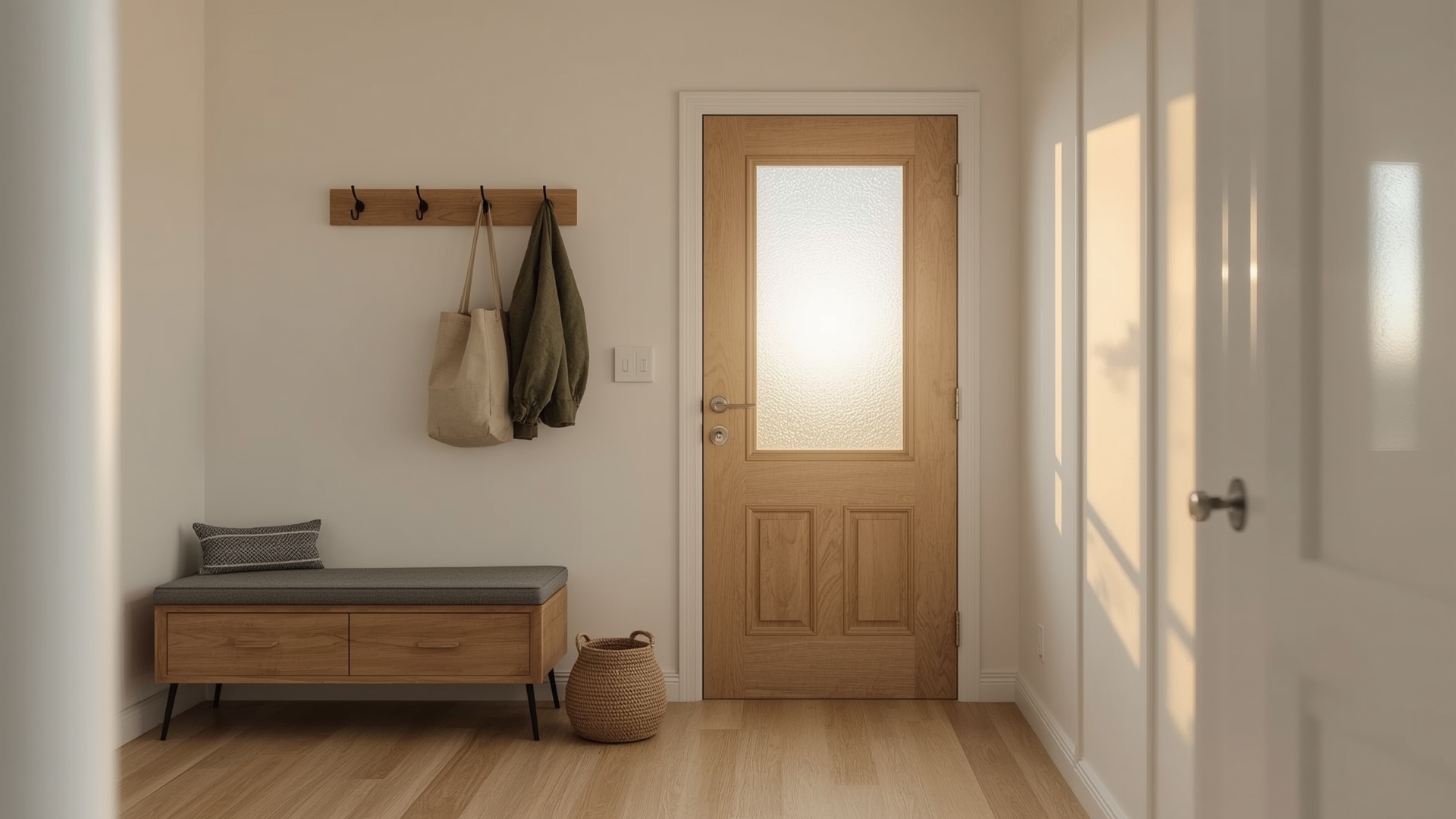
Quick Answer: The best entryway storage furniture for small homes includes storage benches with under-seat compartments, narrow console tables with drawers, and wall-mounted coat racks with shelf tops. These handle shoes, bags, keys, and coats in under 18 inches of floor depth.
Entryways in small homes are often just a strip of floor near the front door. Even that small zone can be transformed with the right furniture. The goal is to handle the “drop zone” problem — shoes, bags, coats, keys — without blocking the path or making the entry feel cramped.
Storage Benches: Seat and Stow at the Front Door
A storage bench near the front door gives everyone a place to sit while putting on shoes and a hidden compartment to store those shoes once they come off. Most storage benches are 42–52 inches wide and 15–18 inches deep, which fits neatly against most entryway walls without blocking traffic.
For families with kids, look for a bench with a flip-top lid (easier for children to open) and cubbies below for multiple pairs of shoes. Cushioned lids are more comfortable but harder to clean — wipe-clean faux leather is the practical family pick.
Narrow Console Tables with Drawers
A console table with one or two drawers handles keys, mail, and small items that otherwise pile up near the door. The best models for small entryways are 10–14 inches deep, leaving enough floor space to walk past comfortably. Pair one with a wall mirror above to visually expand the space.
Hall Trees: All-in-One Entryway Units
A hall tree combines a coat rack, bench, shoe storage, and sometimes a mirror into one unit. It is the most space-efficient entryway solution if you have at least 36 inches of wall space and about 16 inches of depth to spare. Prices run from $120 to $600 depending on size and material.
Entryway Storage Furniture: EAV Comparison
| Furniture Type | Price Range | Depth (inches) | Primary Function | Best For |
|---|---|---|---|---|
| Storage Bench (small) | $60–$180 | 14–16 | Shoes + seating | Couples, small families |
| Storage Bench (large) | $150–$400 | 15–18 | Shoes + seating + blankets | Families with kids |
| Narrow Console Table (with drawers) | $80–$280 | 10–14 | Keys, mail, small items | Tight entryways |
| Hall Tree (full unit) | $120–$600 | 14–20 | Coats, shoes, bags, keys | Families, full entryway setup |
| Wall-Mounted Coat Rack with Shelf | $35–$120 | 4–8 (wall-mounted) | Coats, bags, hats | Minimal floor footprint |
What Are the Best Multi-Function Furniture Picks for Family Living?
Quick Answer: Top multi-function picks for family living include storage sectional sofas with chaise storage, bunk beds with built-in drawers and desks, storage dining benches, and modular cube shelving. These pieces serve 2–3 roles simultaneously, which is essential when square footage is shared among multiple people.
Families need more from their furniture than single people do. Toys, homework, sports gear, and extra bedding all need a home. Multi-function furniture designed for family use is built tougher and sized larger than minimalist singles-oriented pieces. The trade-off is usually a higher price point and a slightly heavier footprint.
Storage Sectional Sofas
A storage sectional has one or more sections — usually the chaise or ottoman portion — with a lift-up compartment underneath. This is the single largest hidden storage option in most family living rooms. Compartment sizes vary, but most hold 4–8 large throw blankets or the equivalent volume in kids’ toys.
Bunk Beds with Built-In Storage
For kids’ rooms in small homes, a bunk bed with integrated drawers and a built-in desk underneath is one of the most space-efficient pieces available. The bottom bunk becomes a study area during the day. Drawers replace a dresser. One piece of furniture does the job of three. Prices for quality units range from $400 to $1,200.
Storage Dining Benches
Dining rooms in small homes often pull double duty as homework stations or work-from-home spots. A dining bench with under-seat storage handles extra table linens, chargers, or art supplies without adding another piece of furniture to the room. It also seats more people than individual chairs in the same footprint.
Modular Cube Shelving
Modular cube shelving units (like the popular 2×4 or 4×4 grid configurations) are one of the most flexible storage furniture systems for small homes. You can mix open cubes for display with closed fabric bins for hidden storage. They work in living rooms, bedrooms, kids’ rooms, and home offices. Prices start around $60 for smaller units and go up to $300 for large configurations.
Multi-Function Furniture for Families: EAV Comparison
| Furniture Type | Price Range | Functions Served | Storage Capacity | Durability Rating |
|---|---|---|---|---|
| Storage Sectional Sofa | $600–$2,200 | Seating + storage | High (chaise bin) | High (frame-dependent) |
| Bunk Bed with Drawers + Desk | $400–$1,200 | Sleep + study + clothing storage | Medium–High | High (solid wood builds) |
| Storage Dining Bench | $90–$350 | Seating + storage | Low–Medium | Medium |
| Modular Cube Shelving (4×4) | $120–$300 | Display + hidden storage | High (16 cubes) | Medium (MDF/particleboard) |
| Lift-Top Coffee Table | $120–$450 | Table + hidden storage | Medium | Medium–High |
How Do You Choose the Right Storage Furniture for a Small Bedroom?

Quick Answer: In a small bedroom, prioritize a bed frame with under-bed drawers or a platform bed with built-in storage. Add a storage headboard with shelving and replace a traditional nightstand with a bedside table that has drawers. This setup can eliminate the need for a separate dresser entirely.
The bedroom has the most furniture pressure in a small home. You need a bed, storage for clothing, and ideally a surface for a lamp and phone charger — all in a room that may be 10×10 feet or smaller. The key is building your storage into the bed frame itself.
Platform Beds with Under-Bed Drawers
A platform bed with built-in drawers on the sides is the single most impactful upgrade for a small bedroom. Drawer configurations vary: some have two large drawers on each side, others have a single large drawer on one side. The two-side four-drawer configuration is the most useful for replacing a dresser.
Look for drawer slides rated for at least 50 lbs per drawer. Cheap units use plastic slides that wear out within a year of heavy use. Metal ball-bearing slides are worth the extra cost.
Storage Headboards
A storage headboard (also called a bookcase headboard) adds shelving directly behind your head while you sleep. This works well for books, reading glasses, alarm clocks, and small décor. Some models include closed cabinets on the sides for charging cables and other items you want hidden. These add 8–14 inches of depth to the bed but replace a bedside table entirely.
Ottoman Bed Frames: Maximum Bedroom Storage
An ottoman bed frame (also called a gas-lift bed or hydraulic storage bed) has a base that lifts on hinges, revealing a large open storage compartment beneath the entire mattress. This gives you the equivalent of a full chest of drawers under your bed — without individual drawers. It is the highest-capacity bedroom storage option available. Prices range from $350 to $1,500 depending on size and upholstery.
Bedroom Storage Furniture: EAV Comparison
| Furniture Type | Price Range | Storage Capacity | Dresser Replacement? | Best For |
|---|---|---|---|---|
| Platform Bed (4 drawers) | $300–$900 | Medium–High | Often yes | Couples, teens |
| Ottoman/Gas-Lift Bed Frame | $350–$1,500 | Very High | Yes | Maximizing every cubic inch |
| Storage Headboard (bookcase style) | $100–$400 | Low–Medium | No | Readers, small item access |
| Under-Bed Storage (rolling bins) | $20–$80 | Medium | Partially | Budget upgrade, existing frames |
| Tall Narrow Wardrobe/Armoire | $150–$600 | High (vertical) | Yes | No built-in closet |
What Materials Hold Up Best in Storage Furniture for Busy Families?
Quick Answer: Engineered wood (MDF and plywood core) handles humidity and daily use better than solid pine in enclosed storage spaces. For frames and legs, solid hardwood like rubberwood or beech lasts longer. Avoid particleboard for drawer boxes — it chips and sags under weight within a few years.
Material choice is where budget storage furniture fails families long-term. A $90 storage ottoman that falls apart in 18 months costs more over time than a $250 one that lasts 8 years. Knowing what to look for at the material level helps you shop smarter at any price point.
Engineered Wood vs. Solid Wood for Storage Pieces
Solid wood sounds premium, but it is not always the best choice for storage furniture. Solid pine, for example, dents and scratches easily and can warp in humid environments like entryways or bathrooms. MDF (medium-density fiberboard) with a laminate finish resists moisture better and holds screws more consistently than pine.
Plywood is the strongest engineered option. Drawer boxes made from plywood handle far more weight cycles than MDF or particleboard. If a furniture listing does not specify the drawer box material, that is usually a sign it is particleboard.
Upholstery Materials for Storage Ottomans and Benches
For family homes with kids or pets, wipe-clean materials matter as much as durability. Faux leather (PU or bonded leather) cleans easily but can peel after 3–5 years of heavy use. Performance fabric (like polyester-blend or microfiber treated with stain resistance) holds up better long-term and does not peel. Velvet looks great but is high-maintenance in family spaces.
How Can Vertical Space Solve Storage Problems in Small Homes?
Quick Answer: Floor-to-ceiling shelving, tall bookcases, wall-mounted cabinets, and pegboard systems all use vertical space that most small homes leave empty. A single 7-foot tall shelving unit can store as much as three standard 3-foot units while using the same floor footprint.
Most people plan storage furniture based on floor space. That is the wrong dimension to optimize. In a small home, floor space is the premium resource — you want to use less of it, not more. The answer is going vertical.
Floor-to-Ceiling Bookcases and Shelving Units
A floor-to-ceiling bookcase that is 12–14 inches deep adds massive storage capacity with a very small floor footprint. Tall units should always be wall-anchored (a wall anchor strap attaches to the stud behind the wall) for safety, especially in homes with children. This is not optional — it is a safety requirement for any freestanding unit over 48 inches tall.
Wall-Mounted Cabinets and Floating Shelves
Wall-mounted cabinets take up zero floor space. In small living rooms and kitchens, a row of wall-mounted cabinets above a sofa or along a hallway wall can store dozens of items that would otherwise pile up on surfaces. Floating shelves work best for display and lighter items; closed wall cabinets work better for hidden, heavier storage.
Over-Door and Between-Stud Storage
Over-door organizers mount on the back of closet or pantry doors and use space that is almost never used otherwise. Between-stud shelving (recessed into the wall between two wall studs, which are typically 14.5 inches apart) creates built-in shelving without taking up any floor or wall projection space. These are more of a renovation project than a furniture purchase, but they are worth noting for small homes in serious need of storage solutions.
What Should You Avoid When Buying Storage Furniture for Small Spaces?
Quick Answer: Avoid furniture that is too bulky for the room, open shelving in high-clutter zones, particleboard drawer boxes, and pieces with decorative features that reduce actual storage. In small spaces, every inch of depth and every shelf counts — decorative furniture that does not function is a waste of limited real estate.
The most common small-home furniture mistake is buying pieces that look great in a large showroom and overwhelm a compact room. Scale matters enormously. A sofa with a 40-inch depth might be fine in a 400-square-foot living room but impossible in a 180-square-foot one.
Common Mistakes to Skip
- Buying oversized storage furniture: Always measure your room and the furniture before ordering. Leave at least 36 inches of clearance for walking paths.
- Choosing open shelving for messy zones: Open shelves in high-traffic areas become clutter magnets. Use closed doors or fabric bins to maintain visual calm.
- Ignoring assembly quality: Flat-pack furniture with cam lock connectors is fine for light use. Families with kids need reinforced joints or pre-assembled solid construction.
- Skipping wall anchoring: Any freestanding unit over 48 inches tall must be wall-anchored. Do not skip this step.
- Underestimating depth requirements: Shallow shelves (under 10 inches deep) cannot hold standard-size bins, boxes, or folded clothing. Check the depth spec before buying.
What Are the Best Budget Storage Furniture Picks Under $200?
Quick Answer: The best storage furniture under $200 includes a fabric storage ottoman ($40–$120), a modular cube shelf unit ($60–$140), a storage bench for the entryway ($80–$180), and a set of under-bed rolling storage bins ($20–$60). These four picks cover the most common small-home storage gaps without a large investment.
You do not need to spend thousands to make a real difference in a small home. A few well-chosen budget pieces can handle 80% of the storage problem. The key is targeting the highest-impact zones first: the entryway, the living room floor, and under the bed.
Best Budget Picks by Category
- Living room: Fabric storage ottoman with tray top ($40–$120) — handles blankets, toys, and serves as a coffee table surface.
- Entryway: Storage bench with flip-top and lower shoe shelf ($80–$180) — the single best entryway investment under $200.
- Bedroom: Under-bed rolling storage bins ($20–$60) — no assembly required, instant extra storage under any existing bed frame with at least 7 inches of clearance.
- Kids’ room or office: 2×4 modular cube shelving unit ($60–$140) — mix open cubes with fabric bins for flexible display and hidden storage.
- Hallway or bedroom wall: Floating wall shelves in a 3-pack ($25–$80) — uses vertical space with zero floor footprint.
Frequently Asked Questions
What is the most space-efficient storage furniture for a studio apartment?
An ottoman bed frame (gas-lift base) gives you the most storage in the smallest footprint. It stores everything under your mattress and replaces a dresser entirely. Pair it with a lift-top coffee table and wall-mounted floating shelves to cover all three main storage zones in a studio.
How do I make an open floor plan feel organized with storage furniture?
Use furniture as room dividers with built-in storage. A bookcase with open shelves on both sides can separate a living area from a dining space while storing items on both sides. This is called a “room-divider bookcase” or “back-to-back shelving unit.” It defines zones and adds storage at the same time.
Can storage furniture replace a built-in closet in a small bedroom?
Yes. A tall narrow wardrobe or armoire (typically 72–80 inches tall, 18–22 inches deep) can fully replace a built-in closet for clothing, shoes, and accessories. Paired with an ottoman bed frame for linen and seasonal item storage, you can match or exceed a standard closet’s capacity in most small bedrooms.
What is the best storage furniture for renters who cannot drill into walls?
Freestanding shelving units, storage ottomans, modular cube shelving, and furniture-mounted storage (like headboards and bed frame drawers) all require zero wall drilling. For hooks and light shelves, adhesive-mount systems rated for 5–20 lbs are a renter-safe alternative. Always check your lease before using any wall anchor, even adhesive ones.
How much should I expect to spend on a complete storage furniture setup for a small living room?
A functional small living room storage setup — storage ottoman, lift-top coffee table, and a media console with closed cabinets — typically runs $350–$900 total for mid-range quality. Budget setups using a storage ottoman and modular cube shelving can come in under $200. Premium or solid-wood configurations can run $1,500 or more.
Is engineered wood or solid wood better for storage furniture in humid climates?
MDF with a moisture-resistant laminate finish outperforms solid pine in humid climates because pine expands and warps with humidity changes. Plywood is the strongest engineered option and handles moisture better than standard MDF. For highest durability in humid zones, look for pieces that specify “moisture-resistant” or “melamine-coated” surfaces on the interior panels.